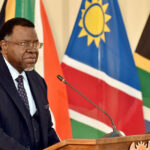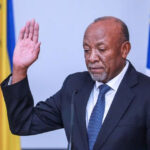

AS Namibians prepare to head to the polls on November 27 for a watershed election, the ruling South West Africa People’s Organisation (SWAPO) faces its toughest challenge since leading the country to independence in 1990. Political analysts are pointing to recent seismic shifts across Southern Africa, where several liberation movements have lost their grip on power, as a potential harbinger for SWAPO’s fate.
The party’s support has been steadily declining, having already lost its two-thirds parliamentary majority in the 2019 elections. That same year, President Hage Geingob secured re-election with just 56% of the vote – the party’s worst showing since independence. The emergence of the Independent Patriots for Change (IPC), led by former SWAPO member Panduleni Itula, who captured 30% of the presidential vote in 2019, has further complicated the political landscape.
The November elections could mark another historic moment, with some analysts predicting the possibility of a second-round runoff – a first in Namibian history – if no presidential candidate secures a majority in the first round.
Recent developments across Southern Africa lend credence to predictions of SWAPO’s vulnerability. In South Africa, the African National Congress (ANC) saw its support drop below 50% for the first time since the end of apartheid in the 2024 general election. Botswana’s Democratic Party (BDP), which had governed since 1966, lost its majority in the 2024 election, leading to a historic transition of power to the Umbrella for Democratic Change led by President Duma Boko.
The latest evidence of this regional shift came from Mauritius, where the ruling Militant Socialist Movement (MSM) suffered a humiliating defeat at the polls, further confirming the trend of voters rejecting long-established parties across the region.
The peaceful transitions in these countries have demonstrated the region’s democratic maturity. Namibia itself showed remarkable stability during the transition following President Geingob’s death earlier this year. However, significant challenges remain. As noted by University of Namibia political scientist Rui Tyitende in The Conversation, opposition parties across the region continue to grapple with internal conflicts, factionalism, and power struggles.
These political shifts reflect growing demands from Southern African voters for more than historical legitimacy from their governments. Citizens are increasingly prioritizing tangible progress, improved service delivery, and responsive governance over liberation credentials.
For SWAPO, the upcoming election represents more than just another poll; it’s a crucial test of the party’s ability to adapt to changing voter expectations in an era where liberation movement credentials no longer guarantee electoral success. As November 27 approaches, the eyes of Southern Africa will be on Namibia to see if the regional winds of change will claim another liberation movement’s long-held dominance.