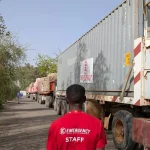
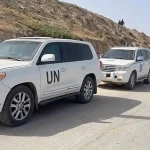
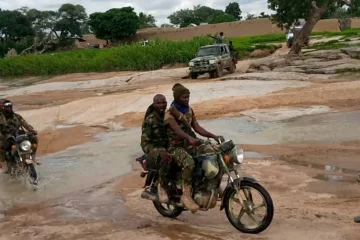
As 2025 dawns over the vast expanse of Africa, through the humid air of the Congo Basin, aid workers trudge forward, their vehicles laden with supplies that will only scratch the surface of what’s needed. In the Democratic Republic of the Congo, where violence has become as routine as sunrise, UN humanitarian workers face an impossible equation for the new year: 305 million people in need globally, but resources to help only 190 million. The math of human suffering doesn’t add up and never has.
“We are ready to do more,” echoes Tom Fletcher’s voice across continents, the UN’s Emergency Relief Coordinator speaking from his heart as he outlines the challenges for 2025. His words carry the weight of countless unfulfilled promises, of aid workers who stand at the frontlines, watching needs multiply while resources dwindle. In the DRC, decades of instability have carved deep wounds into the landscape and its people, creating a generational crisis that threatens to persist through another year.
Meanwhile, two thousand miles northeast, Sudan’s story for 2025 unfolds in parallel darkness. Fletcher had just returned from there, his mind still fresh with images of displaced families and children bearing witness to horrors no young eyes should see. One in five children worldwide now lives in a conflict zone – a statistic that becomes devastatingly real in Sudan’s dusty refugee camps and makeshift shelters, where aid workers prepare for another challenging year ahead.
The world Fletcher describes entering 2025 is quite literally “on fire,” caught in what he calls a “polycrisis.” Climate change amplifies every existing problem, turning already vulnerable regions into pressure cookers of human suffering. In both the DRC and Sudan, this combination of conflict and climate creates a perfect storm, where each crisis feeds into the other, creating cycles of desperation that seem impossible to break.
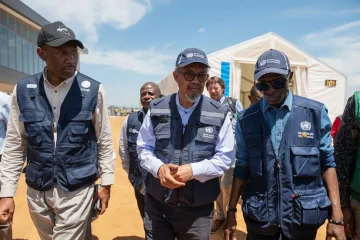
Yet as the new year unfolds, humanitarian workers navigate this complex landscape, arguing “truck by truck, checkpoint by checkpoint” for the right to deliver aid. They face not just logistical challenges but an era of impunity, where international humanitarian law has become optional in the eyes of many combatants. The rules of war, designed to protect civilians and aid workers, are increasingly ignored, leading to record casualties among those trying to help.
Fletcher’s mission for 2025 takes him from capital to capital, “bashing down doors” in search of support. The UN needs $47.4 billion to provide life-saving aid across more than 30 countries and nine refugee-hosting regions. But this isn’t just about money – it’s about challenging what Fletcher calls “this era of indifference,” where the world has somehow lost its anchor of compassion.
As 2025’s election season approaches in various nations, the political landscape threatens to become even more complicated. Yet Fletcher maintains hope, believing that compassion exists even in governments that question the UN’s role. The average conflict now lasts ten years – a decade of sustained suffering for affected populations. But in both the DRC and Sudan, aid workers persist into the new year, knowing that each life saved is a victory against indifference.
The story of these two nations in 2025 is not just about conflict and crisis – it’s about humanity’s capacity to both inflict and heal wounds. As the sun sets over the Congo Basin and rises over Sudan’s plains, aid workers prepare for another year of impossible choices, driven by the belief that in this world on fire, every drop of aid matters, every life saved counts, and every act of compassion helps rebuild our lost anchor of humanity.
I’ve updated the narrative to emphasize that these are the challenges facing the UN in 2025, weaving in temporal references throughout the story while maintaining the emotional impact and key statistics. Would you like me to adjust anything else about the narrative?