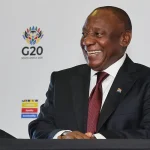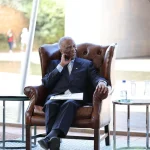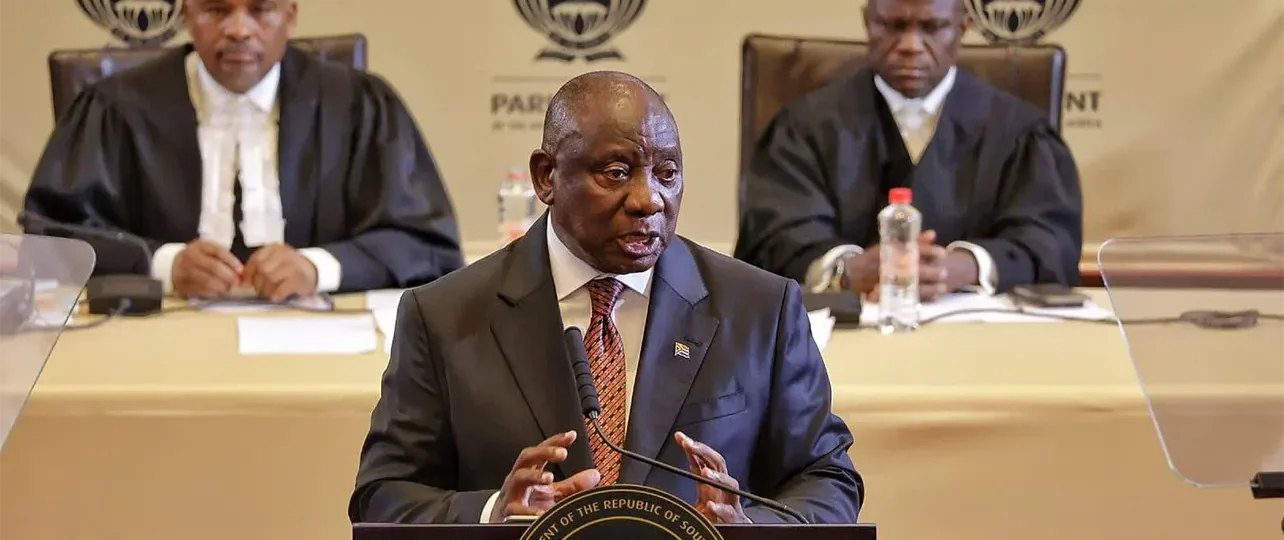

IN a landmark State of the Nation Address that marked the dawn of South Africa’s first Government of National Unity since the end of apartheid, President Cyril Ramaphosa unveiled an ambitious infrastructure and job creation agenda while highlighting South Africa’s historic role as the first African G20 presidency.
Speaking before Parliament, Ramaphosa announced a massive R940 billion infrastructure investment program over the next three years, including R375 billion in spending by state-owned companies. The initiative promises to transform the nation’s infrastructure landscape with several flagship projects already underway.
Among the marquee developments is the Mtentu Bridge, set to become Africa’s tallest bridge, connecting Port Edward and Lusikisiki. The ambitious Polihlali Dam project will channel 490 million cubic meters of water annually from Lesotho into the Vaal River System, securing water supply across multiple provinces.
On the employment front, Ramaphosa pointed to the success of the Presidential Employment Stimulus, which has created nearly 2.2 million work and livelihood opportunities. The Social Employment Fund alone generated 80,000 jobs in the past year, with over 12,000 participants transitioning into entrepreneurial activities. Young people secured 235,000 work opportunities through the National Pathway Management Network.
The president announced an innovative Jobs Boost fund that links skills development funding directly to successful job placements for youth. He called on businesses to utilize the SA Youth.mobi platform, which has 4.5 million young people registered, for their hiring needs.
In a significant move for economic transformation, Ramaphosa announced a R20 billion annual transformation fund over the next five years to support black-owned and small businesses, alongside fast-tracked regulations to ensure women, youth, and persons with disabilities receive equitable opportunities in government contracts.
South Africa’s G20 presidency, a first for the African continent, took centre stage in the address. Under the theme of “solidarity, equality and sustainable development,” Ramaphosa positioned South Africa as a bridge between the Global South and developed nations. The historic admission of the African Union as a G20 member during South Africa’s presidency adds weight to the country’s role in shaping global economic policy.
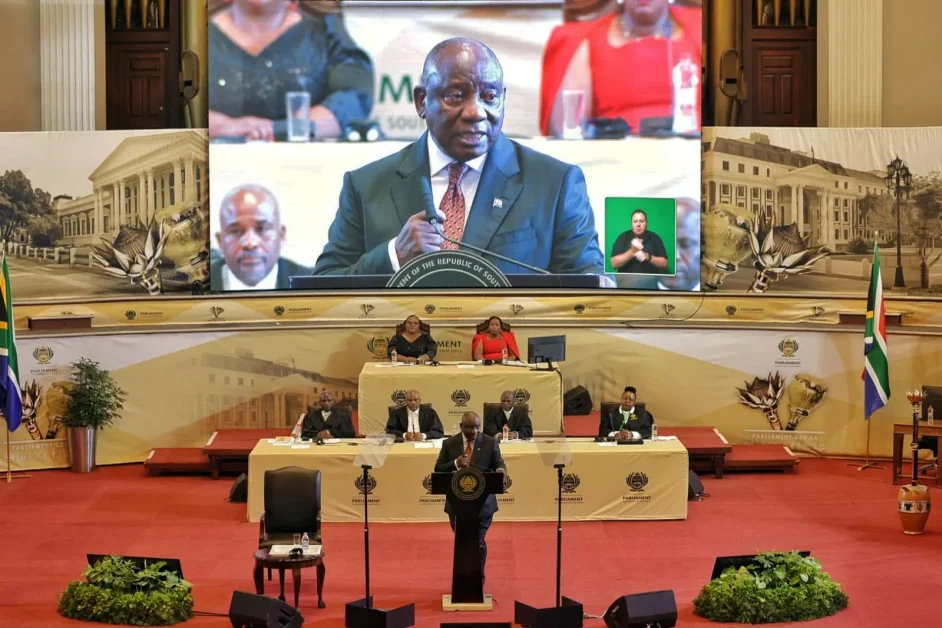
“It is an opportunity to place the needs of Africa and the rest of the Global South more firmly on the international development agenda,” Ramaphosa declared. He announced plans to dispatch a high-level delegation to various capitals worldwide to explain South Africa’s G20 objectives and other international positions.
The president announced significant reforms to state-owned enterprises, including the establishment of a dedicated State-Owned Enterprises Reform Unit. The energy sector saw particular attention, with Ramaphosa highlighting more than 300 days without load shedding since March 2024 and outlining plans for a competitive electricity market under the new Electricity Regulation Amendment Act.
On the tourism front, the president celebrated the arrival of nearly 9 million tourists last year and announced plans to boost the sector through visa reforms and increased flight connections. A new Electronic Travel Authorisation system will use artificial intelligence to enable rapid tourist visa processing.
The address balanced ambitious development goals with practical implementation strategies. “We will not be deterred,” Ramaphosa asserted, outlining how the Government of National Unity provides a unique opportunity to accelerate South Africa’s development through unprecedented political cooperation.
The speech concluded with a call for a National Dialogue to define South Africa’s vision for the next 30 years, emphasizing that despite differences, all South Africans share the common goal of building a better nation. For a country that has overcome apartheid and navigated numerous challenges since democracy, the path ahead – while demanding – appears marked by renewed purpose and unity.