IN a move to prioritise urban sustainability on the global stage, Johannesburg and Tshwane have officially launched the 8th cycle of Urban 20 (U20), a G20 engagement group. The initiative, themed “Cities Leading the Way in Reimagining Global Change,” aims to amplify the voices of major cities in shaping the agenda of the upcoming G20 Summit in Johannesburg this November.
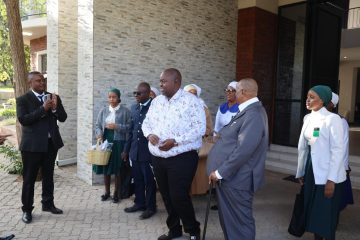
Executive Mayor Nasiphi Moya of Tshwane and Executive Mayor Dada Morero of Johannesburg, the U20 Co-chairs, inaugurated the year-long initiative at the Government Communication and Information Systems (GCIS) Building in Pretoria. This marks the first time South Africa will host and lead the U20, a critical forum for integrating urban priorities into global governance.
The leadership handover from Rio de Janeiro and São Paulo signals a commitment to building on previous successes in advocating for climate finance, green jobs, social inclusion, and sustainable development. Mayors Moya and Morero have pledged to address pressing issues such as equitable economic opportunities, sustainable financing, social inclusion, and enhanced public services, particularly in the face of climate change and rapid urbanization.
“This important summit serves as a strategic moment to elevate the voices of cities, particularly those in Africa, as key drivers of global progress and economic resilience,” said Morero. “Our objective is to shape the urban agenda for the G20, ensuring that cities are recognized as critical players in solving global challenges.”
Moya emphasized the historic significance of the event for South Africa and the Global South, stating, “We are leading a global conversation about the future of our cities and the role they must play in addressing the most pressing challenges of our time.” She also called for stronger collaboration between national and local governments, highlighting cities as being on the frontlines of climate crisis, economic inequality, and social exclusion.
The U20 cycle will culminate in the U20 Mayors Summit in Johannesburg from September 12–14, 2025. Leading up to the summit, approximately 50 global cities will participate in meetings to negotiate the U20 Communiqué, a unified political document to be presented to world leaders at the G20 Summit. The outcomes of the U20 cycle are also expected to influence discussions at the UN World Social Summit in Doha, Qatar, and COP30 in Belém, Brazil.
The U20 initiative, convened by C40 Cities and United Cities and Local Governments (UCLG), unites 38 permanent member cities from G20 countries, along with a rotating group of additional cities each year.
The G20 sustainability initiative encompasses a wide range of goals aimed at addressing global environmental, social, and economic challenges. Here are some of the key objectives:
The G20 aims to accelerate the transition to a green economy, emphasizing a significant reduction in emissions by 2030, with a focus on clean technologies and renewable energy. It also aims to ensure that transitions to sustainable economies are inclusive and equitable, leaving no one behind, particularly vulnerable communities.
Other objectives include:
- Environmental Conservation:
- Circular Economy and Waste Management:
- Sustainable Chemicals Management: Promoting safe recycling and circular economy practices in the chemicals sector.
- Climate Finance: Enhancing climate finance mobilization for adaptation and resilience-building in developing countries.
- Sustainable Chemicals Management: Promoting safe recycling and circular economy practices in the chemicals sector.
- Sustainable Development Goals (SDGs):
- Implementing the 2030 Agenda: The G20 works to advance all dimensions of sustainable development—economic, social, and environmental—across the SDGs.
- Implementing the 2030 Agenda: The G20 works to advance all dimensions of sustainable development—economic, social, and environmental—across the SDGs.
- Global Governance and Cooperation:
- International Collaboration: Strengthening global partnerships to address shared challenges like climate change, inequality, and environmental degradation.
- International Collaboration: Strengthening global partnerships to address shared challenges like climate change, inequality, and environmental degradation.
The G20 sustainability initiative, led by the mayors of Johannesburg and Tshwane, is expected to have several positive impacts on local communities in South Africa:
The initiative will likely focus on creating jobs and economic opportunities, particularly in sectors related to sustainability and renewable energy. This aligns with South Africa’s existing renewable energy procurement program, which mandates job creation and local economic benefits within a 50km radius of project sites.
The initiative will encourage local businesses to participate in procurement processes that can boost local economies and support small enterprises, as seen in the National Framework for Local Economic Development.
The initiative may emphasise community participation, which is crucial for enhancing democracy and accountability in local governance. This can lead to better service delivery and trust between communities and municipal officials. By adopting a collective impact approach, similar to successful initiatives in rural areas like Hammarsdale, in KwaZulu-Natal, the initiative can foster collaboration among stakeholders to address complex social issues effectively.
The focus on sustainability will likely include initiatives to protect local environments, promote biodiversity, and combat climate change, which are essential for long-term community well-being. By addressing social exclusion and promoting equitable economic opportunities, the initiative can help reduce poverty and inequality in marginalized communities.
Another focus will be empowerment and capacity building. Initiatives such as entrepreneurship training programs are expected to empower local youth, enhancing their ability to contribute to the local economy and become leaders in their communities. Building community foundations can unite individuals and organizations around local issues, fostering a sense of community and shared responsibility.
Overall, the initiative has the potential to transform local communities by integrating them into global sustainability efforts, enhancing economic resilience, and promoting inclusive development.