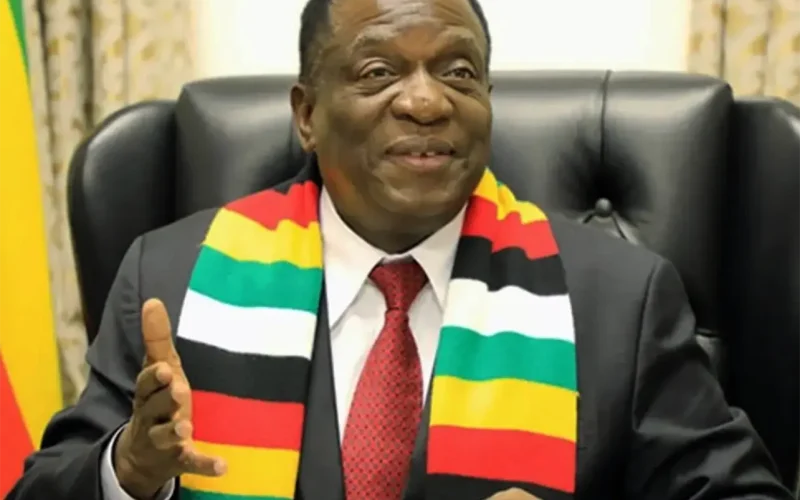
HARARE’s streets fell silent on Monday as a heavy police presence successfully neutralized what could have been the most significant challenge yet to President Emmerson Mnangagwa’s rule. Citizens across Zimbabwe’s capital and other major cities largely heeded calls to stay home, creating ghost towns where businesses remained shuttered and roads stood empty in an apparent show of passive resistance.
Security forces deployed in strength throughout urban centres after war veterans, once stalwart supporters of the regime called for mass demonstrations against controversial plans to extend Mnangagwa’s presidency beyond constitutional limits. In Harare’s outskirts, police fired teargas to disperse small groups of protesters who had gathered to chant “We reject 2030!” – a reference to the proposed extension of Mnangagwa’s term until the end of the decade.
The nationwide economic shutdown, despite government claims of normalcy, delivered a powerful message of public discontent with the ruling ZANU-PF party’s push to amend Zimbabwe’s 2013 Constitution, which currently limits presidents to two five-year terms. Despite Mnangagwa’s previous public assurances that he would retire in 2028, party loyalists have aggressively championed constitutional changes to prolong his tenure.
At the centre of today’s unrest is a remarkable political realignment. War veterans, led by Blessed Geza, have emerged as unlikely opponents to Mnangagwa, whom they accuse of clinging to power and violating the very constitution he swore to uphold. Their calls for mass protests and a national shutdown have filled a void left by weakened opposition parties and galvanized widespread discontent.
“What we are witnessing is a potent statement of defiance from ordinary Zimbabweans,” noted political analyst Ibbo Mandaza. “The economic shutdown speaks volumes about public sentiment regarding the president’s ambitions.”
The crisis has also exposed deep factional divides within ZANU-PF itself. Vice President Constantino Chiwenga and other party figures reportedly oppose the term extension, viewing it as a threat to their own succession ambitions and further destabilizing Mnangagwa’s authority despite his party’s parliamentary dominance.
Meanwhile, Zimbabwe’s diaspora has joined the chorus of opposition, with protesters in London denouncing the proposed constitutional amendments as steps toward renewed authoritarianism. Activists warn that such manoeuvres threaten to erase democratic gains and risk plunging the nation into another dictatorship.
As night falls on Harare, the immediate protests may have been contained, but Zimbabwe stands at a precarious crossroads. If ZANU-PF succeeds in amending the constitution, it risks further alienating key constituencies and deepening political instability. Failure to enact these changes could widen divisions within the ruling party and embolden opposition forces. Either outcome leaves Zimbabwe’s democratic future hanging in the balance.