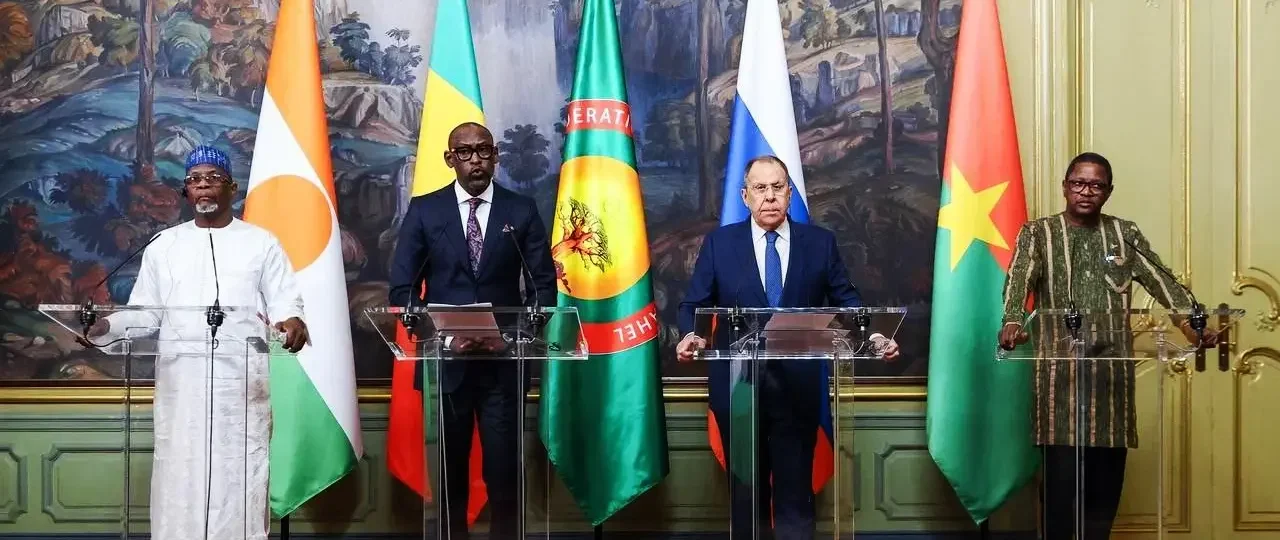

IN the sun-scorched expanse of West Africa’s Sahel region, a new alliance was forming – one that would redraw the geopolitical map of the continent. The foreign ministers of Mali, Burkina Faso, and Niger stepped off their plane in Moscow, greeted by the crisp winter air and the firm handshake of Russian Foreign Minister Sergei Lavrov. Behind closed doors, a pact would be sealed that would send ripples across international corridors of power.
“Today, we cement our brotherhood in arms,” Lavrov proclaimed as they finalised arrangements for Russia to arm and train a 5,000-strong joint military force for the Alliance of Sahel States. For these three nations, ruled by military juntas that had seized power in recent years, the agreement represented not just military support, but validation of their new political reality.
The formation of this alliance marked the culmination of a dramatic geopolitical pivot. Once strongholds of French influence, these former colonies had systematically expelled Western forces and withdrawn from ECOWAS, the regional economic bloc. The vacuum was quickly filled by Russia, primarily through Wagner mercenaries who had established a growing footprint across the region.
In the small village of Diabaly in central Mali, local elder Ibrahim Touré had witnessed the change firsthand. “First came the jihadists, then the French soldiers, now the Russians,” he said, sitting cross-legged in the shade of a baobab tree. “Everyone promises peace, but the gunfire never stops for long.”
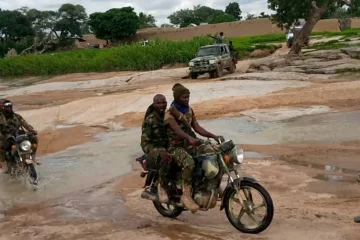
The jihadist insurgency that had plagued the region since 2012 had claimed thousands of lives and displaced millions. Villages emptied as families fled the brutality of both insurgent attacks and sometimes heavy-handed military responses. Farmland lay fallow, and traditional trade routes were severed by insecurity.
Russia’s pledge to equip and train the joint Sahelian force represented more than military support – it was a declaration of a new regional order. With Western influence diminished, Russia gained access to the region’s vast natural resources: Mali’s gold, Niger’s uranium, strategic transit routes, and untapped reserves of everything from lithium to rare earth minerals.
“This is not charity,” said a Malian academic and international relations expert at the University of Bamako who preferred to stay anonymous. “Russia gains markets for weapons, access to resources, and a strategic foothold in Africa. The juntas gain military support to consolidate power without Western demands for democratic transitions.”
As night fell over the Sahel, lights flickered on in military command centres where maps showed territory controlled by jihadist groups, government forces, and various militias. The battle lines had been fluid for years, but with Russian equipment and training, the alliance was betting on changing the momentum.
For the 90 million people living across the Sahel, the promise of security remained elusive, but a new chapter was beginning. Russian military instructors were already arriving at bases, bringing with them not just tactical knowledge but a different vision for Africa’s future – one less tethered to Western institutions and more aligned with Moscow’s multipolar worldview.
As dawn broke over the Niger River, fishing boats pushed off from the shore. Farmers headed to their fields, and merchants opened their stalls. Life continued despite the geopolitical chess match playing out above their heads. For them, the true measure of this new alliance would not be found in diplomatic communiqués, but in whether the guns finally fell silent and their children could grow up without fear.
The desert winds carried whispers of change across the Sahel – whether they brought the storms of continued conflict or the rains of stability remained to be seen.