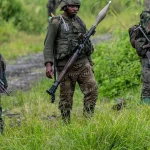
The blood-red sun dipped below the mineral-rich hills of Eastern Congo as Céleste watched the last of the M23 fighters vacate Walikale. Their rifles glinted in the fading light as they moved eastward in a long, snaking column. The town had held its breath for weeks, trapped between hope and terror. Now, as the rebels melted into the dense forest, a cautious exhale rippled through the community.
“They’re really leaving,” whispered Marcel, her neighbour and a local tin miner. His eyes, which had witnessed two decades of conflict, reflected both disbelief and the faintest spark of hope. “But for how long this time?”
Céleste placed a weathered hand on Marcel’s shoulder. At sixty-seven, she had buried two sons and a husband to Congo’s unending wars. The withdrawal was supposed to happen a month ago, but excuses mounted like the casualties in this forgotten conflict. The rebels claimed the Congolese army hadn’t fulfilled promises to remove attack drones. The government accused Rwanda of pulling strings from across the border. Meanwhile, children went hungry, and hospitals ran dry of medicine.
“They’re saying it’s for the Doha talks,” Céleste said. “April 9th. Another peace conference while we count our dead.”
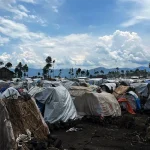
The eastern DRC has been embroiled in a deepening conflict involving the Rwandan-backed M23 rebel group. Recent developments offer a glimmer of hope for peace as the M23 rebels have withdrawn from the strategic town of Walikale, a move described as a goodwill gesture ahead of planned peace talks with the Congolese government.
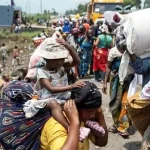
Since January, the M23 rebels have made significant territorial gains, capturing the two largest cities in eastern Congo. This rapid advance has resulted in thousands of deaths and the displacement of hundreds of thousands of people, raising concerns about a broader regional conflict. Neighbouring countries, including Uganda and Burundi, have deployed troops in the area, further complicating the situation.
The conflict has been exacerbated by tensions between the DRC and Rwanda, with the international community accusing Rwanda of supporting the M23 rebels. Despite these allegations, Rwanda has consistently denied any direct military involvement
In Walikale, night had fallen completely. Céleste lit a small oil lamp in her modest home. For the first time in months, she didn’t hear the rumble of rebel trucks or the sharp commands of fighters patrolling the streets.
Her grandson Patrice, orphaned by the conflict, sat cross-legged on the floor, sketching with a stubby pencil.
“Grandmother,” he asked without looking up, “if they make peace in Doha, will the soldiers never come back?”
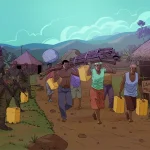
Céleste sat beside him, examining his drawing – a landscape of Walikale without checkpoints or armed men. Just trees, houses, and people working freely. A child’s vision of peace.
“I don’t know, my little one,” she answered truthfully. “Peace isn’t just made in faraway rooms by important men. Real peace must grow here, in our hearts and our lands.”
She looked out her window toward the road where the rebels had departed. In the distance, faint pinpricks of light moved in the darkness – flashlights of villagers cautiously emerging, testing the boundaries of their newfound, fragile freedom.
Céleste knew the truth that diplomats in Doha would soon discover: in Congo, peace was as rich and complex as the land itself – desperately wanted, violently contested, and eternally elusive. But for tonight, at least, her town slept without the shadow of guns.
For now, that would have to be enough.