IN the gleaming conference halls of Doha, a piece of paper signed on Saturday may have changed the trajectory of one of Africa’s most enduring conflicts. For the first time in months of diplomatic efforts, the M23 rebel group—the crucial missing element in previous peace negotiations—sat across from Democratic Republic of Congo representatives and committed to a comprehensive peace agreement by August 18.
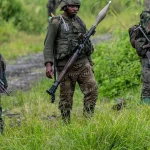
The moment carries profound significance for the millions living in eastern Congo’s shadow of war. When Congolese President Felix Tshisekedi and Rwandan President Paul Kagame signed their peace deal at the White House last month, a critical voice was absent from the table: the rebels who actually control much of the disputed territory. That absence left many wondering whether any agreement could hold without the group that has seized Goma, eastern Congo’s largest city, and expanded across North and South Kivu provinces since late January.
Qatar’s Diplomatic Gambit
Qatar’s mediation, which began in earnest in April, represented a different approach. Rather than sidelining M23 as a “terrorist group”—as Congo had previously insisted—the Gulf nation brought all parties into the same room. The breakthrough came after months of patient shuttle diplomacy, building on a surprise March meeting between Tshisekedi and Kagame that Qatar had quietly orchestrated.
“This declaration lays the groundwork for a new phase of partnership among the various components of society in the Democratic Republic of the Congo,” said Qatar’s Minister of State for Foreign Affairs, Mohammed bin Abdulaziz Al-Khulaifi, his words carefully chosen to acknowledge M23’s role without legitimising their methods.
The signing ceremony itself was modest—a declaration of principles rather than a final peace treaty. But for communities in eastern Congo who have endured decades of cyclical violence, the symbolism resonates powerfully. For the first time, the group controlling their territory has committed publicly to a timeline for peace.
The Trump Factor
The American dimension adds both urgency and complexity to the negotiations. President Donald Trump’s administration has made clear its strategic interest in Congo’s vast mineral wealth—tantalum, gold, cobalt, copper, and lithium that are essential for modern technology and the green energy transition. Trump’s invitation for both presidents to return to Washington suggests significant economic incentives await a successful peace deal.
Massad Boulos, Trump’s senior adviser for Africa, expressed confidence after Saturday’s ceremony: “We are confident and we are hopeful. Both leaders have committed to resolving this.” The subtext is clear—American investment and development assistance could transform the region, but only under stable conditions.
The Challenges Ahead
Yet the path from declaration to lasting peace remains treacherous. The document signed in Doha deliberately sidesteps the thorniest issues that have frustrated negotiators. Questions about M23’s withdrawal from occupied territories, the release of prisoners, and the reopening of banks in rebel-held areas are left for future negotiations.
Most critically, the declaration avoids addressing Rwanda’s role in the conflict. While Rwanda denies supporting M23, the rebel group’s unprecedented territorial gains have coincided with what many observers see as Rwandan military backing. Any durable peace will require Rwanda to step back—a commitment not explicitly addressed in Saturday’s agreement.
The timeline is also punishingly tight. Formal negotiations must begin by August 8, leaving less than two weeks to resolve issues that have defied solution for years. Congo government spokesperson Patrick Muyaya struck an optimistic note on social media, saying the declaration respects Congo’s “red lines, including the non-negotiable withdrawal” of M23. But whether M23 shares that interpretation remains to be seen.
Seeds of Hope
For residents of Goma and surrounding areas, the declaration represents something that has been absent for too long: hope grounded in inclusive dialogue. Previous peace efforts failed partly because they excluded key actors. By bringing M23 to the table, Qatar has created the possibility—however fragile—of an agreement that all parties might actually implement.
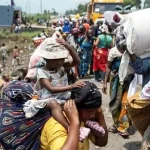
The human cost of failure is measured in lives disrupted and dreams deferred. Hundreds of thousands have been displaced this year alone, while the threat of regional war has grown as neighbouring countries deployed troops to eastern Congo. Children in Goma have known nothing but conflict; for them, the idea of lasting peace exists only in imagination.
If the August 18 deadline holds, these communities could witness something remarkable: former enemies shaking hands over agreements that restore state authority, reopen commerce, and allow families to rebuild their lives. The mineral wealth beneath their feet, rather than fueling conflict, could finance development and opportunity.
Looking Forward
The next few weeks will test whether diplomatic momentum can overcome decades of mistrust and cycles of violence. Qatar’s patient mediation has created an opening, but transforming declarations into a durable peace requires political will from all parties and sustained international support.
The stakes extend far beyond eastern Congo. Success could demonstrate that inclusive dialogue—however difficult and time-consuming—offers a pathway to resolve Africa’s most intractable conflicts. Failure risks not only renewed violence but also the collapse of faith in diplomatic solutions to regional disputes.
As negotiators return to their capitals to prepare for the final push, millions of Congolese wait with cautious optimism. The missing piece of the peace puzzle has finally been found. Whether it fits into place will determine the future of one of Africa’s most troubled regions—and perhaps offer lessons for conflicts far beyond Congo’s borders.
The countdown to August 18 has begun. For eastern Congo, it may be the most important deadline in decades.