A surge in violence across South Sudan is pushing the country to the brink of a renewed civil war, with health facilities and humanitarian workers increasingly caught in the crossfire. The World Health Organisation (WHO) and medical charity Médecins Sans Frontières (MSF) have sounded the alarm following a series of deadly attacks that threaten to unravel fragile health gains and exacerbate an already dire humanitarian emergency.
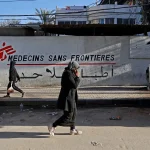
On May 3, at least seven people were killed and 20 injured in an aerial attack on the MSF hospital and a nearby market in Old Fangak, Jonglei State. MSF reported that helicopter gunships bombed the hospital’s pharmacy and strafed the town for half an hour, destroying the only functioning hospital serving over 110,000 people in the region. The attack also obliterated critical medical supplies and forced the closure of the last operational health facility in the area. The motives behind the bombing remain unclear, and no group has claimed responsibility.
“This assault has drastically undermined our capacity to deliver life-saving medical assistance in Old Fangak – the sole hospital catering to over 110,000 residents in the region,” MSF declared, calling the incident a “blatant breach of international law”.
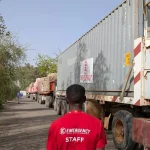
The latest attack is part of a disturbing pattern. Since January 2025, WHO has documented at least eight separate incidents targeting health facilities, resulting in the deaths of health workers, looting of medical supplies, and destruction of essential infrastructure. Humanitarian convoys have also come under fire, and the destruction of cold chain systems has crippled the delivery of vaccines and other vital services.
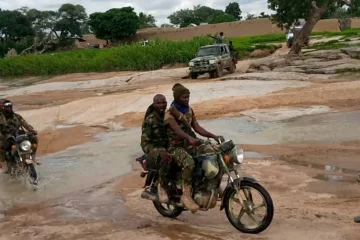
The violence comes as government forces and armed groups clash in Upper Nile State and other regions, displacing an estimated 125,000 people since March, including 23,000 refugees who have fled into Ethiopia. The United Nations reports that at least 180 people have been killed, more than 250 injured, and four humanitarian workers have lost their lives in recent weeks. Six health facilities have been forced to close due to looting and destruction, and services at Ulang Hospital, a lifeline for 174,000 people-have been suspended.
The violence is compounded by severe humanitarian access restrictions, with critical medical supplies running low as a cholera outbreak sweeps the country. From September 2024 to April 2025, nearly 56,000 cholera cases and over 1,000 deaths have been reported, with Unity and Jonglei States bearing the highest burdens. The outbreak is spreading rapidly as displaced populations crowd into camps with poor sanitation, overwhelming an already fragile health system.
South Sudan has struggled with instability since its independence from Sudan in 2011. The country endured a brutal civil war from 2013 to 2018, which killed an estimated 400,000 people before a peace agreement established a unity government. However, tensions between President Salva Kiir and First Vice President Riek Machar-representing the Dinka and Nuer ethnic groups, respectively, have reignited, with Machar reportedly under house arrest since March for alleged insubordination. The breakdown of their power-sharing agreement has fueled fears of a return to widespread conflict.
The violence is further inflamed by the spillover of fighting from neighbouring Sudan, which has led to an influx of returnees and refugees, increased criminality, and the proliferation of weapons in border regions.
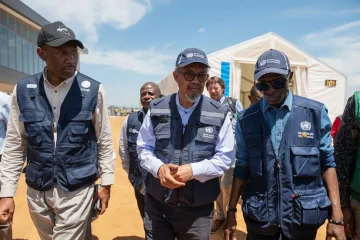
The United Nations, WHO, and humanitarian agencies have condemned the deliberate targeting of health facilities and personnel, stressing that such acts violate international law. They warn that, without urgent action, the health crisis could spiral further out of control. WHO has graded the situation as a highest-priority emergency and is deploying rapid response teams, prepositioning medical supplies, and coordinating outbreak response efforts. However, officials warn that cholera cases could double within six weeks and measles deaths could rise by 40 percent if violence and access restrictions persist.
Marie-Hélène Verney, acting Humanitarian Coordinator in South Sudan, echoed these concerns, calling for an immediate end to the fighting and unimpeded access for humanitarian teams.
As South Sudan faces the convergence of violent conflict, mass displacement, and deadly disease outbreaks, the international community is under mounting pressure to ensure the protection of civilians, health workers, and critical infrastructure. Without strong political will and sustained humanitarian support, the country risks plunging back into the devastation of civil war, this time with its health system in ruins and millions more lives at stake.