PROTESTS have intensified across Kenya’s capital following the death of Albert Omondi Ojwang, a 31-year-old political blogger and teacher, in police custody under circumstances that authorities now admit contradict their initial claims.
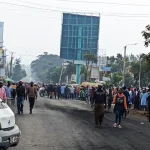
The demonstrations, which entered their fourth day Thursday, have drawn hundreds of activists to central Nairobi, with protesters confronting police along Harambee Avenue and occupying roads leading to Parliament as lawmakers debate the national budget. Police have deployed tear gas against demonstrators demanding justice for Ojwang’s death.
A government post-mortem examination conducted on June 10 has demolished the police narrative surrounding Ojwang’s death. The autopsy revealed that the blogger died from blunt force trauma and neck compression — findings that directly contradict police claims that he died by suicide after “hitting his head against the cell wall.”
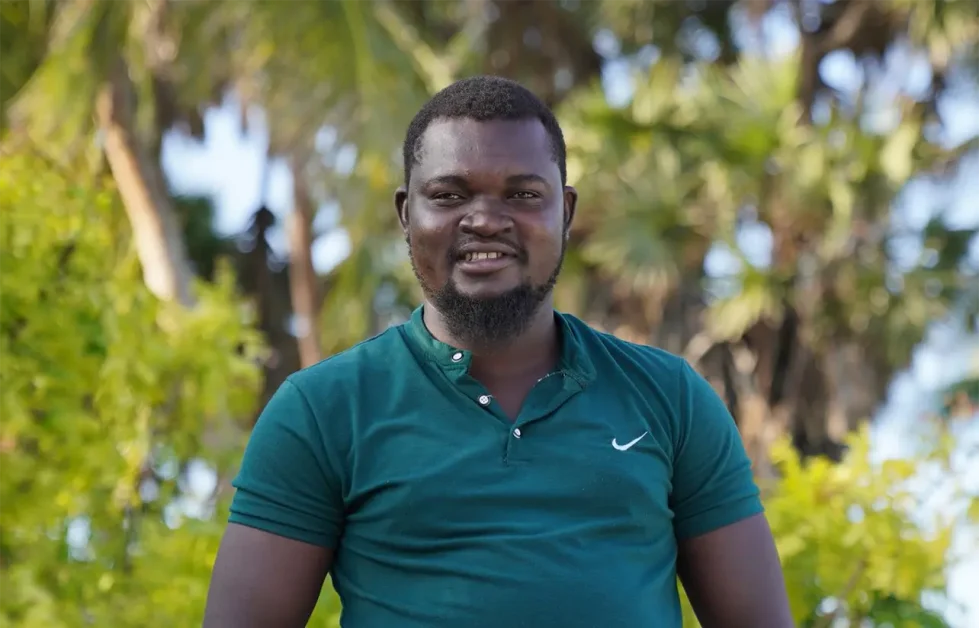
Government pathologist Bernard Midia’s report confirmed what activists and human rights organisations suspected: Ojwang was beaten to death while in custody. The findings show clear evidence of assault, making suicide “very unlikely” according to medical examiners.
President William Ruto broke his silence Wednesday, condemning Ojwang’s death as “heartbreaking, unfortunate and unacceptable.” In his first public statement on the case, Ruto acknowledged that the blogger died “at the hands of police,” marking a significant shift from the official account initially provided by law enforcement.
“The law must apply to everyone — civilian or uniform,” Ruto declared, instructing the National Police Service to work “swiftly, transparently, and credibly” with the Independent Policing Oversight Authority (IPOA) to establish accountability.
Ojwang was arrested in Homa Bay County on June 6 for allegedly sharing false information about a senior police officer on social media. He was subsequently transferred to Nairobi’s Central Police Station, where he died two days later on June 8.
Initial police reports claimed officers found Ojwang “with blood oozing from his head” during a routine cell check, suggesting he had sustained self-inflicted injuries. These claims have now been thoroughly discredited by forensic evidence.
The U.S. Embassy in Kenya has issued demands for accountability, joining Amnesty International and local human rights groups in questioning the official account. The international attention reflects growing concern over Kenya’s pattern of extrajudicial killings and police brutality.
The Independent Policing Oversight Authority Vice Chairperson Ann Wanjiku confirmed that IPOA attended Ojwang’s post-mortem examination and stated: “We are committed to ensuring that everyone who was involved in the crime faces justice.”
Ojwang’s death has reignited longstanding grievances over police misconduct in Kenya, where extrajudicial killings and deaths in custody have become disturbingly common. The case has particular resonance given Kenya’s recent history of youth-led protests, with authorities appearing increasingly heavy-handed in their response to social media criticism.
The blogger’s death represents what many view as a chilling message to Kenya’s politically active Generation Z, who have proven capable of mobilising mass demonstrations against government policies.
Several police officers have been interdicted pending the outcome of investigations. President Ruto has promised that “the truth about what happened to Ojwang will be established in due course, and justice will be served.”
As protests continue to roil the capital, the case has become a litmus test for Kenya’s commitment to police accountability and protection of civil liberties. The stark contradiction between official claims and forensic evidence has only deepened public mistrust of law enforcement institutions.
The demonstrations show no signs of abating as Kenyans demand not just justice for Albert Ojwang but systemic reforms to prevent future deaths in police custody.
This is a developing story. Updates will be provided as new information becomes available.