AFRICA stands at a crossroads of demographic destiny and political stagnation. While the continent boasts the world’s youngest population with a median age of just 19.4 years, its corridors of power remain firmly in the grip of octogenarians and nonagenarians who have transformed governance into a gerontocratic stranglehold.
Recent developments across the continent starkly illustrate this troubling paradox. In Uganda, President Yoweri Museveni – now 80 years old – has announced his intention to seek re-election, extending what would already be a four-decade reign that began when many of his constituents’ parents were not yet born. His announcement signals another constitutional manipulation in a career marked by systematic removal of term limits and age restrictions designed to preserve democratic transitions.
Meanwhile, in Cameroon, the 92-year-old Paul Biya -an absentee president whose sporadic appearances have become the stuff of international ridicule – faces his first serious political challenge in years. The challenger, Tourism Minister Bello Bouba Maigari, however, embodies the very problem plaguing African politics: at 78 years old, this former ally and prime minister represents not generational change but merely a shuffling of the elderly guard. Maigari is backed by the National Union of Democracy and Progress.
The spectre of Zimbabwe’s Robert Mugabe looms large over these developments. After clinging to power for 37 years, Mugabe was eventually removed by military intervention in 2017, but only after his cognitive decline had become so pronounced that even his own party could no longer sustain the pretence of effective leadership.
The Cultural Trap of Elder Reverence
This continental gerontocracy finds its roots in deeply embedded cultural traditions that venerate age and grant elders unquestioned authority. While respect for wisdom and experience remains a valuable cultural asset, its transformation into political infallibility has created a governance crisis of unprecedented proportions.
The average age of Africa’s longest-serving leaders hovers around 80 years – more than four times the median age of their populations. This creates a leadership cohort that is not merely disconnected from their constituents by policy differences, but by generational chasms that span entire technological revolutions, social transformations, and economic paradigm shifts.
The Institutional Enablers of Entrenchment
These leaders have not maintained power through popular mandate alone. Instead, they have systematically dismantled democratic safeguards through constitutional amendments, electoral manipulation, and the suppression of opposition voices. Museveni’s Uganda serves as a textbook example: multiple constitutional changes have eliminated age limits and extended presidential terms, transforming what should be temporary public service into permanent political occupation.
The weakness of institutional checks and balances across the continent has enabled this democratic backsliding. Judiciaries lack independence, legislatures function as rubber stamps, and civil society operates under increasing restrictions. The result is a political ecosystem that rewards longevity over legitimacy and age over aptitude.
The Economic Cost of Gerontocratic Governance
The economic implications of this leadership crisis extend far beyond poor governance metrics. Entrenched elderly leaders consistently resist the innovation and adaptability that modern economies demand. Their preference for maintaining power-preserving status quos over implementing necessary reforms has left many African economies structurally stagnant despite abundant natural and human resources.
Youth unemployment across the continent often exceeds 50 percent, while leaders who came to power decades ago struggle to comprehend digital economies, technological disruption, and the aspirations of populations born into a globalised world. This disconnect between leadership and economic reality represents one of the greatest barriers to Africa’s development potential.
The Succession Crisis Brewing
Perhaps most dangerously, these ageing leaders have systematically failed to develop succession mechanisms that could ensure peaceful transitions of power. As health challenges mount and cognitive decline becomes apparent, the absence of clear succession plans creates fertile ground for political instability, family feuds, and potential conflict.
The “twilight phase” of ageing presidencies—marked by prolonged absences, health-related speculation, and internal power struggles—has become a recurring pattern across the continent. Each represents not just a governance crisis but a potential flashpoint for broader instability.
The Youth Awakening and Its Implications
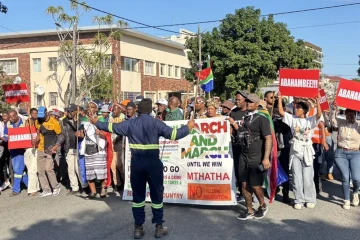
Despite cultural constraints and institutional barriers, Africa’s youthful majority shows increasing signs of political awakening. From Nigeria’s #EndSARS movement to recent protests across francophone Africa, young people are beginning to challenge the gerontocratic order that has marginalised them for generations.
This emerging youth activism represents both an opportunity and a warning. If channelled through reformed democratic institutions, it could drive the leadership renewal Africa desperately needs. If blocked by entrenched interests, it risks exploding into the kind of social upheaval that has destabilised other regions.
The Path Forward: Breaking the Gerontocratic Grip
Africa’s demographic dividend – its vast youthful population – represents the continent’s greatest economic and political asset. Realising this potential requires breaking free from the gerontocratic stranglehold that has defined post-independence politics.
This transformation demands constitutional reforms that restore term limits and age restrictions, strengthen democratic institutions that can check executive power, and create political pathways for youth participation beyond token representation. Regional bodies like the African Union must move beyond diplomatic niceties to actively promote democratic governance and peaceful transitions of power.
The stakes could not be higher. A continent where the median citizen is under 20 cannot afford to be led by individuals who view governance as lifetime employment. Africa’s future depends on aligning its leadership with its demographics—replacing gerontocracy with democracy, and age-based entitlement with merit-based representation.
The time has come for Africa’s young majority to inherit the political space that rightfully belongs to them. The continent’s development trajectory depends on it.