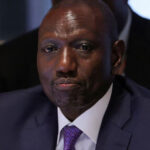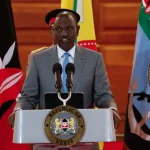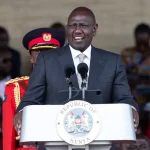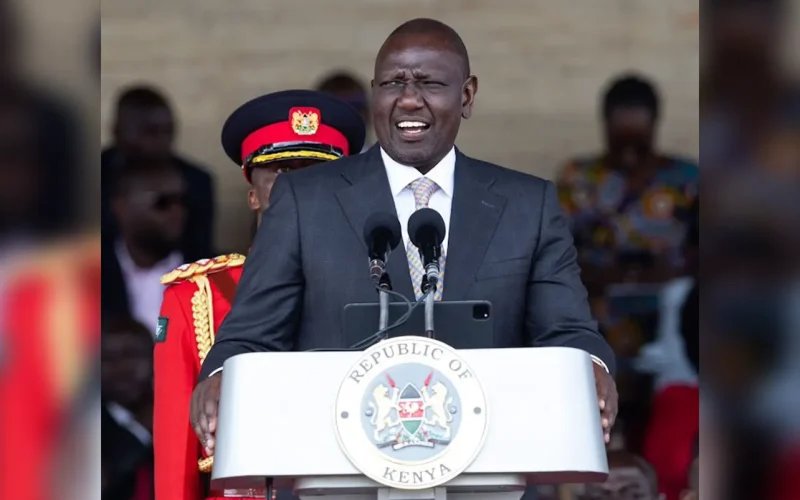
IN an unprecedented and legally questionable directive that has sent shockwaves through Kenya and the international community, President William Ruto has ordered police officers to shoot protesters who loot or vandalise businesses during ongoing anti-government demonstrations — but only in the legs to “incapacitate” rather than kill them.
The extraordinary command came during a speech at a police housing project inspection in Kilimani, as Kenya grapples with a deadly wave of protests that have claimed at least 31 lives in recent demonstrations alone.
“Police should only shoot them on the legs, so they can be taken to the hospital and after charged for their criminal activities,” Ruto declared, emphasising that Kenyans want a peaceful environment for business. He instructed officers to shoot looters and vandals in the legs to incapacitate them before taking them to the hospital and then to court to face charges.
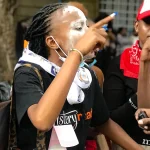
The directive represents a dramatic escalation in the government’s response to widespread civil unrest that has gripped Kenya, with at least 31 people dead and more than 500 arrested in anti-government protests across Kenya on Monday alone, according to the Kenya National Commission on Human Rights.
Legal experts and human rights organisations have swiftly condemned the order as unconstitutional and potentially criminal. President Ruto’s frustration with the destruction of property is understandable, but his directive is not legal. Kenya’s Constitution demands restraint, due process, and accountability, not vigilante justice from the state.
The directive has triggered calls for international intervention, with “We shall report you not to the Kenyan police but the International Criminal Court,” according to critics of the president’s order.
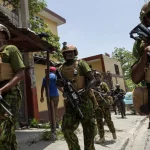
The controversial directive comes amid Kenya’s most serious civil unrest in years. At least 10 people were killed, as well as looting and destruction of property in Kenya, as police and other security forces responded to violent protests in the capital, Nairobi and at least 16 other counties. Lethal ammunition, rubber bullets, tear gas, and water cannons were used.
The protests have been driven by long-standing grievances over government corruption, police brutality, and economic hardship. Kenyan youth remain unhappy with the current administration due to corruption, rising cost of living and police brutality, and the recent death of a blogger in custody.
The United Nations has expressed alarm over the escalating violence. The UN and human rights groups have accused the police of excessive force during the demonstrations, raising concerns about Kenya’s commitment to human rights and constitutional governance.
Human rights organisations point to a troubling pattern of unaccounted deaths and disappearances from previous protests. The whereabouts of at least 26 people remain unknown. In May 2025, the Independent Policing Oversight Authority (IPOA) said it had completed investigations of 22 deaths that occurred during the 2024 protests, but only two of these are in court.
Medical professionals and legal experts have warned that shooting to wound carries severe risks of permanent disability, arterial damage, and death — contradicting the president’s stated aim of non-lethal force. The directive also raises questions about proportionality and the rule of law in Kenya’s response to civil unrest.
The order has divided public opinion, with some supporting tough measures against looters while others fear it represents a dangerous erosion of constitutional protections and could escalate tensions further.
As Kenya faces mounting international pressure and internal criticism, the implementation and legal challenges to President Ruto’s directive will likely determine the country’s democratic trajectory. The controversial order has thrust Kenya into a constitutional crisis that experts warn could have lasting implications for the rule of law and human rights in East Africa’s largest economy.
The directive marks a critical test for Kenya’s institutions and its commitment to constitutional governance amid one of its most challenging periods since independence.