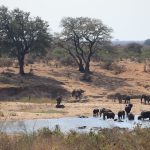
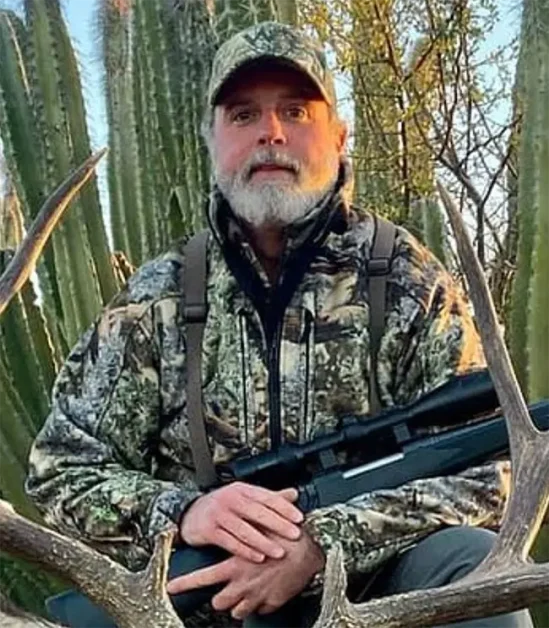
THE African sun hung heavy over the Limpopo province as Asher Watkins, a 52-year-old Texas millionaire, crept through the thornbush with practised silence. Behind him, a professional hunter and tracker from Coenraad Vermaak Safaris moved like shadows, their eyes scanning the terrain for any sign of their quarry. They were hunting death itself – a massive Cape buffalo known among the safari community as “Black Death,” a 1.3-tonne behemoth with a reputation that sent shivers through even the most seasoned hunters.
For Watkins, founder of the luxury Watkins Ranch Group and a prominent member of the Dallas Safari Club, this was more than just another hunt. It was a pursuit of one of Africa’s most dangerous adversaries, an animal responsible for more hunter fatalities than lions, elephants, or crocodiles combined. The Cape buffalo – Africa’s “Black Death” – had earned its fearsome moniker through countless encounters where the roles of hunter and hunted had been brutally reversed.
The Moment Everything Changed
What happened next unfolded with the lightning speed and finality that only the African bush can deliver. Without warning, without provocation, the massive buffalo emerged from the vegetation and charged. At 35 miles per hour, nearly two tons of muscle and fury bore down on Watkins with unstoppable force. In that horrifying instant, the dynamics of the hunt were completely reversed – the predator had become the prey.
The professional hunter and tracker could only watch in stunned horror as their client was gored to death almost instantly. The very animal Watkins had come to claim as a trophy had claimed him instead, delivering a brutal reminder of nature’s ultimate authority in the wild.
Back at the safari lodge, Watkins’ mother, stepfather, and brother waited for his return, unaware that their loved one had just become another tragic statistic in the dangerous game of African big-game hunting. The man who had built an empire selling luxury ranch properties, who shared his hunting exploits across social media, who believed deeply that ethical trophy hunting supported conservation efforts, would never walk through those lodge doors again.
A Death That Will Reshape the Debate
This tragic reversal of fortune represents far more than a hunting accident – it has become a flashpoint that will likely reshape the entire discourse surrounding trophy hunting in Africa. Watkins’ death arrives at a time when the practice faces unprecedented scrutiny, and his story provides both sides of the debate with powerful ammunition.
The Critics Seize the Moment
Animal rights advocates and trophy hunting opponents are already pointing to this tragedy as a stark illustration of their core arguments. They see poetic justice in the hunter becoming the hunted, viewing it as nature’s own verdict on a practice they consider morally indefensible. For organisations like PETA and other animal welfare groups, Watkins’ death serves as a sombre reminder that treating sentient beings as trophies carries inherent risks – not just to the animals, but to the humans who pursue them.
The circumstances of his death – sudden, violent, and ironic – provide critics with a powerful narrative tool. They argue that this tragedy strips away any romantic notions about the nobility or safety of big-game hunting, revealing it as a dangerous pursuit that reduces magnificent wild animals to mere targets.
Conservationists Face a Complex Challenge
Yet the story becomes more complicated when viewed through the lens of conservation. Watkins himself was an advocate for ethical hunting as a conservation tool, believing that well-regulated trophy hunting provided crucial funding for wildlife protection and supported local African communities. His death forces conservationists to grapple with a painful paradox: how do you defend a practice when its very advocate becomes its victim?
Proponents of regulated trophy hunting find themselves in an increasingly difficult position. While they acknowledge the tragedy, they argue that incidents like this highlight the inherent risks of working with wild animals rather than discrediting the broader conservation benefits. They worry that emotional reactions to dramatic deaths like Watkins’ could lead to blanket bans that would eliminate crucial conservation funding, potentially harming the very wildlife that critics seek to protect.
The Ripple Effects Begin
As South African authorities continue their inquest into the incident – with the buffalo found nearby bearing a bullet wound but reportedly not wounded when it charged – the reverberations are already being felt across continents. Social media is ablaze with commentary ranging from expressions of karma to calls for stricter regulations or outright bans.
The polarisation is deepening by the hour. Those who see trophy hunting as an anachronistic blood sport are using Watkins’ death to call for immediate reforms or prohibitions. Meanwhile, supporters worry that such reactions could undermine decades of conservation work in regions where alternative funding sources remain scarce.
Beyond the political implications lies a human tragedy that has shattered a family and community. Watkins’ ex-wife, Courtney, speaks of their daughter Savannah’s anguish, describing the “immeasurable hole” left by his passing. Friends remember him as a courageous man with a vibrant personality, deeply devoted to his family. These personal details humanise a story that risks becoming lost in ideological battles.
The Future of Trophy Hunting
The tragic irony of Watkins’ death – a passionate advocate for ethical hunting killed by the very animal he sought to hunt – will likely become a defining moment in the ongoing debate over trophy hunting in Africa. His story embodies the complex tensions between conservation, tradition, animal rights, and human safety that make this issue so contentious.
As investigations continue and the debate intensifies, one thing remains certain: the image of a Texas millionaire gored to death by “Black Death” will be seared into the collective memory of both sides of this argument. In death, Watkins may have unwittingly provided the most powerful case study yet for both the critics and supporters of the practice he loved.
The hunter has indeed become the hunted, and in that tragic reversal lies a story that will be told and retold as the future of African trophy hunting hangs in the balance. Whether his death leads to meaningful safety reforms, conservation innovations, or outright bans remains to be seen – but it will undoubtedly leave an indelible mark on one of conservation’s most controversial debates.
The African bush, indifferent to human politics and passion, continues its ancient rhythms. But the reverberations of what happened in Limpopo will echo far beyond the thorn trees and termite mounds, potentially reshaping how humanity interacts with some of Earth’s most magnificent – and dangerous – creatures.