CHAD’S former Prime Minister, Succes Masra, is mounting what promises to be a titanic legal battle to overturn his 20-year prison sentence, with his defence team preparing to unleash a devastating appeal that could shake the foundations of President Mahamat Idriss Deby’s government.
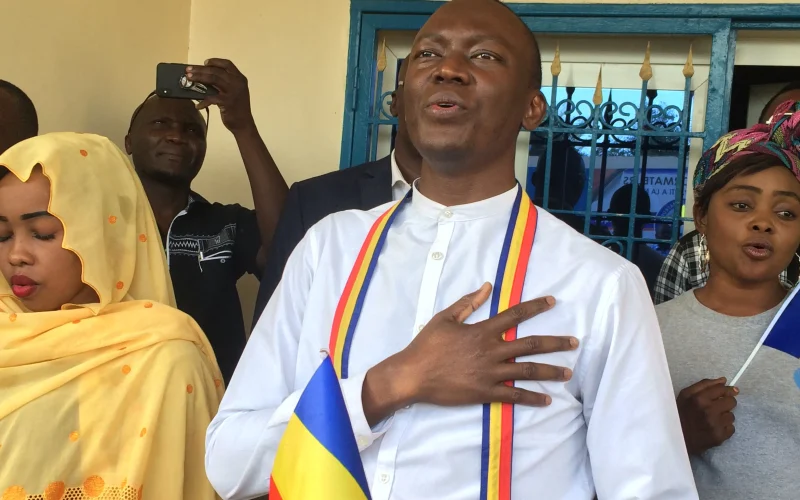
The opposition leader, who defiantly told supporters to “stand firm” as he was led from the courtroom, faces what his lawyers are calling a politically orchestrated conviction designed to eliminate Deby’s most formidable rival. The stakes couldn’t be higher: Masra’s freedom, his political future, and potentially the trajectory of Chad’s fragile democracy hang in the balance.
A criminal court in N’Djamena delivered the crushing verdict this week, finding Masra guilty of disseminating racist and xenophobic messages, inciting hatred and rebellion, complicity in murder, and inciting communal violence. The charges stem from deadly May 2025 clashes between herders and farmers in Mandakao that left 35-42 people dead, mostly women and children.
Beyond the two-decade prison term, the court slapped Masra with a staggering 1 billion CFA franc fine—approximately $1.8 million—in what his supporters see as an attempt to financially cripple the opposition movement.
Masra’s legal team is preparing a withering counterattack, building their appeal on explosive allegations that could expose fundamental flaws in Chad’s judicial system. The defence strategy centres on three devastating arguments:
Political Manipulation: Lawyers will argue the entire trial represents a brazen manipulation of the justice system, designed to eliminate Deby’s primary political threat. Masra, who led the opposition party Les Transformateurs and briefly served in Deby’s transition government before becoming his chief rival, poses the greatest challenge to the president’s authority.
Evidentiary Collapse: The defence plans to systematically dismantle the prosecution’s case, arguing that key evidence linking Masra to the violence is either non-existent or fatally flawed. They contend that no concrete proof exists connecting the former prime minister to inciting the deadly communal clashes.
Procedural Warfare: Legal experts expect Masra’s team to launch a full-scale assault on how evidence was gathered, handled, and presented, potentially exposing irregularities that could invalidate the entire proceedings.
This case represents far more than a single politician’s fate—it’s become a defining moment for Chad’s political landscape. Masra ran against Deby in the May 2024 presidential election, acknowledging defeat but contesting the results. His imprisonment removes the opposition’s most charismatic leader just as Deby, who assumed power after his father’s death in 2021, faces mounting pressure to legitimize his rule.
The trial of Masra alongside 67 co-defendants, mostly from the Ngambaye ethnic group, has raised alarming questions about whether the government is weaponizing ethnic tensions for political gain.
A Battle That Could Define a Nation
Masra’s hunger strike in prison – ended only after public demonstrations demanded his release – demonstrated the opposition leader’s continued ability to mobilise supporters even from behind bars. His defiant courtroom message to “stand firm” signals this legal war is far from over.
The appeal represents a make-or-break moment for both Masra and Chad’s democratic institutions. If successful, it could expose the prosecution as a political hit job and restore one of Africa’s most prominent opposition voices. If it fails, it may cement Deby’s grip on power while sending a chilling message to all who dare challenge his authority.
Legal observers expect the appeal process to become a brutal test of Chad’s judicial independence, with international attention focused on whether the courts can rise above political pressure to deliver justice.
For Masra, the stakes are existential: victory means freedom and a return to political relevance; defeat could mean spending the next two decades watching from prison as his country’s democratic hopes wither away.
The battle for Masra’s freedom has become nothing less than a battle for Chad’s democratic soul.