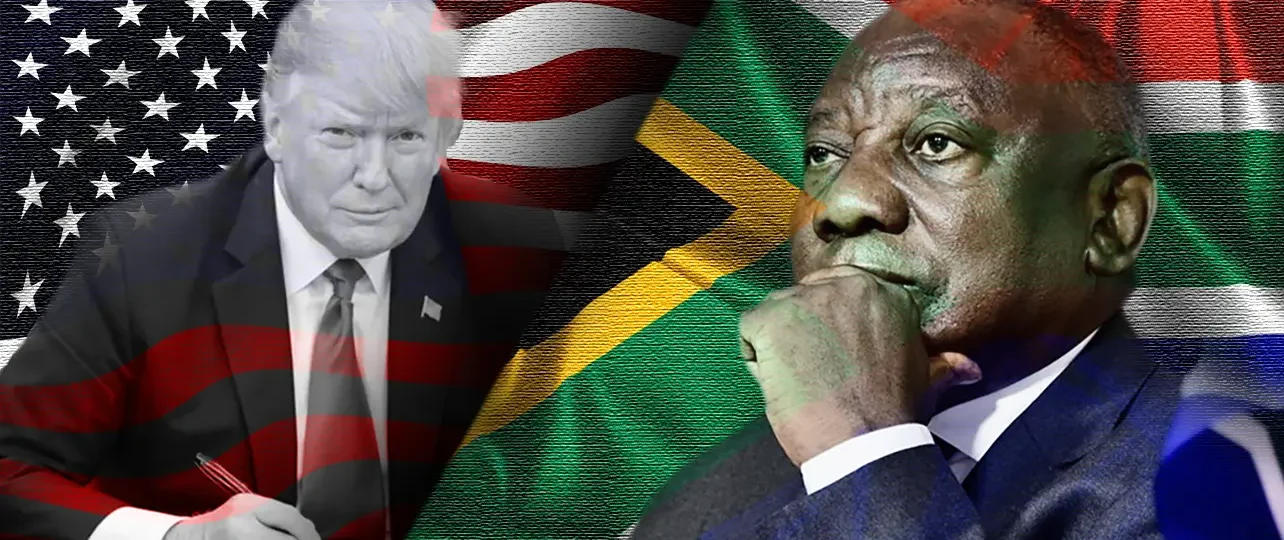

SOUTH Africa has unveiled a sweeping five-point response strategy to combat the devastating 30% tariffs imposed by US President Donald Trump, as the government scrambles to protect jobs and salvage trade relationships worth billions of rand.
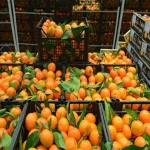
The punitive tariffs, which took effect on August 7, have plunged one of Africa’s largest economies into crisis mode, threatening R9.8 billion ($537 million) in agricultural exports and forcing Pretoria to rapidly diversify its trade partnerships away from Washington.
In a comprehensive government briefing, officials revealed that the Cabinet has approved a revised trade offer to be submitted to the United States as the foundation for emergency negotiations. The move represents South Africa’s most aggressive diplomatic and economic response to Trump’s protectionist agenda, which has targeted the country as part of a broader assault on global trade partnerships.
In a significant diplomatic victory, South Africa has successfully resolved key biosecurity disputes that had long frustrated US trade officials. The breakthroughs include:
- Poultry access: South Africa granted market access under a conditional self-ban system, unlocking the 72,000-ton Tariff Rate Quota agreed in 2016
- Blueberry exports: Market access granted for fruit fly-free states, with mitigation measures for affected regions
- Pork trade: Full market opening subject to biosecurity requirements
The USA-Africa Trade Desk has confirmed that containers of poultry and pork will ship to South Africa within two weeks from Georgia, Mississippi, South Carolina, North Carolina, and Alabama through major US ports.
Economic War Room Activated
The government’s economic response package represents one of the most comprehensive trade defence strategies in South Africa’s democratic history:
Export Support Desk: A crisis command centre that has already assisted 23 affected companies while engaging with 54 South African exporters to provide updates on negotiations and market diversification strategies.
Localisation Support Fund: A targeted intervention to help affected companies contribute to national economic resilience while absorbing tariff impacts.
Export and Competitiveness Support Programme: Includes working capital and equipment facilities to address short to medium-term industry needs across all sectors.
Block Exemption for Exporters: Following consultations with the Competition Commission, competitors will be allowed to collaborate and coordinate responses to the trade crisis.
Strategic Pivot to Global Markets
Perhaps most significantly, South Africa is accelerating what officials describe as “not a Plan B, but Plan A for long-term resilience” – a massive diversification of export markets away from US dependency.
The strategy targets Asia, including Japan, Vietnam, and Thailand, alongside Middle Eastern markets and India. Officials emphasise this represents a fundamental shift toward building regional resilience under the African Continental Free Trade Agreement (AfCFTA) while strengthening European partnerships.
“This is directly linked to job protection,” officials stated. “Diversification is about protecting rural livelihoods and sustainable agricultural growth for our people.”
David vs. Goliath Trade Battle
The scale of the challenge is stark. While the US ranks as South Africa’s third-largest trading partner after the EU and China, South Africa represents just 0.25% of total US imports and ranks as America’s 43rd export destination.
The asymmetry underscores what South African officials describe as Trump’s misguided targeting of a trading partner that poses no threat to US industries. Agricultural exports to the US account for just 4% of South Africa’s total agricultural exports, yet have grown 104% since 2018.
Trade Defence Arsenal Deployed
Anticipating a flood of diverted goods from the 130+ countries also hit by US tariffs, South Africa is preparing to deploy the full range of World Trade Organisation-approved trade defence measures:
- Anti-dumping actions against unfairly priced imports
- Anti-subsidy measures targeting government-supported foreign products
- Safeguard measures to protect domestic industries from import surges
Officials warn that chronic global overcapacity in steel, glass, subsidised agricultural products, solar panels, and automotive vehicles will create “incessantly harmful” conditions for domestic industry as exporters seek alternative markets.
Domestic Demand Campaign
The “Proudly South Africa” initiative is being supercharged through enhanced corporate and retailer outreach, utilising online platforms and procurement tools to boost domestic sales of products with future export potential.
High-Stakes Negotiations Ahead
A high-level negotiation team combining trade and agricultural expertise stands ready for intensive engagement with US counterparts. The government’s stated goal: demonstrate that South African exports complement rather than threaten American industries.
As Trump’s tariff war reshapes global trade flows, South Africa’s response represents a critical test of whether middle-power economies can successfully navigate the new era of economic nationalism while protecting jobs and growth at home.
The outcome will determine not only the future of US-South African trade relations but also serve as a model for how emerging economies respond to the unilateral trade actions that have become hallmarks of the Trump administration’s second term.