CRIMINAL organisations from Europe’s Western Balkans have dramatically expanded their cocaine trafficking operations into West Africa, forging sophisticated alliances that are transforming the region into a critical smuggling corridor while fueling instability in areas already devastated by terrorism and conflict.
The expansion represents a seismic shift in global drug trafficking patterns, with European crime syndicates – among the continent’s most powerful cocaine traffickers – establishing deep roots across West African maritime hubs including Senegal, Sierra Leone, Gambia, Guinea-Bissau, and Cape Verde.
These groups have formed strategic partnerships with Brazil’s notorious Primeiro Comando da Capital (PCC) and Dutch criminal networks, creating an intercontinental web that capitalises on Europe’s surging cocaine demand and increased enforcement on direct Latin America-Europe routes.
The port of Dakar in Senegal has emerged as a primary gateway due to its high cargo throughput and established European connections, while Guinea-Bissau’s coastal facilities and the ports of Freetown and Banjul serve as crucial transit points. These facilities now handle fully containerised shipments, trans-shipments at sea, and smaller vessel operations designed to obscure cocaine origins and evade detection.
“The expansion and modernisation of these port facilities, combined with weak enforcement mechanisms, have enabled these networks to deepen their grip on the maritime cocaine trade,” according to security analysts tracking the phenomenon.
Terrorism Nexus Emerges
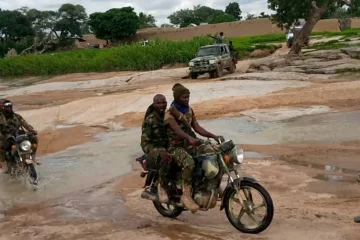
The criminal infiltration carries profound implications for a region already struggling with extremist violence. In the Sahel, groups like Jama’a Nusrat ul-Islam wa al-Muslimin (JNIM) and Boko Haram have begun leveraging drug trafficking proceeds to fund their operations, creating a dangerous nexus between organised crime and terrorism.
These militant organisations exploit the criminal presence in multiple ways: taxing drug shipments passing through their territories, providing armed protection for smuggling routes, and diversifying into related illicit economies, including illegal mining and fuel smuggling. The convergence has created what experts describe as a “potent nexus of insecurity” that severely challenges governance efforts across the region.
The criminal expansion deliberately targets West Africa’s institutional vulnerabilities. Weak border security, limited law enforcement capacity, and governance gaps provide ideal conditions for trafficking networks to establish operations with minimal interference.
The sophisticated criminal alliances introduce advanced smuggling techniques, money laundering expertise, and operational knowledge that enhance both drug trafficking efficiency and militant group capabilities. This transfer of criminal expertise enables local groups to expand their reach while providing international networks with essential local logistics and territorial control.
Regional Security Crisis
The implications extend far beyond drug trafficking. Criminal profits fuel corruption at multiple government levels, undermine state authority, and generate violence that destabilises communities across affected countries. The phenomenon has created complex cross-border challenges that individual nations struggle to address independently.
Border regions become particularly vulnerable as criminal networks exploit jurisdictional gaps and weak coordination between neighbouring countries. Areas with limited state presence become staging grounds for trafficking operations and militant recruitment, creating security vacuums that spread instability across porous frontiers.
Security experts emphasise that countering these threats demands unprecedented international cooperation. The transnational nature of the criminal networks—spanning Europe, Latin America, and Africa—requires coordinated intelligence sharing, joint enforcement operations, and targeted interventions against key trafficking brokers and alliance structures.
Current efforts include enhanced port security measures, improved maritime surveillance, and capacity building for regional law enforcement agencies. However, the scope and sophistication of the criminal expansion outpace existing countermeasures, demanding more robust international commitment and resources.
Cascading Effects
The entrenchment of these trafficking networks threatens to create lasting damage to West African development prospects. Beyond immediate security concerns, the criminal presence undermines legitimate economic activity, discourages foreign investment, and perpetuates cycles of corruption and violence that hinder progress toward stability and prosperity.
The situation represents a critical juncture for West Africa, where the convergence of organised crime and terrorism could fundamentally alter the region’s trajectory. Without decisive international action, experts warn, the criminal networks will continue expanding their influence, creating deeper instability that could require decades to reverse.
As European cocaine demand continues rising and enforcement pressure mounts on traditional trafficking routes, West Africa’s strategic importance to international criminal networks will only increase, making urgent, coordinated action essential to prevent further entrenchment of these destabilising forces.