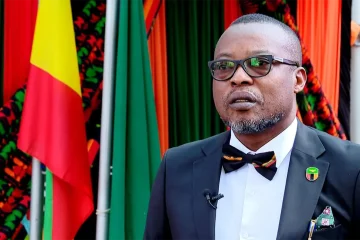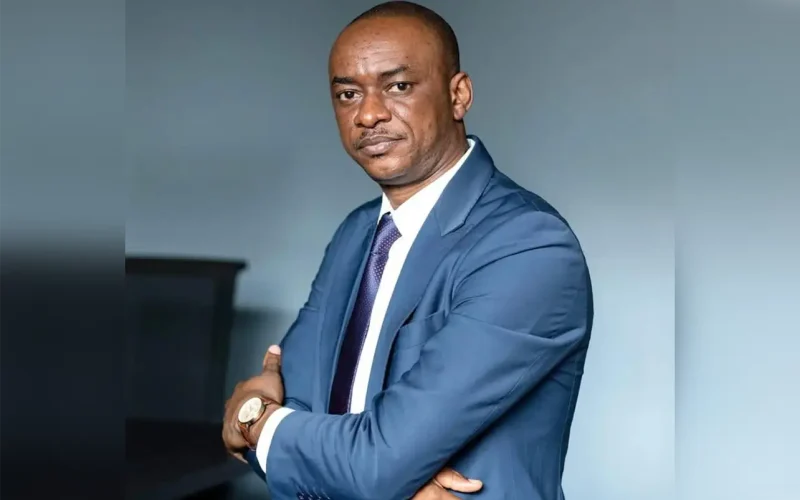
CABRAL LIBII, presidential candidate for the Cameroonian Party for National Reconciliation (PCRN), has pledged to transform Cameroon into an “economic miracle” within two decades if elected in the October 12, 2025, presidential election, according to an interview with Africanews.
The opposition candidate criticised what he described as 43 years of mismanagement under the current system, pointing to widespread infrastructure decay, chronic energy shortages, and soaring unemployment as evidence of governmental failures.
“They’ve run out of ideas. They can’t continue, and the people need something new,” Libii told Africanews in the third of a series of interviews with presidential candidates.
Libii, who leads a five-member parliamentary bloc elected in 2020, highlighted what he considers a fundamental contradiction in Cameroon’s current predicament: a nation rich in natural resources struggling with basic necessities.
“It makes no sense to have energy shortages in a country with a hydroelectric potential of 23,000 megawatts—the second-highest in Africa after the DRC, and 18th globally,” he said in the interview. He also noted that Cameroon possesses 21,000 cubic meters of water per person annually, nearly triple the global average of 7,500, yet faces drinking water shortages.
The PCRN leader’s campaign centres on an 11-pillar platform detailed in nearly 400 pages of policy proposals published last year as “The Manifesto for Change and Progress.” At its core is a vision of “A Cameroon that protects and unleashes potential,” with emphasis on industrialisation and agricultural self-sufficiency.
Libii told Africanews his economic program includes establishing a Bank for Investment and Innovation to provide funding for young entrepreneurs and startups. He also advocates allowing dual nationality to leverage the economic potential of Cameroonians living abroad.
The candidate defended his signature policy of “community-based federalism” against concerns it might fragment opposition unity. He argued that Cameroonian voters have historically proven rational, noting that in every presidential election since 1992, the top three candidates have collectively captured over 95 percent of votes.
“Cameroonian voters can tell who’s serious and who’s not,” Libii said in the Africanews interview, adding that opposition efforts should focus on ensuring vote transparency rather than forming political coalitions.
Libii accused the ruling system of maintaining power through what he called “sophisticated fraud” in election result manipulation.
The candidate’s path to the 2025 ballot came after navigating internal party tensions. Since founding the PCRN in 2017 and running in the 2018 presidential election, Libii has worked to position himself as representing a generational break from established politics.