AS the sun climbed over the ancestral grounds of Opoda home in Siaya County on Thursday morning, the rhythmic pulse of traditional drums echoed across the land where Kenya’s beloved son, Raila Amolo Odinga, once walked. Hundreds of mourners gathered in reverent silence as Luo elders prepared to perform the sacred Tero Buru – the driving of the bull – a centuries-old ritual reserved for the most honoured departed.
The ceremony unfolded with ancient solemnity. Young men, their bodies adorned with green twigs and trailing tendrils, emerged from the village leading a massive herd of cattle. Their drums beat in hypnotic cadence as they guided the animals in a symbolic procession around the homestead, each circumambulation representing the final journey of the fallen statesman’s spirit. The elders, draped in ceremonial attire, chanted prayers in Dholuo, their voices rising and falling like the waters of Lake Victoria that shimmer beyond the homestead.
“Tero Buru – the driving of the bull,” explained one elder, his weathered face etched with grief. “This is how we honour our greatest. This is how we bid farewell to a lion among men.”
The ritual, whose name translates to “driving of the bull,” serves a dual sacred purpose: to cleanse the home of sorrow and to ensure the departed spirit finds eternal peace. As the procession moved through the compound, women ululated in traditional mourning cries that pierced the morning air, while men raised their voices in songs that celebrated Odinga’s decades-long struggle for democracy and justice.
The young ceremonial escorts disappeared into the wilderness with the cattle, carrying with them – according to ancient belief – the restless energy of death itself. They would not return until late afternoon, when Odinga’s eldest son would receive them in a mock dance, a succession ritual symbolising the passage of legacy from father to son.
A Nation Weeps
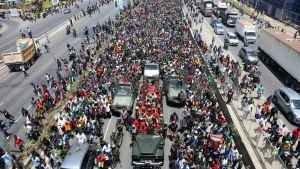
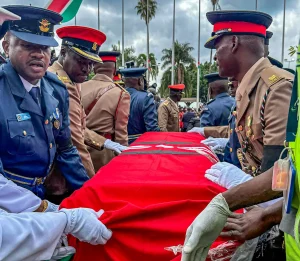
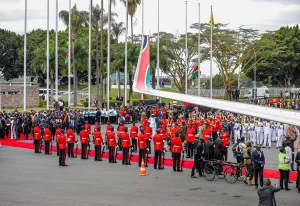
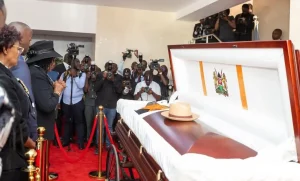
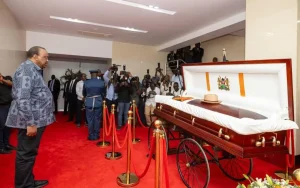
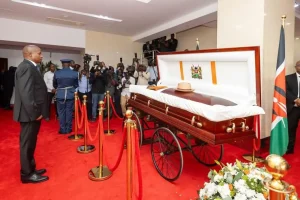
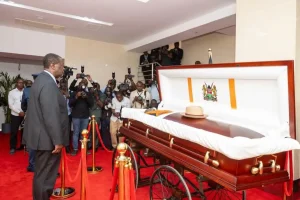
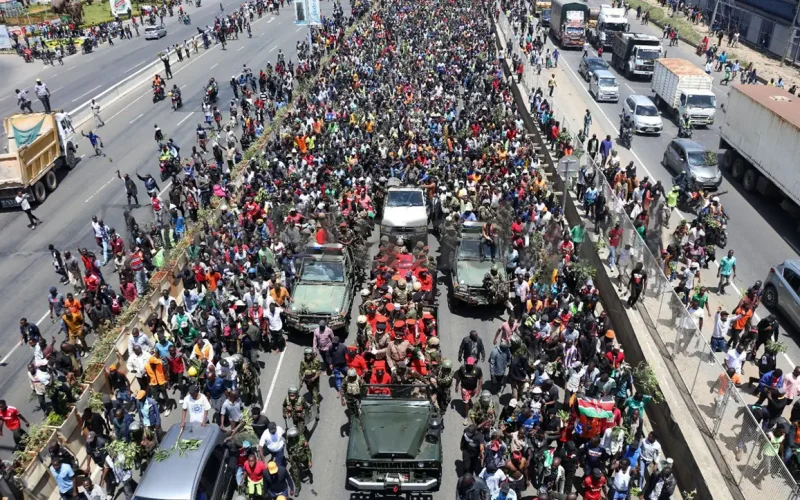
Meanwhile, 350 kilometres away in Nairobi, scenes of unprecedented national mourning unfolded as Raila Odinga’s remains arrived from Kerala, India, where he had been receiving medical treatment. The aircraft carrying Kenya’s former Prime Minister touched down to a reception that revealed the depths of a nation’s heartbreak.
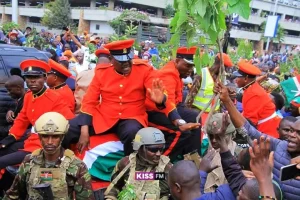
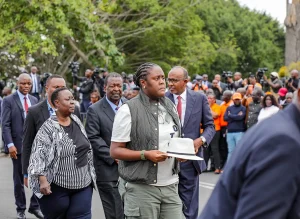
Hundreds of thousands of Kenyans lined the route from Jomo Kenyatta International Airport, transforming the city’s streets into a river of humanity. They came on foot, in vehicles, on motorcycles – streams of mourners converging from every direction. Many clutched freshly cut tree branches, waving them overhead in the traditional gesture of both welcome and farewell, the green leaves rustling like whispered prayers.
Tears flowed freely down weathered faces and youthful cheeks alike. Elderly women collapsed in grief, held up by younger relatives. Men who had stood firm through decades of political turbulence openly wept. Mothers hoisted children onto their shoulders so the young ones might witness history, might remember the day Kenya mourned its champion of the common man.
“Baba! Baba!” The cry rippled through the crowd – “Father! Father!” – the affectionate title bestowed upon Odinga by millions who saw him as more than a politician, but as a tireless defender of their hopes and dignity.
The cortege moved slowly through streets decorated with black and white bunting, the colours of mourning. Vendors abandoned their stalls. Matatus stopped mid-route. Office workers poured from buildings. Traffic came to a standstill as a nation paused to honour the man who had fought five presidential campaigns, endured detention and exile, yet never abandoned his quest for a more just Kenya.
From Kibera to Karen, from Eastlands to the city centre, the scenes repeated: massive crowds, unrestrained emotion, branches waving against the sky like a forest in prayer. Photographs of Odinga – young and defiant, older and still fighting, smiling at rallies, marching with supporters – appeared on signs, shirts, and murals hastily painted overnight.
A Legacy Written in Struggle
The outpouring reflected a life lived in service of transformation. Odinga had been detained without trial, had seen his businesses destroyed, had buried comrades and family members claimed by the struggle. Yet he remained, throughout five decades of political life, an unwavering voice for reform, for accountability, for the marginalised.
“He carried our burdens,” sobbed Mary Akinyi, a small-scale trader who had travelled from Kisumu to join the Nairobi crowds. “When we had no voice, he spoke. When we had no hope, he fought. Today, Kenya has lost its conscience.”
As evening approached in Siaya, the Tero Buru participants returned from the wilderness. The drums changed their tempo, becoming celebratory even through sorrow. The cattle, blessed and ceremonially cleansed, were driven home. The ritual was complete. The spirit of Raila Amolo Odinga, according to Luo tradition, was now free to rest.
But across Kenya, from the lakeshores of Nyanza to the streets of Nairobi, from the coast to the highlands, the living struggled with their loss. The branches still waved. The tears still flowed. And a nation prepared to bid final farewell to the man who had become, through decades of sacrifice, the embodiment of their aspirations.
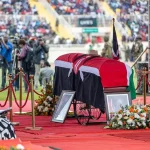
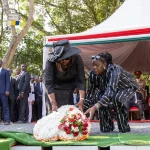
Raila Odinga is scheduled to be laid to rest on Sunday, October 19, 2025, at his Opoda home in Siaya County, where the sacred bulls were driven, where the drums beat their ancient rhythms, and where Kenya’s long struggle for democracy found one of its most steadfast champions.