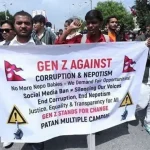
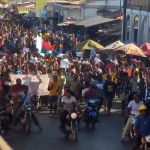
AFTER a 10-day pause, young Moroccans returned to the streets outside parliament on Saturday, marking the latest surge in a leaderless movement that is reshaping political participation across Africa and drawing uncomfortable parallels with the Arab Spring that swept through the region over a decade ago.
The protests, organised through the online collective Gen Z 212, represent a growing wave of youth-led demonstrations that have convulsed multiple African nations in recent months, from Madagascar’s largest protests in 15 years to Kenya’s tax revolts, signalling what analysts describe as a fundamental shift from electoral to participatory democracy.
“Even though we paused for more than 10 days, we are continuing, and will continue until our demands are met, not just in words but in reality,” said Reda, one of the protesters gathered in Rabat. “We want to see solutions that satisfy young people and make us feel that our daily sacrifices are worthwhile.”
A Continental Awakening
The Moroccan movement, which began on Discord following the deaths of eight women after caesarean surgeries in Agadir, has evolved into a broader challenge to government priorities. Protesters denounce plans to build World Cup 2030 stadiums while millions struggle with unemployment, failing healthcare, and crumbling education systems.
The timing is particularly sensitive for North African governments still mindful of the 2011 Arab Spring, which toppled regimes across the region after youth-led protests demanding dignity, jobs, and political reform.
But today’s movements differ in crucial ways. Unlike the Arab Spring’s often-centralised leadership, Gen Z protests are deliberately leaderless, organised through encrypted messaging apps and social media platforms, making them harder to co-opt or suppress.
“Africa’s median age is 19, but most leaders are over 60, a gulf that has left millions of young people disillusioned with traditional politics,” said political analyst John Obongi. “The young generation wants to act now and change the wrongs in the moment.”
From Digital Spaces to Street Power
The GenZ 212 movement describes itself as apolitical, focusing on tangible service delivery rather than ideological positions. This pragmatic approach mirrors successful recent uprisings in Madagascar and Nepal, where youth mobilisation forced concrete government responses.
In Madagascar, three weeks of protests over water and electricity shortages, amplified through social media, compelled President Andry Rajoelina to dissolve his cabinet on October 7. Demonstrators have continued filling the streets of Antananarivo, now demanding his resignation.
King Mohammed VI addressed Morocco’s parliament 10 days before Saturday’s protest, calling for job creation and improvements in healthcare and education. But his failure to directly acknowledge the Gen Z movement or provide specific commitments left protesters unconvinced.
“Whether this movement will bear its fruit, I think it’s very soon to tell,” said protester Naji. “There are a lot of variables that enter the equation, and a lot of things can change. But obviously, the youth are hopeful.”
Prime Minister Aziz Akhannouch has said he is “open to dialogue” as youth continue gathering daily across Moroccan cities.
Economic Pressures Fuel Discontent
The surge in youth-led protests comes against a backdrop of severe economic strain. The World Bank’s October 2024 Africa’s Pulse report directly linked Gen Z demonstrations to soaring youth unemployment, noting that Sub-Saharan Africa’s working-age population will expand by more than 600 million over the next 25 years.
“The challenge will be matching this growing population with better jobs, given that only 24 percent of new workers today land wage-paying jobs,” said Andrew Dabalen, World Bank Chief Economist for the Africa Region.
Analysts say these movements represent a fundamental shift from electoral democracy—which required waiting for presidential term limits to expire—to participatory democracy that demands immediate action regardless of political calendars.
The pattern has emerged across the continent. In Nigeria, hundreds of activists marked the anniversary of the #EndBadGovernance movement in August, demanding relief from inflation and corruption. In Kenya, Gen Z protesters who initially rejected punitive taxes have pivoted to crowdfunding infrastructure projects, including a proposed TikTok Community Hospital valued at 1.5 billion shillings.
A Movement Without Retreat
Despite the 10-day pause in Moroccan street protests, participants insist the movement has not lost momentum. The Saturday demonstration was explicitly organised to unify ranks and coordinate future actions, sending a clear message that temporary tactical pauses should not be mistaken for surrender.
“It sends a message to the authorities,” Reda emphasised. “We are continuing.”
As Africa’s youth bulge collides with ageing leadership and economic stagnation, the continent’s Gen Z has demonstrated it will no longer wait for change to arrive through traditional political channels. Whether governments can adapt quickly enough to these new forms of civic engagement—or whether the confrontations will intensify—remains the defining question for North Africa and the broader continent.