PLUMES of white teargas choked the streets of Nigeria’s capital Monday as riot police and soldiers mounted an overwhelming show of force to stamp out demonstrations demanding freedom for imprisoned separatist leader Nnamdi Kanu.
Armed officers unleashed volleys of teargas canisters and blasted water cannons at crowds attempting to rally in Abuja, while armoured trucks rumbled through sealed-off intersections in a military-style operation that transformed the city center into a lockdown zone. Heavily-armed soldiers reinforced police lines as authorities moved aggressively to prevent any gathering momentum for the banned Indigenous People of Biafra movement.
The crackdown spotlights the explosive tensions gripping Africa’s most populous nation over Kanu’s detention—now stretching into its fourth year—and the unhealed wounds of a civil war that killed over a million people more than half a century ago.
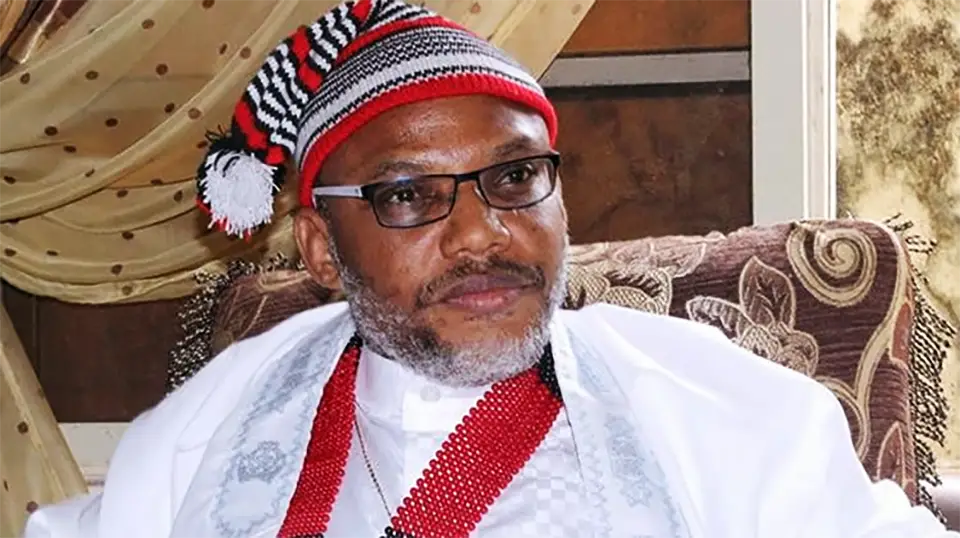
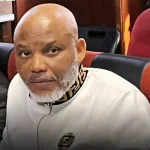
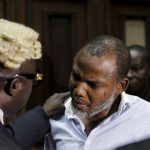
Kanu, 58, a dual Nigerian-British citizen born the same year his Igbo homeland declared itself the breakaway Republic of Biafra, faces seven terrorism charges carrying potential life sentences. From his cell, the firebrand leader of IPOB continues to galvanize supporters across Nigeria’s oil-rich southeast who view him as a freedom fighter battling decades of political marginalization and economic injustice.
His followers insist the charges are fabricated to silence legitimate grievances. The government paints a starkly different picture, branding IPOB a terrorist organization responsible for deadly violence and calling Kanu’s detention essential to preserving national unity.
The confrontation Monday laid bare the powder-keg nature of ethnic nationalism in Nigeria, where the ghost of Biafra—the secessionist republic crushed in a brutal 1967-1970 war—continues to haunt the present. IPOB’s resurgence under Kanu’s leadership, amplified through his Radio Biafra broadcasts, has rekindled separatist fervor among a new generation of Igbos who feel systematically excluded from power and resources.
Recent months have seen escalating clashes between suspected IPOB militants and security forces across the southeast, with both sides reporting casualties. The government has responded with intensified military deployments and mass arrests, while IPOB denies orchestrating violence and accuses authorities of using deadly force to crush peaceful activism.
President Bola Tinubu’s administration has pursued a hardline approach—maintaining heavy security operations while offering modest economic development programs that critics say fail to address the fundamental political grievances fueling separatist sentiment.
Human rights organizations warn the iron-fist tactics risk deepening Nigeria’s ethnic fractures and transforming Kanu into a martyr. His trial has become a lightning rod, crystallizing long-simmering resentments about resource control, political representation, and the unresolved legacy of one of Africa’s bloodiest conflicts.
As armoured vehicles patrolled Abuja’s empty streets Monday evening, the stalemate appeared entrenched: a government determined to crush separatism through force confronting a movement that shows no signs of fading, sustained by historical grievances and a charismatic leader whose imprisonment has only amplified his symbolic power.
Rights advocates increasingly call for dialogue to defuse what many fear could explode into sustained violence—but with both sides dug in, Nigeria’s Biafran question remains dangerously unresolved.