CAMEROON stands at a critical juncture as the Constitutional Council prepares to announce presidential election results Thursday morning, ending days of tense uncertainty that have gripped the Central African nation and sparked street protests over allegations of electoral fraud.
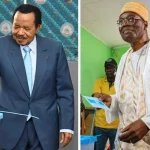
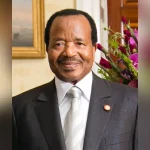
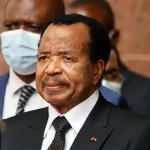
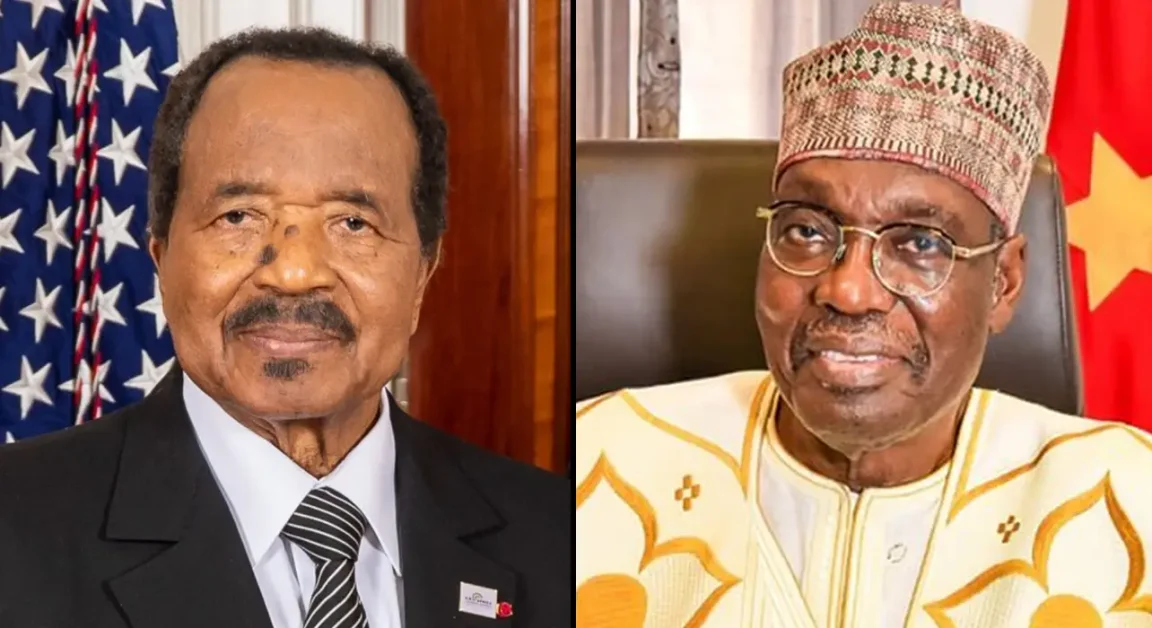
The announcement, scheduled for 10:30 a.m. at the Yaoundé Convention Center, will determine whether 92-year-old Paul Biya – the world’s oldest sitting president who has ruled Cameroon for 43 unbroken years – secures an eighth term, or whether opposition candidate Issa Tchiroma Bakary’s claims of victory will be validated.
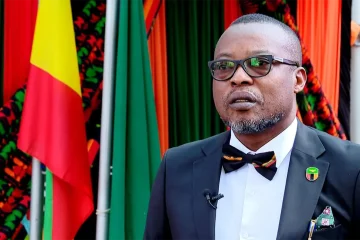
Since polls closed on October 12th, Tchiroma, 75, has repeatedly declared himself the winner based on what he claims are official polling station reports in his possession. The former cabinet minister, who served Biya for over two decades before breaking ranks in June to challenge his former boss, has called on the longtime leader to “respect the people’s mandate” and step down with dignity rather than oversee electoral fraud.
“Our victory is clear, it must be respected,” Tchiroma declared in a video from his northern hometown of Garoua that went viral on social media. His claims have drawn large crowds of supporters but fierce pushback from the government.
Grégoire Owona, deputy secretary-general of Biya’s ruling RDPC party, dismissed Tchiroma’s declarations outright, insisting he neither won nor possessed legitimate results. Minister of Territorial Administration Paul Atanga Nji went further, accusing Tchiroma of orchestrating “a cleverly planned diabolical plan with his occult networks at home and abroad aimed at setting Cameroon ablaze.” The minister had warned before the election that unauthorized release of results would constitute “high treason.”
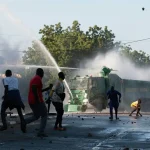
The escalating rhetoric has translated into street-level tension. By October 15th, protests erupted in several cities. In Douala, Cameroon’s economic capital, demonstrators gathered at electoral commission headquarters. In Dschang, anger turned destructive as offices of the ruling RDPC party were set ablaze – a vivid symbol of the volatile political atmosphere.
The prolonged wait for official results stems from Cameroon’s entirely manual voting system, where paper ballots must travel from individual polling stations through multiple verification points before reaching the Constitutional Council. The laborious process has stretched national nerves to breaking point and fueled suspicions of manipulation in a country where electoral integrity has long been questioned.
Biya’s extraordinary longevity in office – he is Africa’s second-longest serving leader after Equatorial Guinea’s Teodoro Obiang – has been sustained through control of government institutions including the electoral commission and judiciary. His grip was cemented in 2008 when his party abolished constitutional term limits. The 2018 election, in which he claimed over 70% of the vote, was marred by violence and mass arrests of opposition supporters who disputed the results.
Yet the once-unassailable president now appears vulnerable. Extended absences from public view and persistent health concerns have fueled speculation about succession. Even his own daughter, Brenda Biya, briefly posted a video in September urging voters not to elect her father, though she later deleted it and apologized.
The opposition’s path to victory was always steep. Maurice Kamto, who finished second in 2018 and spent ten months in detention for disputing those results, was barred from this year’s race by the electoral commission. The decision eliminated Biya’s strongest challenger and left 11 opposition candidates competing on October 12th – a fractured field that favored the incumbent.
Tchiroma, who served in multiple ministries including Communication, Transport, and Employment, emerged as the focal point of opposition hopes. As a former insider with deep knowledge of the regime, he represents both continuity and rupture – someone who can speak credibly about governance while promising reform.
His appeal extends beyond Cameroon’s borders. In Monday’s statement, Tchiroma called on neighboring Nigeria and Chad, as well as the African Union, European Union, United Nations, France, and the United States to refuse to remain silent. The implicit warning: electoral fraud could ignite instability across Central Africa, a region already grappling with militant Islamist insurgencies and separatist conflicts.
The stakes are indeed regional. Cameroon forms a critical frontline against Boko Haram and Islamic State threats, with fatalities from these groups increasing 50% in the past year. Meanwhile, a brutal separatist conflict in Anglophone regions has killed over 3,000 people, displaced nearly 700,000, and disrupted schooling for 600,000 children since 2016.
The United States Embassy in Yaoundé emphasized in July “the importance of free, fair, peaceful, and inclusive elections as a cornerstone of democratic governance and stability in Cameroon and Central Africa,” stressing that fundamental freedoms of expression and assembly must be protected.
As Thursday’s announcement approaches, Cameroon remains suspended between hope and anxiety. In a country where 60% of the population is under 25, an entire generation has never known leadership beyond Biya. For them, this moment represents either the possibility of renewal or the continuation of a status quo that has defined their nation for more than four decades.
Whether the Constitutional Council validates Tchiroma’s claims or confirms another Biya victory, the announcement will shape Cameroon’s trajectory for years to come. The question haunting the nation: will this be a historic democratic transition or business as usual under the world’s oldest president?
Cameroon, and the watching world, will have its answer Thursday morning.