RAPE is being wielded as a weapon of war in Sudan, where simply being a woman has become “a strong predictor” of hunger, violence and death, the United Nations gender equality agency has warned.
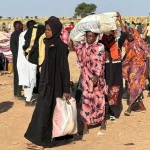
As tens of thousands flee the fallen city of El Fasher, women describe a nightmare of starvation, displacement and sexual violence so pervasive that their bodies have become “a crime scene,” according to UN Women officials.
“Pregnant women have given birth in the streets as the last remaining maternity hospitals were looted and destroyed,” Anna Mutavati, UN Women Regional Director for East and Southern Africa, told reporters in Geneva.
The Rapid Support Forces militia captured El Fasher, the capital of North Darfur state, in late October after a siege lasting more than 500 days. The fall of the city came amid reports of widespread atrocities, including summary executions and mass sexual violence.
Nearly 89,000 people have fled the area, according to UN humanitarian officials, many heading toward the Chad border or to remote towns like Tawila, 70 kilometres away, where humanitarian presence is scarce.
‘Every Step Carries Risk’
Women who escaped describe harrowing journeys where danger lurks at every turn.
“Every step that they’ve taken to fetch water, to collect firewood or to stand in a food line has carried a high risk of sexual violence,” Mutavati said. “There is mounting evidence that rape is being deliberately and systematically used as a weapon of war.”
The UN official warned that “no safe spaces” remain where women can find protection or access basic psychosocial care.
The crisis has stripped away even basic dignity. In North Darfur, a single packet of sanitary towels costs $27 – nearly one-fifth of the average $150 monthly humanitarian cash assistance provided to a family of six.
Families face “impossible decisions,” Mutavati said, “forced to choose between food and medicine and dignity. The essential needs of women and girls fall to the very bottom of that list.”
Famine’s Gendered Face
The hunger crisis afflicting Sudan bears down hardest on women and girls, who “eat the least and they eat last,” according to Mutavati.
“Most women and girls may not be eating at all in Sudan,” she said. “Women often skip meals so that their children can eat, while adolescent girls frequently get the smallest share, undermining their long-term nutrition and health.”
In besieged areas of Darfur and Kordofan, women scavenge for survival, “foraging for wild leaves and berries to boil into soup” while facing additional risks of violence.
A UN-backed food security analysis confirmed famine conditions in El Fasher and Kadugli, the capital of South Kordofan state, in early November.
Health workers report rising cases of severe acute malnutrition in infants, linked to starving mothers losing their ability to breastfeed.
“There’s a ripple effect of the hunger that women are experiencing,” Mutavati warned.
War Without End
Fighting erupted in April 2023 between the Sudanese Armed Forces and the paramilitary RSF when a transition to civilian rule collapsed, four years after the overthrow of longtime ruler Omar al-Bashir. The conflict has devastated communities, displaced millions and created one of the world’s worst humanitarian crises.
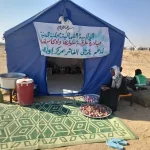
Mutavati called for an immediate end to violence, broader humanitarian access and increased support for women-led soup kitchens and other aid providers.
“Women and girls in Sudan are the measure of our shared humanity,” she said. “Every day that the world delays to act on Sudan, another woman gives birth under fire, or buries her child in hunger or disappears without justice.”