THE siege has ended, but the nightmare has only begun for the people of El Fasher. After 500 days of starvation so severe that residents resorted to eating peanut shells and animal feed, the fall of North Darfur’s capital to the Rapid Support Forces (RSF) last month has unleashed what UN officials describe as a “bloodbath” – one so extensive that satellite imagery captures bloodstains on the ground from space.
This is not hyperbole. This is the reality of a continental catastrophe unfolding in our backyard while the world looks away.
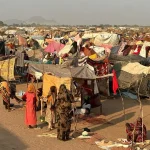
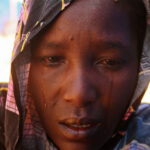
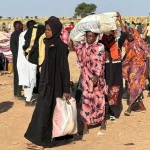
Nearly 100,000 people have fled El Fasher and surrounding villages in just two weeks. But their escape offers no guarantee of safety. Families who reached Tawila, a mere 50 kilometres away, bring accounts of “unimaginable horrors” – systematic rape, sexual violence, and ethnically-motivated executions that continue even as the international community wrings its hands.
Parents search desperately for missing children. Young men disappear into forced recruitment or languish in detention, their families unable to pay ransoms that armed groups demand. The elderly, the disabled, and the wounded remain trapped in El Fasher, either prevented from leaving by checkpoints or simply too weak to attempt the journey.
Those who do flee face a gauntlet of dangers. Some travel for 15 days with minimal food and water, navigating around military positions, only to reach Ad Dabbah – a small Nile-side town now sheltering at least 37,000 displaced people with thousands more en route. Even more disturbing: reports indicate armed groups are forcibly returning many escapees to El Fasher, trapping them in a cycle of violence.
Africa’s largest displacement crisis — and we’re not talking about it
Let that number sink in: 12 million people – more than the entire population of Rwanda or Burundi – have been uprooted from their homes inside and outside Sudan. This is the world’s largest displacement crisis, and it’s happening on African soil.
Yet it receives a fraction of the attention given to conflicts on other continents. Where is the African Union’s emergency intervention? Where is the continental solidarity that our charters promise? Where are the peacekeeping forces, the mediation efforts, the humanitarian corridors?
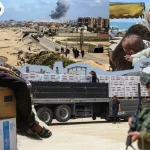
This conflict presents unique challenges that distinguish it from other African crises. According to the UN Mine Action Service, the war is primarily urban – fought in cities where civilians once lived their daily lives. Khartoum, the capital, is now a minefield of unexploded ordnance, anti-vehicle mines, and anti-personnel devices scattered among homes, schools, and markets.
In South Kordofan, West Kordofan, and Blue Nile States alone, 13 million square kilometres are contaminated with explosive remnants. Displaced families returning home face death with every step, settling in unfamiliar locations “without any awareness of past conflicts or contamination,” as UNMAS Chief Sediq Rashid warns.
The reported casualties from mines and unexploded ordnance represent only “a fraction of the true scale of the harm.” For every documented victim, countless others die unreported, their stories lost to the chaos of war.
At a special Human Rights Council session in Geneva, UN High Commissioner Volker Türk issued a stark warning to all parties in the conflict: “We are watching you, and justice must prevail.”
His words must not be empty rhetoric. African nations have a responsibility to ensure accountability. The International Criminal Court exists for precisely these circumstances — when a state cannot or will not prosecute atrocities within its borders. The evidence of mass killings, ethnically-motivated executions, and systematic sexual violence is mounting. Satellite imagery, survivor testimony, and humanitarian reports paint an undeniable picture.
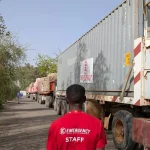
First, immediate humanitarian access. Aid organisations must be allowed to reach those still trapped in El Fasher and other conflict zones. This requires international pressure on all armed factions — pressure that should be led by Sudan’s African neighbours who have the most at stake in regional stability.
Second, safe corridors for civilians. The practice of forcibly returning people to conflict zones must end immediately, and those fleeing must be allowed safe passage to areas where they can receive protection and assistance.
Third, continental leadership. The African Union cannot remain a bystander to Africa’s largest humanitarian crisis. This requires more than statements — it demands coordinated diplomatic intervention, potential peacekeeping deployment, and serious mediation efforts to end the conflict.
Fourth, accountability. Documentation of atrocities must continue, and those responsible — on all sides — must know that justice will eventually catch up with them. African nations should support ICC investigations and any other mechanisms to ensure perpetrators face consequences.
Sudan’s catastrophe is not a distant problem. It threatens regional stability, strains neighbouring countries absorbing refugees, and represents a moral test for the African continent. The same solidarity we demand from the international community when our people suffer must be extended to our Sudanese brothers and sisters.
The bloodstains visible from space are not just a horrific detail — they are an indictment of our collective inaction. How many more people must die, how many more children must go missing, how many more families must be torn apart before Africa rises to meet this challenge?
The people of El Fasher, like all Sudanese caught in this war, deserve more than our sympathy. They deserve our action. The question is whether we will provide it before it’s too late.