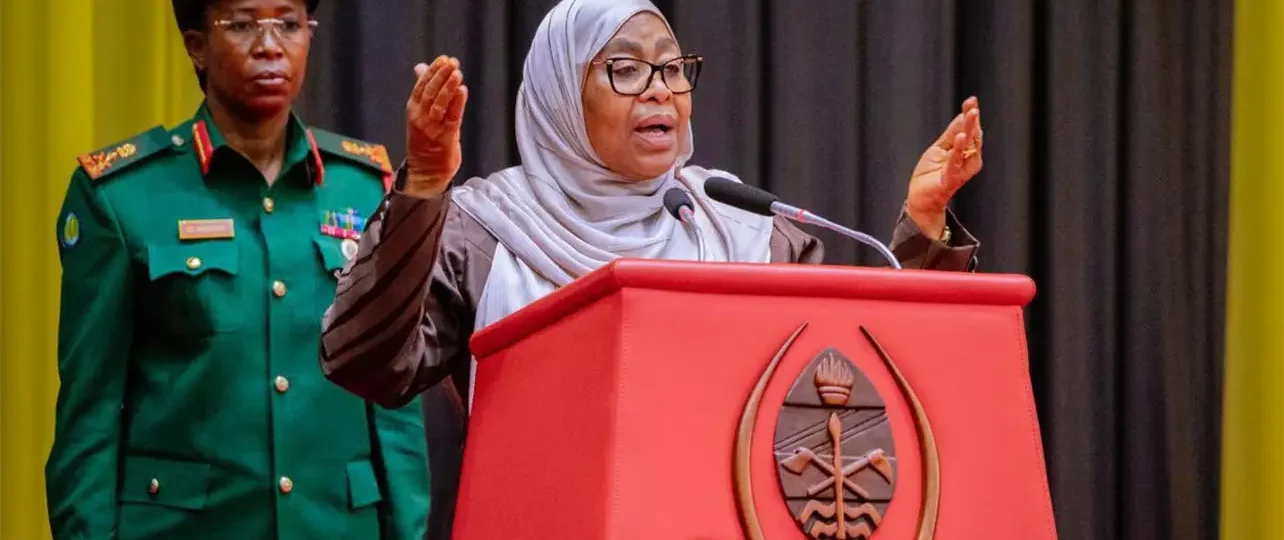

IN a defiant address that shocked international observers, Tanzanian President Samia Suluhu Hassan on Tuesday refused to apologise for security forces accused of killing thousands of unarmed protesters, instead justifying the deadly crackdown as a proportionate response to what she characterised as a foreign-funded coup attempt.
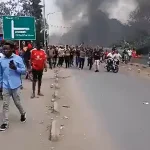
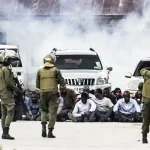
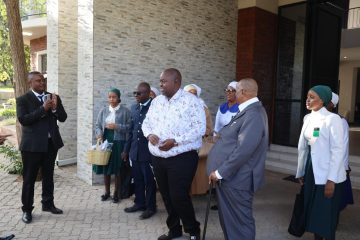
Speaking to a gathering of elders in Dar es Salaam, Hassan stood by police and military forces implicated in post-election massacres that the main opposition party CHADEMA claims killed over 2,000 people – deaths documented through satellite imagery showing signs of mass graves and CNN video evidence of police firing on unarmed demonstrators who posed no threat.
“These were not protests; it was violence with malicious intentions,” Hassan declared, alleging without evidence that young people were paid to destabilise her government. “What happened was a manufactured event, and those who planned it intended to bring down our government.”
The president’s remarks come as she faces mounting international isolation following last week’s European Parliament vote to halt direct financial support to Tanzania and consider targeted sanctions against officials responsible for the violence. Hassan responded with open contempt for foreign criticism, asking: “Those foreigners keep saying Tanzania should do one, two, three, who are you? Do they still think they’re still our masters, our colonisers?”
Hassan’s government has refused to confirm any death toll, dismissing opposition figures as “hugely exaggerated” while focusing instead on property damage. When pressed on the use of force, she challenged critics: “What was the smallest force? Were we supposed to wait until the protesters, who had planned to overthrow the government, had succeeded?”
The violence followed the October 29 elections that regional observers from the African Union and Southern African Development Community sharply criticised. Hassan claims to have won with 98% of the votes in a contest where the two main opposition parties were barred from participating on technicalities. Opposition leader Tundu Lissu has been imprisoned since April on treason charges carrying the death penalty.
In her address, Hassan dismissed widespread youth disaffection as manipulation, claiming protesters “had no reason at all to be on the streets but were just misled to sing about issues that don’t concern them”—a characterisation that ignores the fundamental democratic grievances over electoral fraud and authoritarian consolidation of power, including the appointment of family members to key cabinet positions.
An exclusive CNN investigation documented police fatally shooting unarmed protesters and identified potential mass grave sites north of Dar es Salaam through satellite imagery and eyewitness accounts. While the government rejected the reporting as “misleading,” it has not disputed any specific facts presented.
Hassan also falsely claimed the opposition refused to participate in the election, omitting that opposition candidates were systematically barred. Human rights organisations have documented a wave of disappearances, arbitrary arrests, and alleged abductions by security forces targeting government critics in the months preceding the vote.
The president’s defiant stance sets up a potentially explosive confrontation as a massive pro-democracy rally is planned for the coming days. With security forces already implicated in mass killings and Hassan signalling no restraint in her approach to dissent, the planned demonstration represents a critical test of whether Tanzania’s democracy movement can withstand what international lawmakers have characterised as systematic state violence.
Religious leaders representing both Tanzania’s Christian and Muslim communities have condemned the government’s use of force, adding moral authority to calls for accountability. The European Parliament has demanded an African-led international commission of inquiry to investigate alleged killings, enforced disappearances, and torture.
Hassan’s dismissal of international pressure as neo-colonialism marks a dramatic shift for a leader who initially raised hopes for democratic reform when she assumed office in 2021 following the death of her predecessor. Her address on Tuesday suggested those hopes have been decisively abandoned, replaced by a government willing to defend mass violence against its own citizens rather than acknowledge democratic legitimacy concerns.
As Tanzania faces international isolation and internal unrest, Hassan’s choice to double down rather than seek reconciliation raises urgent questions about the country’s trajectory and whether the planned pro-democracy rally will end in dialogue – or further bloodshed.