AS Tanzania hurtles toward what activists are calling a “megaprotest” on December 9, neighbouring Kenya has issued an urgent security advisory to its nationals living in the East African nation, warning them to shelter in place and avoid all public gatherings. The alert underscores mounting regional alarm over what has become Tanzania’s gravest political crisis in decades, a situation born from disputed elections, mass killings, and the systematic dismantling of democratic safeguards.
The Kenya High Commission in Dar es Salaam on Friday directed Kenyan citizens to remain indoors should unrest materialise, avoid large gatherings and security checkpoints, and maintain adequate supplies of food, water, and medications. The advisory comes amid reports that the situation “can change rapidly,” with potential curfews, roadblocks, ferry suspensions, and heightened scrutiny of foreign nationals already anticipated.
Kenya’s warning follows similar alerts from the United States and Israel, reflecting international concern about stability in a country once considered a regional anchor. The U.S. Embassy in Tanzania has placed its citizens on high alert since December 1, cautioning that unrest could begin as early as this weekend. American officials have warned of nationwide curfews, internet blackouts, and flight cancellations, while restricting the domestic travel of U.S. government employees beginning December 8.
A Nation Still Bleeding
The planned demonstrations seek to channel rage that has festered since Tanzania’s October 29 general election, a ballot that international observers have uniformly condemned as fraudulent. President Samia Suluhu Hassan claimed 98 percent of the vote after her two main challengers from the opposition Chadema party were barred from competing. What followed was a week of protests met with overwhelming state violence that rights groups describe as potentially the worst human rights crisis in Tanzania’s history.
The exact death toll remains shrouded in controversy and government denials, but evidence continues to mount of a massacre. The opposition Chadema party has documented between 1,000 and 2,000 deaths, while diplomatic sources suggest the figure may approach 1,000. UN human rights chief Volker Türk has called for investigations into credible reports that security forces transported bodies from streets and hospitals to undisclosed locations, allegedly to conceal evidence. Verified videos and satellite imagery analysed by international media outlets, including CNN and BBC appear to show protesters shot from behind, bodies piled in morgues, and the digging of mass graves.
The Tanzanian government has dismissed these reports as exaggerated and slanderous, with President Hassan herself blaming foreigners for the violence, claiming without evidence that those arrested were from other countries. A government-appointed commission of inquiry has been established, but the opposition has rejected it as neither independent nor impartial, demanding instead international investigations by the United Nations, the International Criminal Court, and regional bodies.
Continental Condemnation
The election itself has been repudiated by the African Union and the Southern African Development Community, whose observer missions both concluded that the polls failed to meet democratic standards. The AU mission determined that the elections “did not comply with AU principles, normative frameworks, and other international obligations and standards for democratic elections,” citing ballot stuffing, politically motivated abductions, excessive military force, and a six-day internet shutdown that compromised electoral integrity.
SADC, which rarely criticises fellow member states publicly, issued an equally damning preliminary report stating that voters “could not express their democratic will” and that the environment was characterised by violence, censorship, and intimidation. The last time SADC openly criticised an African election was during Zimbabwe’s contested 2023 polls.
Tanzania’s Catholic bishops have joined the chorus demanding an independent inquiry, while the Commonwealth has placed the country on its Formal Agenda, demanding sweeping political and human rights reforms. Ghana has become the first African state to independently call for a credible investigation into the violence.
Strategic Partnerships at Risk
The diplomatic fallout extends beyond moral condemnation. The United States has initiated what it calls a “comprehensive review” of bilateral relations with Tanzania, placing at risk a partnership valued at approximately $2.8 billion annually. The U.S. is Tanzania’s largest development partner, with investments exceeding $1 billion in the country and bilateral trade reaching $1.4 billion in 2024. American officials cited not only election violence but also concerns over religious freedom, free speech restrictions, and obstacles to U.S. investment.
A joint statement issued Thursday by 16 Western diplomatic missions, including the British and Canadian High Commissions and the EU Delegation, called on Tanzanian authorities to release bodies to families, free political prisoners, ensure detainees have legal access, and address shortcomings identified by AU and SADC observers. The missions stressed that any inquiry must be “independent, transparent, and inclusive.”
Economic Ripples Across Borders
The crisis is already disrupting regional trade. At the Kenya-Tanzania border, commerce has slowed sharply as traders report arbitrary restrictions, harassment, and an unofficial 6 PM curfew imposed on Kenyan nationals operating beyond border towns. Kenya exported goods worth 67 billion Kenyan shillings ($515 million) to Tanzania in 2024 and imported goods worth about 57 billion shillings, making Tanzania a critical market for Kenyan manufacturers and small-scale traders.
Transport operators and boda boda riders at the Taveta-Holili border post report that they can no longer access Tanzanian towns that previously offered a steady income. Similar disruptions have been reported at the Songwe and Kasumulu crossings between Malawi and Tanzania, where trucks remain stranded, customs offices have been vandalised, and fuel supplies disrupted.
December 9: Independence Day or Reckoning?
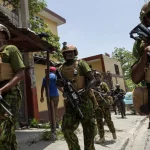
Monday’s planned protests coincide with Tanzania’s Independence Day, a date traditionally reserved for celebration but which the government has now cancelled, redirecting funds toward rebuilding infrastructure damaged during post-election violence. Tanzanian police have declared the demonstrations illegal, warning of dire consequences for those found “perpetrating chaos,” and President Hassan has vowed that security forces are prepared for whatever comes.
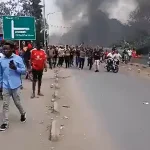
The opposition and civil society groups have called for peaceful demonstrations demanding accountability for the killings, the release of political prisoners, and fundamental electoral reforms. Fresh in their minds are the events of late October and early November, when largely youthful protesters flooded the streets of Dar es Salaam, Mwanza, Mbeya, and Arusha, only to face tear gas, curfews, and live ammunition.
Government officials, speaking anonymously to international media, have described a tiny cabal around President Hassan now exercising total control over the levers of power and repression. “People in the government are in shock, there’s disbelief,” one senior official told AFP, adding they would “end up dead” if their name was published. Even members of parliament, the official said, are paralysed by fear of security services while privately discussing the killings constantly.
A Nation Forever Changed
For decades, mainland Tanzania prided itself on relative stability in a turbulent region. That reputation lies in ruins after the October killings. Opposition members of parliament who witnessed the violence say they saw people lined up and shot multiple times by police. Civil society leaders speak of families desperately searching hospitals and police stations for missing relatives, many of whom may never be found.
“What’s clear is that Tanzania will never be the same again,” the anonymous government official told AFP. As Monday approaches, that assessment appears tragically prescient. Whether the demonstrations proceed peacefully, are violently suppressed, or fail to materialize amid fear and intimidation, Tanzania faces a crossroads between continued authoritarianism and a long, uncertain path toward genuine democratic reform.
For now, Kenya and other regional actors can only watch, warn their citizens, and hope that the violence that shocked the world five weeks ago does not repeat itself on Tanzania’s Independence Day. The stakes extend far beyond one country’s borders. What happens in Tanzania on December 9 will send a signal across a continent where youth-led protests are increasingly challenging entrenched power, and where the gap between electoral ritual and genuine democracy has never been more stark.