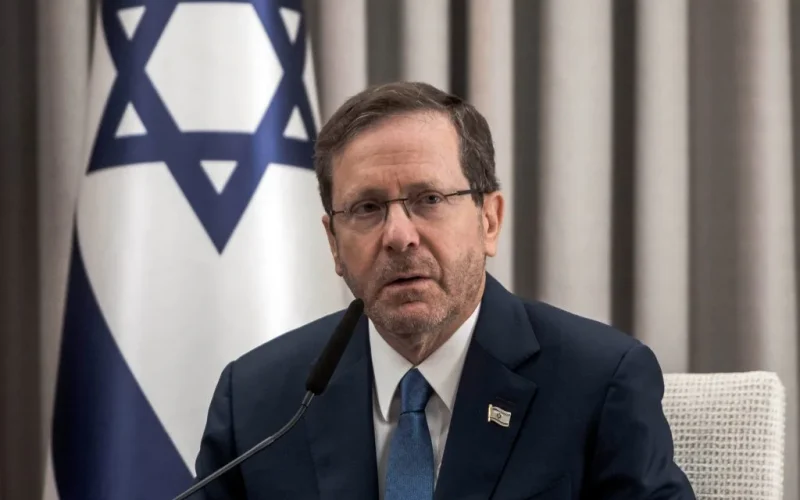
JUST one month after Israeli President Isaac Herzog declared “Africa is the future” while embarking on a historic tour of Zambia and the Democratic Republic of Congo, Israel now faces a diplomatic crisis with Ghana that exposes the fragility of its African courtship and raises fundamental questions about whether warm words can survive harsh airport realities.
The contradiction could hardly be starker. In November, Herzog became the first Israeli president to visit Zambia in a carefully choreographed diplomatic push designed to break Israel’s growing international isolation. He spoke of expanding cooperation in agriculture, technology, and innovation. Israel reopened its embassy in Lusaka after 52 years, signalling what observers called a renewed commitment to African partnerships at a moment when Tel Aviv desperately needs diplomatic allies.
Yet on December 7, at Ben Gurion International Airport, seven Ghanaian travellers – including four members of parliament attending an international cybersecurity conference in Tel Aviv – were detained for hours without justification. Three were deported. The incident prompted an extraordinary condemnation from Ghana’s Foreign Ministry, which described the treatment as “inhumane,” “traumatic,” and “deliberately targeted.”
For Ghana, a country that established diplomatic relations with Israel in 1957 – making it one of the first African nations to do so – the incident represented a profound betrayal of what the ministry called “friendly historical relations” spanning more than six decades. Foreign Affairs Minister Samuel Okudzeto Ablakwa summoned Israeli officials to Accra and announced Ghana was considering reciprocal measures. Within days, Ghana deported three Israeli nationals who arrived at Kotoka International Airport, marking a dramatic escalation.
The timing reveals the inherent tensions in Israel’s Africa strategy. Tel Aviv is courting the continent not from a position of strength but from one of increasing diplomatic isolation. As one analyst noted, Herzog’s Africa tour came as Israel faces global criticism over its conduct in Gaza, where a humanitarian crisis has left thousands dead and hundreds of thousands displaced. The International Criminal Court has issued arrest warrants for Israeli officials, and many nations have downgraded relations.
Africa represents both opportunity and necessity for Israel. The continent holds strategic importance in agriculture, technology, minerals, and voting blocs at international forums like the United Nations. Zambian President Hakainde Hichilema openly embraced what he called “economic diplomacy,” seeking Israeli expertise in agriculture and innovation. The DRC, mineral-rich and strategically positioned, offers similar potential. These are relationships Israel cannot afford to lose.
But the Ghana incident exposes the contradiction at the heart of this diplomatic push: Israel is simultaneously courting African nations while implementing airport security procedures that African travellers describe as profiling and humiliation. Ghana’s Foreign Ministry explicitly noted that its citizens were “deliberately targeted”—language suggesting systematic discrimination rather than isolated incidents.
Israel’s explanation—that Ghana’s embassy failed to cooperate during deportation procedures—was flatly rejected by Accra as “totally untenable.” Ghana insisted its mission acted fully within international law, turning what might have been a security matter into a question of respect and dignity.
The broader pattern is troubling for Israel’s African ambitions. While Herzog spoke eloquently about partnership and shared futures in Lusaka and Kinshasa, the experience of African travellers at Ben Gurion tells a different story – one of suspicion, detention, and deportation. For nations with long memories of colonialism and continued sensitivity about how their citizens are treated abroad, such incidents carry weight far beyond airport terminals.
Ghana’s response – swift, public, and reciprocal – sends a clear message to other African nations: friendship with Israel will not come at the cost of national dignity. The statement’s language was notably sharp for diplomatic discourse, describing Israeli conduct as “extremely provocative” and “inconsistent with our friendly historical relations.”
This matters because Israel’s Africa strategy depends on maintaining relationships with moderate, pro-Western African governments precisely like Ghana’s. These are nations that have historically balanced relations with both Israel and Arab states, that participate in international institutions, and that can provide diplomatic cover when Israel needs it most. Losing Ghana’s goodwill – or even seeing it publicly challenged – undermines the entire premise of Herzog’s tour.
The incident also arrives at a moment when African nations are reassessing their international partnerships. China and Russia have made significant inroads on the continent, offering infrastructure investment and diplomatic support without the baggage of Western criticism. Gulf states are expanding their African presence. Israel’s value proposition – agricultural technology, security cooperation, innovation partnerships – must compete in an increasingly crowded marketplace.
What the Ben Gurion incident reveals is that diplomatic tours and embassy openings cannot substitute for consistent, respectful treatment of all citizens. African leaders may welcome Israeli investment and expertise, but they will not tolerate their parliamentarians being detained at airports without cause. The optics alone are devastating: lawmakers invited to a cybersecurity conference, presumably to strengthen ties, instead become diplomatic incidents.
For Israel, the lesson should be clear. Courting Africa requires more than presidential visits and embassy reopenings. It demands institutional changes in how African travellers are treated, genuine partnership rather than transactional relationships, and recognition that respect cannot be compartmentalised – extended in presidential palaces but withheld at airport immigration counters.
Ghana’s forceful response may actually serve Israel’s long-term interests if it prompts serious reflection. Other African nations are watching. They are noting which countries stand up for their citizens’ dignity and which quietly accept mistreatment in exchange for aid or investment. In an era when African nations have more diplomatic options than ever, Israel cannot afford to lose partners over preventable airport incidents.
The question now is whether Israel will treat the Ghana incident as an aberration to be smoothed over with diplomatic apologies, or as a warning sign that its Africa strategy contains a fundamental contradiction. Can you simultaneously court nations as partners while subjecting their citizens to treatment those nations describe as inhumane? Can warm words in presidential speeches overcome cold realities at immigration counters?
Herzog’s declaration that “Africa is the future” rings hollow if African travellers experience present-day discrimination. For Israel’s African ambitions to succeed, the welcome extended to presidents must extend to all citizens—including those arriving at Ben Gurion Airport with conference invitations and parliamentary credentials.
Ghana has drawn a line. Other African nations are watching to see if Israel will respect it.