
BOTSWANA has become the latest African country to sign a major health cooperation agreement with the United States, joining a growing list of nations entering controversial partnerships that have sparked alarm over data sovereignty and citizen privacy rights.
The US Embassy in Botswana announced a P1.3 billion (approximately $95 million) health cooperation Memorandum of Understanding under Washington’s “America First Global Health Strategy” — the same framework that triggered a legal challenge in Kenya, where a High Court has suspended implementation over concerns about transferring citizens’ intimate medical data to foreign control.
Ethiopia separately signed a $1.466 billion health cooperation deal with the United States, marking what officials described as “a new five-year chapter” in relations between the two countries.
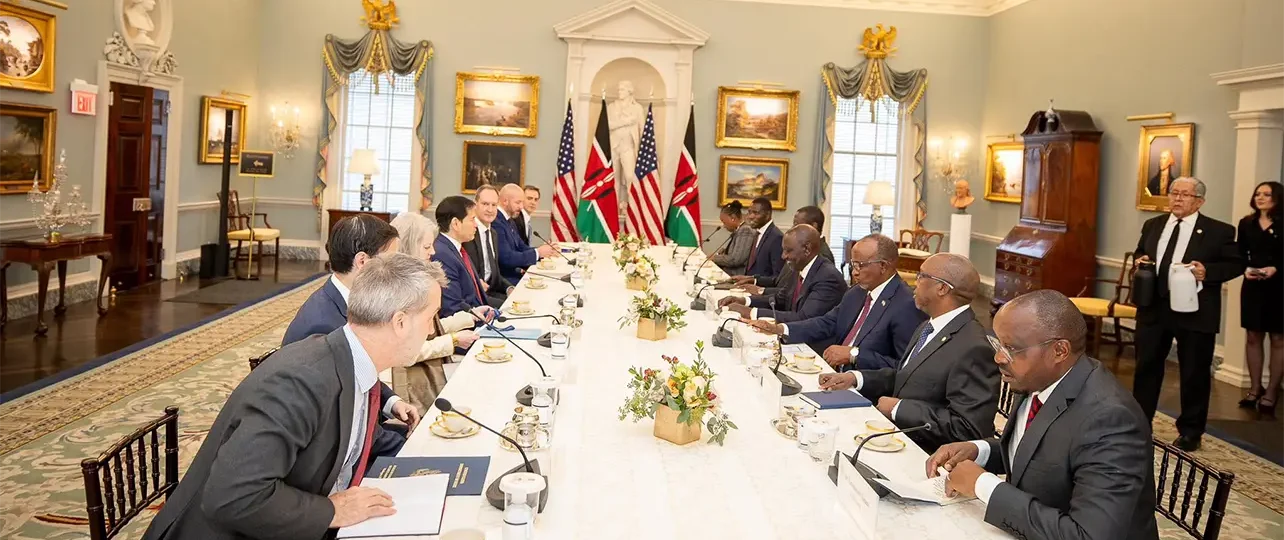
The announcements come as Kenya’s December 4 agreement — a $2.5 billion framework signed at the White House — remains frozen following swift judicial intervention that has sent shockwaves across the continent about the terms of these partnerships.
Kenya’s Court Intervention Sets Precedent
Justice Bahati Mwamuye of the Nairobi High Court issued a conservatory order halting any transfer of personal medical or epidemiological data from Kenya’s $2.5 billion health deal, suspending implementation “with immediate effect” until a full hearing next year.
The intervention came after the Consumer Federation of Kenya filed a petition warning that once citizens’ health records leave national borders, “the harm becomes permanent and irreversible.” The legal challenge exposed what critics characterise as insufficient safeguards over who controls, accesses, and profits from Kenyan citizens’ personal health information once transferred abroad.
“Neither this honourable court nor Kenyan regulators would have the power to recall, restrict, or oversee how such data is used overseas,” the petitioners argued, cutting to the heart of data sovereignty concerns rippling across Africa.
A Pattern Emerges Across the Continent
Rwanda and Uganda had already entered comparable pacts under the Trump administration’s restructured foreign aid architecture before Kenya’s suspension. With Botswana and Ethiopia now joining, the emerging pattern raises questions about the terms African nations are accepting in exchange for American health funding.
These agreements replace decades of US Agency for International Development programs dismantled earlier this year by the Trump administration. The new bilateral framework requires recipient countries to increase domestic health spending while accepting American funding, with emphasis on faith-based healthcare providers and what Washington describes as “country-led sustainability.”
Kenya’s deal promised $1.7 billion in American funding — with Kenya contributing $850 million — to combat HIV/AIDS, malaria, and tuberculosis over five years. The specifics of Botswana’s and Ethiopia’s agreements regarding data handling and sovereignty protections remain unclear.
The Privacy Stakes
Medical data represents some of the most sensitive personal information citizens possess. HIV status, genetic information, mental health records, and reproductive health details — once transferred abroad — could enable discrimination, surveillance, and exploitation if mishandled or accessed without consent.
Justice Mwamuye’s order demands that “decision-making informed by Kenyan health data must be public, auditable and jointly supervised, with consumer representatives involved in data processing, monitoring and evaluation, and independent oversight,” according to the Consumer Federation.
President William Ruto sought to calm fears, insisting his Attorney General had examined the agreement “with a fine-tooth comb” to ensure “the law that prevails on data that belongs to the people of Kenya is the Kenyan law.” Yet the court found those assurances insufficient to override citizens’ immediate privacy interests.
Continental Alarm
Civil society groups across Africa have issued an open letter to African heads of state warning that, beyond data risks, these agreements could grant Washington “undue leverage” over African governments and enable human rights violations.
The concern centres on a fundamental question: At what point does economic partnership cross into sovereignty surrender? The Kenyan case illuminates tensions emerging across the developing world as Western powers increasingly seek health data partnerships alongside traditional aid.
While proponents argue such cooperation enables better disease surveillance and treatment protocols, critics see a new form of extractive relationship — one trading not natural resources, but the intimate details of citizens’ lives.
Democratic Safeguards or Geopolitical Imperatives?
The Kenyan court’s action demonstrates democratic institutions providing a check on executive power when citizens’ fundamental rights appear threatened. For President Ruto, the suspension represents an embarrassing reversal of a deal signed with ceremony at the White House. For Kenyan citizens, it may represent the difference between partnership and subjugation in the digital age.
Justice Mwamuye’s order will remain in effect until a full hearing, giving civil society groups time to argue that the agreement violates Kenyan data protection laws and constitutional rights to privacy.
The outcome will likely reverberate beyond Kenya’s borders as Botswana, Ethiopia, and other African nations with similar agreements confront the same fundamental question: How much control over citizens’ most personal information should governments cede in pursuit of foreign aid?
As these billion-dollar deals multiply across the continent, the absence of public debate about data protections in Botswana and Ethiopia — compared to Kenya’s judicial intervention — underscores what critics describe as inadequate scrutiny of agreements that affect entire populations’ most intimate information.