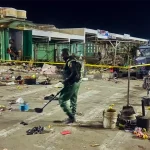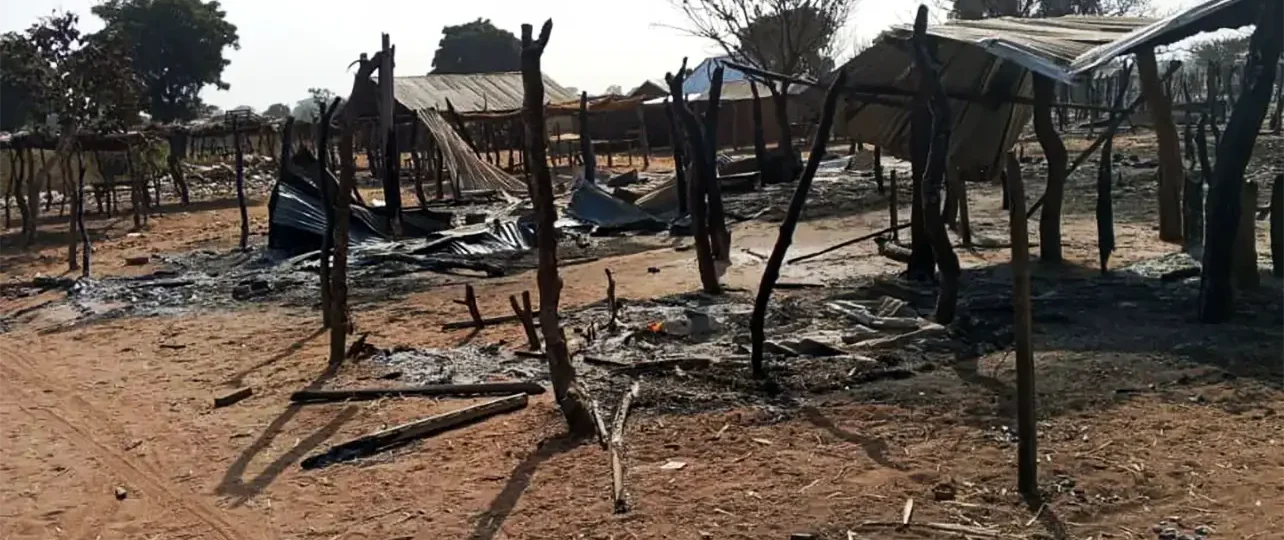

THE smoke had barely cleared from last week’s rare joint US-Nigeria bombing operation when the terrorists struck again. On Saturday, gunmen descended on Kasuwan Daji market in Niger State’s Demo village, turning a place of commerce into a killing field. At least 30 people lay dead, stalls reduced to ash, and an unknown number of victims dragged into the forest – another grim tally in Nigeria’s seemingly endless war against banditry and terror.
For President Bola Ahmed Tinubu, the attack demanded another urgent summons, another round table with military chiefs, another vow that would echo those made countless times before. “These terrorists have tested the resolve of our country and its people,” he declared, ordering the Minister of Defence, Chief of Defence Staff, Service Chiefs, and security directors to hunt down those responsible. “They must face the full consequences of their criminal actions.”
But the question hanging over Nigeria is no longer about resolve – it’s about results. How many times can a president promise that no stone will be left unturned before the ground itself seems exhausted?
The Kasuwan Daji massacre follows a pattern that has become horrifyingly familiar. The attackers arrived on motorcycles, opened fire indiscriminately, and fled with hostages. Women and children were not spared. Witnesses spoke of panic, of bodies still being recovered hours later, of a security vacuum so complete that residents reported no visible military presence even as the violence unfolded across multiple communities since Friday.
This is Nigeria’s singular enemy: not a conventional army that can be bombed into submission, but a hydra-headed network of armed groups that melt into forests, strike soft targets, and thrive in the spaces where the state’s authority has withered. Last week’s bombing may have inflicted casualties, but it clearly did not inflict deterrence.
Yet amid the carnage, there are fragments of success that complicate the narrative of complete failure. Just weeks ago, more than 300 schoolchildren and staff were abducted in Niger State and held for nearly a month – a mass kidnapping that sent shockwaves across the nation. Their eventual rescue represented a rare victory for Nigerian security forces, proof that when resources are mobilised and intelligence is actionable, results can be achieved. President Tinubu’s directive to urgently rescue the latest victims reflects both that capability and the recognition that time is always the enemy in hostage situations.
The government has also recorded other rescue operations in recent months, pulling victims from the clutches of bandits before ransom negotiations could enrich the criminal networks further. These successes matter, even if they are overshadowed by the relentless drumbeat of new attacks.
But rescuing victims is not the same as preventing their abduction in the first place. It is crisis management, not security. And as the violence escalates across northwestern and central Nigeria, the uncomfortable truth is that the military appears stretched beyond its capacity to provide the kind of persistent presence that would make markets, schools, and villages genuinely safe.
President Tinubu’s words carry the weight of moral clarity: “We must stand together as one people and confront these monsters in unison.” He has promised not only to pursue the attackers but also “those who aid, abet, or enable them” – an acknowledgement that these networks rely on local collaboration, whether through coercion or complicity. His call for intensified security operations around vulnerable communities, especially near forests where bandits find sanctuary, is a necessary response.
But promises, however resolute, are not strategies. And strategies, however sound, mean nothing without the boots on the ground to execute them. Nigeria’s security forces face an enemy that knows the terrain better, moves faster, and strikes where defences are weakest. Bombing raids can destroy camps and kill fighters, but they cannot occupy space, reassure communities, or prevent the next motorcycle convoy from materialising out of the bush.
The question facing Nigeria is not whether its leaders have resolve – President Tinubu’s anger and determination are evident. The question is whether resolve, even backed by American firepower, is enough to defeat an enemy that has proven endlessly adaptable, deeply embedded, and willing to target the most vulnerable.
As bodies are laid to rest in Demo village and families wait desperately for news of the abducted, Nigeria confronts a sobering reality: in this war, there are no final victories, only the grinding work of denying terrorists sanctuary, one forest at a time, one rescued hostage at a time. The stones President Tinubu vows to turn over are many. Whether enough can be turned fast enough to reclaim peace for communities under siege remains the defining challenge of his presidency.
May the souls of the departed rest in peace.