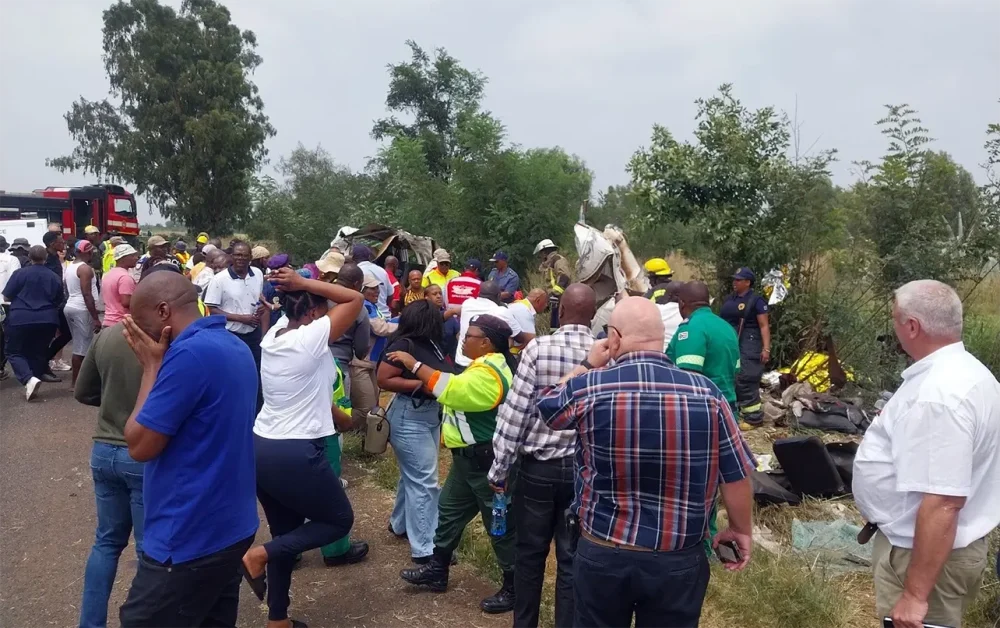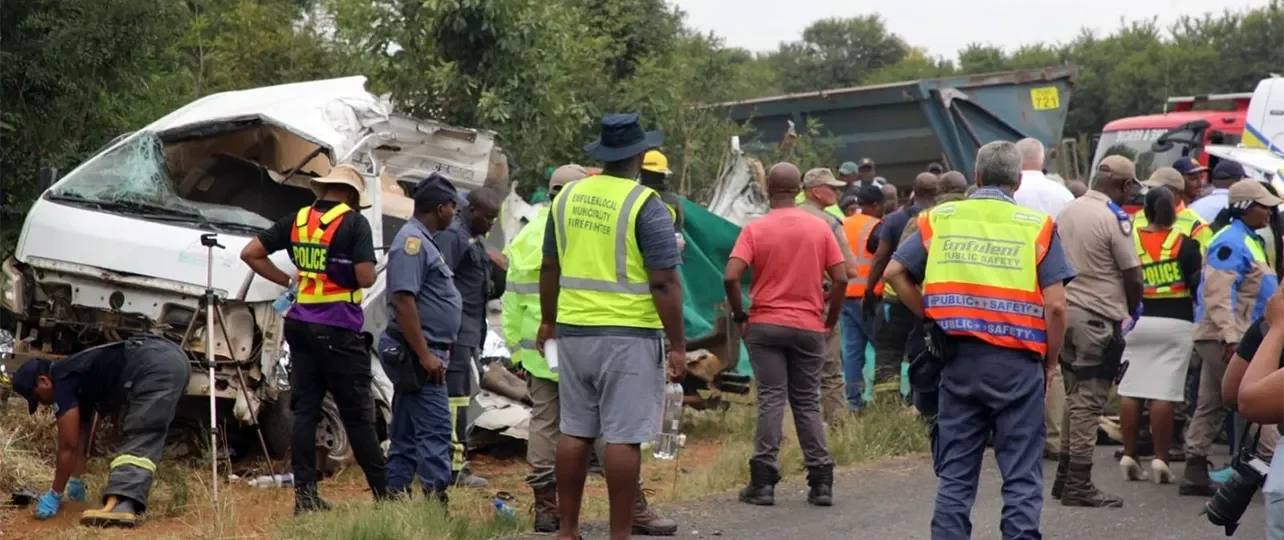

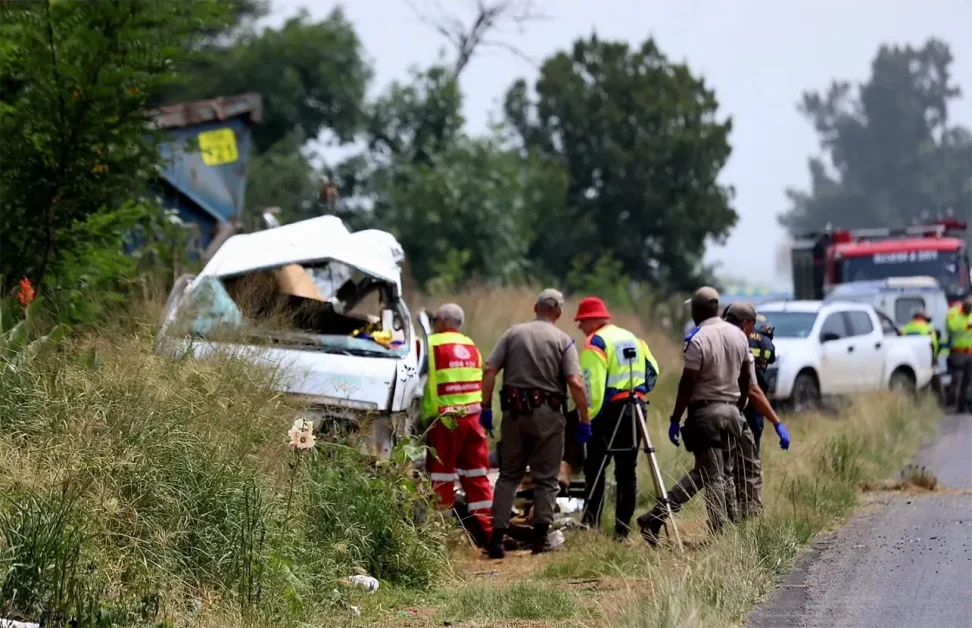
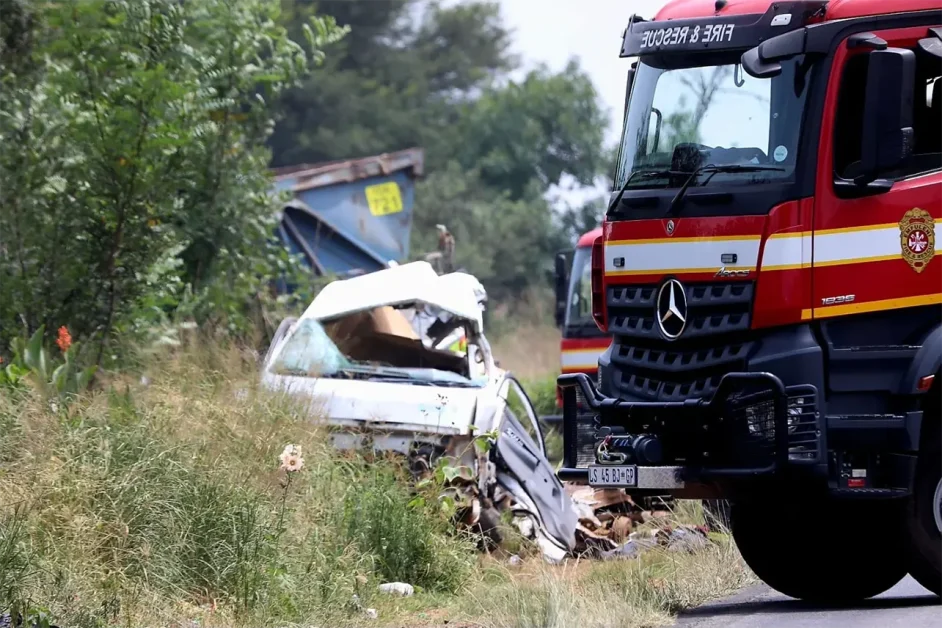
A mangled white minibus taxi lies crumpled on a Vanderbijlpark roadside, its twisted frame and shattered windows bearing mute testimony to the catastrophic violence of Monday morning’s collision. The vehicle’s grotesque distortion – metal bent at impossible angles, seats torn from their moorings, broken glass scattered like deadly confetti across the tarmac – tells the story that official statistics cannot: how thirteen young South African lives were extinguished in an instant on what should have been an ordinary school commute.
Emergency vehicles surrounded the wreckage, their flashing lights casting urgent red and blue shadows across a scene of devastation. Paramedics worked with desperate intensity, fighting to save limbs and lives as five critically injured learners clung to survival. The frantic activity spoke to the thin line between life and death on South Africa’s roads, where every second counts and every intervention matters.
But for thirteen families, the battle was already lost. The crumpled minibus marked not just the site of a traffic accident, but the beginning of an unbearable period of grief – thirteen sets of parents who must now undertake the harrowing task of planning funerals for children who left home that morning with schoolbags on their backs and futures ahead of them.
The collision between the school transport minibus and a side-tipper truck has thrust South Africa’s haemorrhaging road safety crisis into brutal, undeniable focus. With 11,418 road deaths recorded in the previous year, more than 31 fatalities daily, the nation’s roads have become killing fields where the country’s most precious assets, its children, are paying the ultimate price for systemic failures in enforcement, infrastructure, and accountability.
A Crisis Written in Blood
The modest 6% decline in road deaths offers cold comfort to the bereaved families of Vanderbijlpark, whose children became statistics in a crisis that shows no signs of abating. South Africa’s Transport Minister Barbara Creecy’s proposal last week to eliminate blood alcohol limits entirely in favour of zero-tolerance legislation signals growing official recognition that incremental measures have failed catastrophically.
Yet Monday’s tragedy exposes deeper fault lines: the deadly mixing of heavy commercial vehicles with passenger transport on congested routes, the vulnerability of scholar transport systems, and enforcement mechanisms too weak to deter the reckless driving, speeding, and alcohol-impaired operation that officials identify as major contributors to the carnage.
A Community in Mourning, A Nation Asking Questions
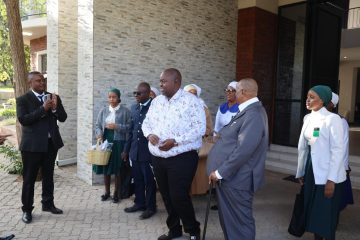
Gauteng Premier Panyaza Lesufi and Education MEC Matome Chiloane stood at the crash site, confronting the physical evidence of systemic failure. “It really is a tragic day for us as the Department and the province,” Chiloane said, his words inadequate against the magnitude of loss. His call for “greater vigilance when it comes to scholar transports, particularly private scholar transport” echoes with painful irony, vigilance demanded after thirteen children have already paid with their lives.
President Cyril Ramaphosa noted the “particularly distressing” timing: the collision occurred on the same day the South African Human Rights Commission published a damning report on scholar transport in the North West. The coincidence underscores how warnings go unheeded, reports gather dust, and children continue to die while authorities promise psychosocial support to families and schools left to pick up the pieces.
“Our children are the nation’s most precious assets, and we must do all we can,” the President said, promising protection that came too late for thirteen young people whose futures ended in twisted metal on a Vanderbijlpark road.
The Unanswered Questions
As police investigate the circumstances of the crash, officials are left grappling with questions that transcend this single tragedy: How many more children must die before scholar transport regulations match rhetoric? When will enforcement mechanisms gain teeth sharp enough to deter the dangerous behaviours killing thirty-one South Africans daily? Can a nation that loses its children on morning school runs truly claim to value their lives?
Thirteen families now face the incomprehensible task of selecting caskets, writing eulogies, and burying dreams along with their children. Thirteen schools will hold memorial services where classmates struggle to comprehend empty desks. Thirteen sets of school uniforms will never be worn again.
The mangled minibus remains, for now, a metal monument to questions South Africa can no longer afford to leave unanswered – and to young lives the nation could not afford to lose.