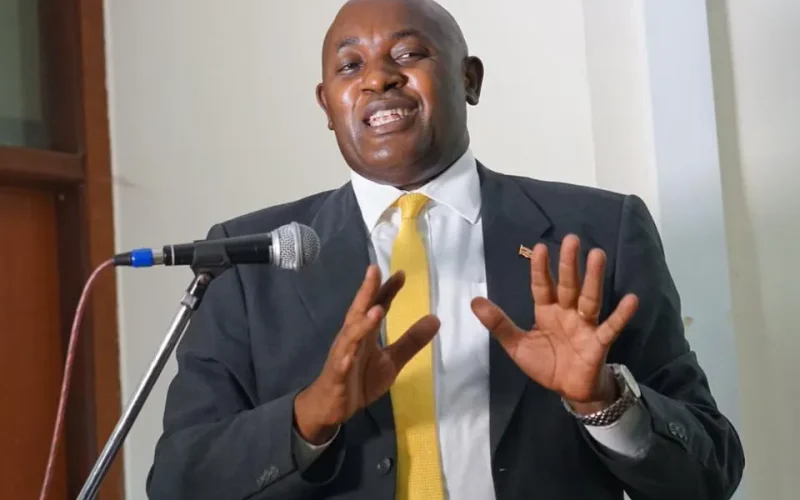
IN the ruthless calculus of Ugandan politics, where power flows exclusively from the Museveni dynasty, Information Minister Chris Baryomunsi has just committed the ultimate act of career self-immolation: he publicly contradicted the President’s son.
Baryomunsi condemned the military raid on opposition leader Bobi Wine’s home, stating that the popstar-turned-politician had not committed any crime and was free to return there. This measured critique of security forces’ conduct following Uganda’s disputed January 15 presidential election would be unremarkable in any functional democracy. In Museveni’s Uganda, it was political suicide.
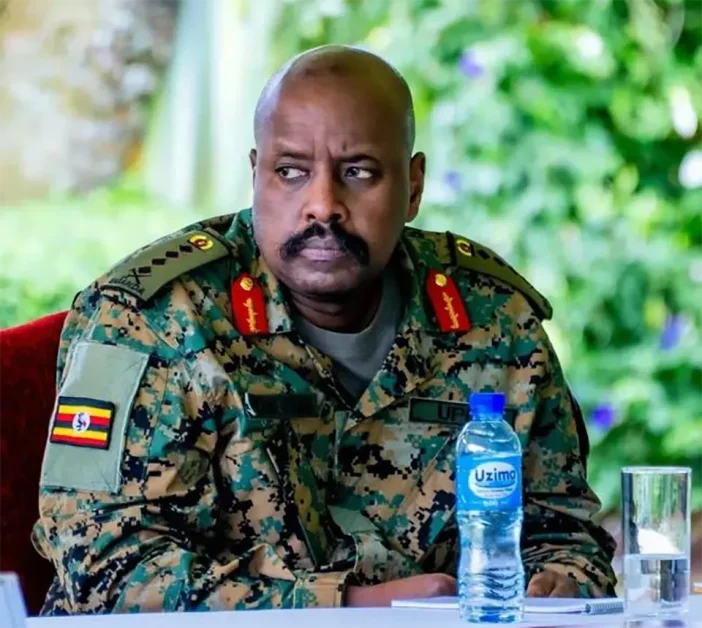
The minister’s transgression wasn’t merely that he questioned military overreach – it was that he did so while General Muhoozi Kainerugaba, Chief of Defence Forces and President Museveni’s heir apparent, was actively orchestrating the crackdown. Muhoozi had posted on social media that the military was searching for Wine, though he never specified what charges might be brought.
The rupture between Baryomunsi and Muhoozi had been building for weeks through an increasingly toxic social media war. The Communications Minister had made the fatal error of trying to contain the diplomatic damage from Muhoozi’s inflammatory online pronouncements, which included threatening to suspend all cooperation with the U.S. Embassy and accusing American officials of helping Bobi Wine escape.
Speaking on a political talk show, Baryomunsi attempted damage control with brutal honesty about his predicament. He revealed he had complained to President Museveni that Muhoozi’s tweets were complicating his job as government spokesperson, adding that the general’s posts should not be considered official policy but rather personal commentary.
This pragmatic attempt at institutional clarity proved catastrophic. Muhoozi responded on X by branding Baryomunsi a “traitor” and declaring he would “never be a Minister again”. The CDF escalated further, telling the minister he should be “more worried about jail” and threatening to arrest him if he mentioned Muhoozi’s name again.
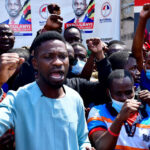
Baryomunsi’s condemnation of the Bobi Wine raid must be understood against the backdrop of extraordinary military brutality following the January election. Reports emerged of the detention of at least three top National Unity Platform leaders, arrests of over 2,000 opposition supporters, and claims of at least 30 killed.
Wine himself has been in hiding since fleeing his Kampala home hours before being declared runner-up to Museveni. Wine said soldiers entered his residence, with his wife requiring hospital treatment following the incident. Most disturbingly, Muhoozi posted a photo showing an armed military officer standing over Wine’s wife during the raid, a chilling display of state power.
While Prime Minister Robinah Nabbanja insisted no one was looking for Bobi Wine and characterised his hiding as “political theatrics,” Muhoozi’s deleted tweets told a different story. He had posted that Wine was wanted “Dead or Alive” and boasted about security forces killing opposition supporters.
To his credit, Baryomunsi refused to grovel. In a defiant response, he wrote that he rose to prominence through his own abilities, not patronage, adding that being a minister was “not necessarily the best thing in life.” He invoked what he called “Peter Pan Syndrome” – a pointed psychological jab suggesting Muhoozi’s behaviour reflected adult immaturity and inability to accept responsibility.
This courage, however admirable, only confirms his political obituary. In Uganda’s patronage system, where the President appoints all ministers and routinely shuffles cabinets to maintain control, Muhoozi’s declaration carries the weight of prophecy. The general is widely understood to play a role in ministerial selections and is positioned as his father’s successor.
Baryomunsi’s downfall sends an unmistakable signal throughout Uganda’s ruling establishment: there is no space, even for senior government officials, to question military conduct, especially when that military is commanded by the President’s son and probable heir.
The minister’s criticism of the Bobi Wine raid, though couched in careful bureaucratic language about “acts of indiscipline,” represented an intolerable challenge to the architecture of impunity that underpins the Museveni regime’s longevity. For forty years, the military has been the ultimate enforcer of NRM rule, and attempts to impose civilian accountability remain career-ending heresies.
As Uganda’s opposition faces systematic repression, its international isolation deepens, and succession politics intensify, Baryomunsi has become an object lesson in the costs of principled dissent, even from within. His next cabinet reshuffle will almost certainly be his last.
The minister may have found his conscience on the Bobi Wine issue. In doing so, he has also found his ticket out of Ugandan politics.