
IT was supposed to be a prayer. Instead, it became a portrait of power.
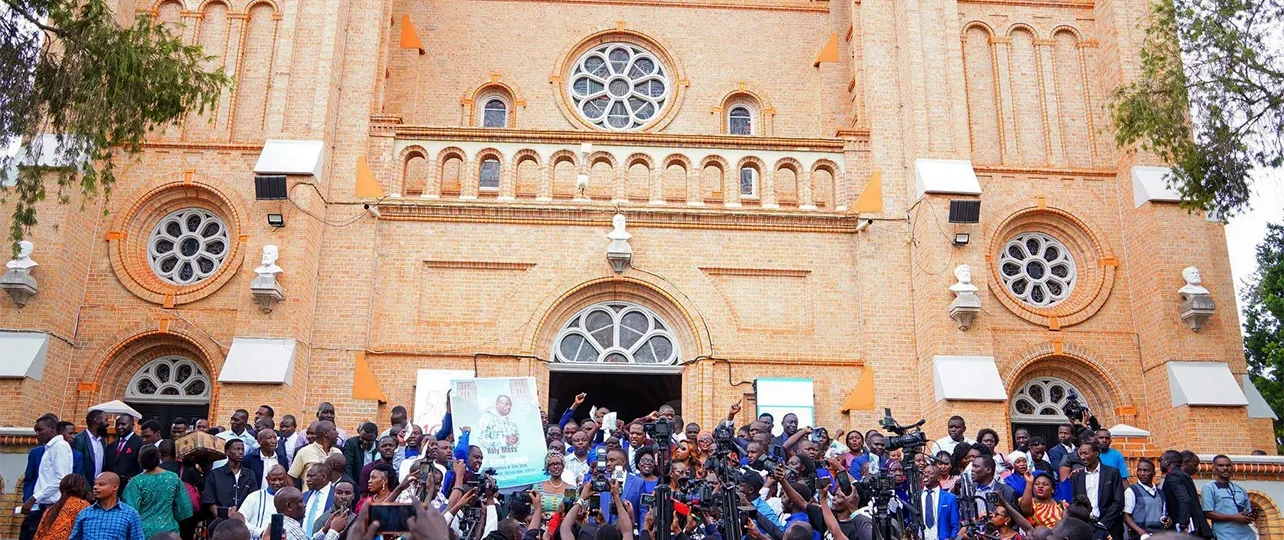
On Monday evening, Ugandans who had gathered at Lubaga Cathedral – one of the most storied Catholic churches in East Africa, perched on one of Kampala’s seven hills – found themselves frozen in the threshold of something that many said they had never witnessed in their lifetimes: a sitting president personally calling an archbishop to stop a mass.
Not a political rally. Not a protest march. A prayer service for a sick man behind bars.
The reverberations have not stopped since.
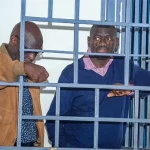
The sequence of events, as reconstructed from multiple accounts, is as stark as it is extraordinary. A mass had been organised at Lubaga Cathedral, the seat of the Kampala Catholic Archdiocese, to pray for Dr Kizza Besigye – the veteran opposition leader and former physician who was abducted from Nairobi, Kenya by Ugandan military operatives fourteen months ago – and for other political prisoners held alongside him.
Besigye’s wife, Winnie Byanyima, the United Nations Development Programme chief and one of Africa’s most prominent diplomats, was to lead the gathering. It was, by any measure, a pastoral act – a congregation of the faithful interceding before God for a man whose health is said to be deteriorating in detention.
Then the phone rang at the Archbishop’s residence.
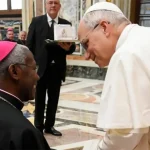
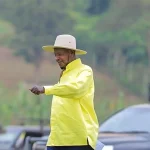
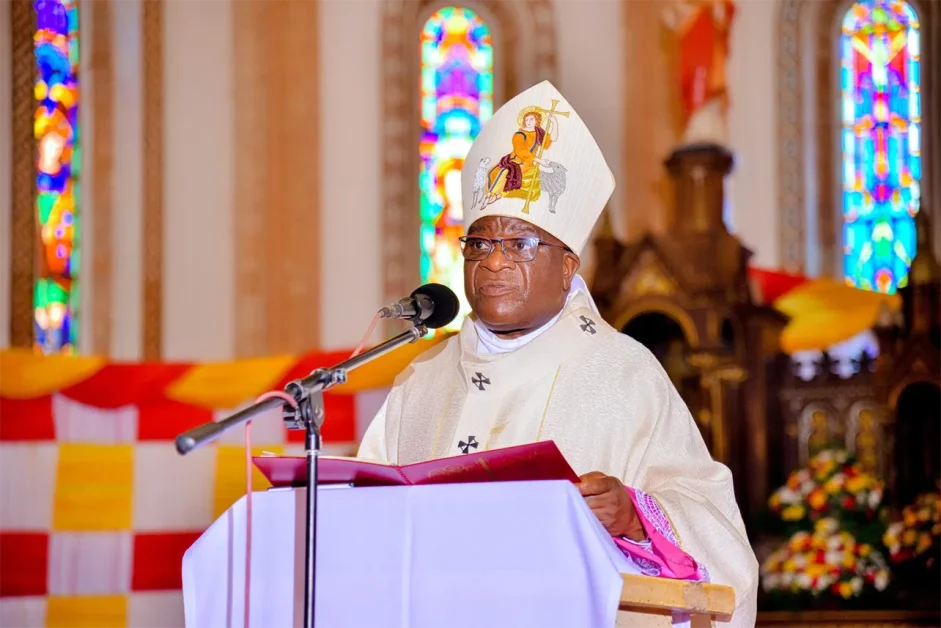
According to Byanyima, who addressed journalists after the cancelled service, Archbishop Paul Ssemogerere summoned her and informed her that President Yoweri Museveni had personally called him. The President’s message: the prayers were not to proceed until he had satisfied himself that they were not political in nature. In effect, the head of state had appointed himself the arbiter of what prayers were permissible in a house of God.
The Archbishop complied.
“Museveni is the coward who orders religious clerics to cancel holy mass for sick people who are imprisoned unjustly for their political opinions,” Byanyima said, her voice carrying the fury of a wife, a citizen and a diplomat who has seen the machinery of repression up close. “Even when he is sick and unjustly imprisoned, Dr Besigye continues to expose Museveni’s oppression.”
And then, channelling the defiant spirit of liberation movements past, she added: “La luta continua.”
To understand the weight of what happened at Lubaga Cathedral on Monday, one must understand what that building means to Uganda.
Lubaga is not merely a church. It is a monument to the Ugandan Martyrs, to colonial resistance, to the idea that even under the most brutal of temporal authorities, there exists a higher jurisdiction. It is the kind of place where Ugandans have historically gone when the streets were too dangerous, and the courts were too compromised. When everything else failed, the Church endured.
Until Monday evening.
“What happened at Lubaga Cathedral today is most unfortunate,” said David Lewis Rubongoya, a senior opposition figure. “History will remember how an Archbishop of the Catholic Church received a call from Gen. Museveni ordering him not to conduct a mass for Dr Kizza Besigye and other political prisoners.”
The symbolism is almost too heavy to carry. Museveni, who has ruled Uganda for 39 years and who has systematically dismantled or co-opted every independent institution that rose to challenge him, the courts, the parliament, the press, and the security apparatus, had now reached his hand into the last space that many Ugandans believed remained beyond his grasp.
Miria Matembe, a former minister and longtime civil society voice, told NTV Uganda that she was not surprised Museveni moved to stop the prayers. “He acts out of fear,” she said. But she admitted she was deeply troubled by something else entirely: that the Archbishop appeared to give in to that fear without a fight.
The Ghost of Janani Luwum
The timing carries a historical irony so sharp it cuts.
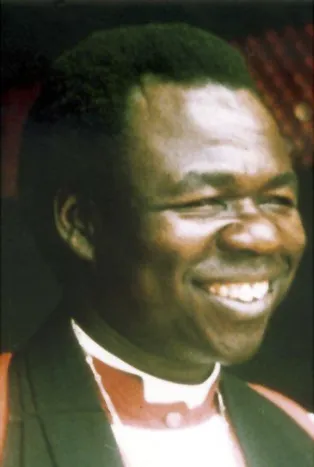
Just days before Monday’s events, Uganda had commemorated Archbishop Janani Luwum – the Anglican church leader murdered by Idi Amin’s regime in 1977 after he dared to confront the dictator over human rights abuses. Luwum walked into Amin’s trap knowing, by most accounts, that it could cost him his life. He went anyway. He is remembered as a martyr and a moral giant.
Uganda was still digesting the lessons of that commemoration when Museveni picked up the phone to call Ssemogerere.
“The juxtaposition is striking,” wrote commentator Mordecai Muriisa in an analysis that spread rapidly on social media. “The memory of resistance celebrated, while present-day restraint prevails.”
The contrast is not merely symbolic. It poses a direct and uncomfortable question to the Ugandan Catholic Church: if the presidency now dictates who may be prayed for, who may be mentioned at the altar, and which gatherings of the faithful are politically acceptable, then what precisely remains of ecclesiastical independence? And if the Church cannot provide sanctuary to the sick and the imprisoned, to whom does it belong?
The Man Being Prayed For
Behind all the politics and symbolism is a human being.
Kizza Besigye, 68, was once Museveni’s personal physician during the bush war that brought the current president to power in 1986. He was his comrade, his confidante, his friend. He later became his most formidable political opponent – running against Museveni in four presidential elections, each one marked by arrests, tear gas and disputed results.
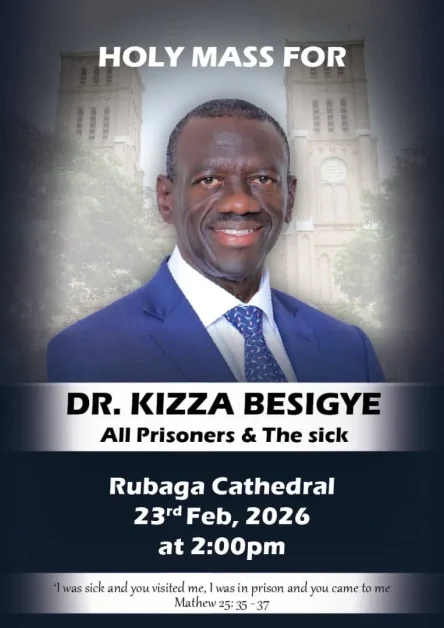
In May 2024, Besigye was seized from Nairobi in what his supporters and international observers have described as a transnational abduction – a covert military operation on foreign soil to neutralise a political rival. He has been held ever since, charged under military law despite being a civilian, a legal manoeuvre that has drawn condemnation from human rights organisations and foreign governments alike.
His health has become a source of mounting alarm. Earlier this month, Byanyima mounted a public battle to have independent, private doctors allowed access to her husband. That battle is ongoing. The mass at Lubaga was, in part, an expression of the desperation of people who feel they are running out of avenues.
Now even prayer has been closed off.
Perhaps most telling was what did not happen after the Archbishop complied.
Those who gathered at Lubaga – opposition politicians, activists, ordinary Ugandans, some of them having travelled considerable distances – did not disperse in anger or attempt to force their way into the cathedral. They stood outside and sang hymns. They prayed quietly among themselves. Then Byanyima held a press conference.
It was dignified. It was peaceful. And in its restraint, it was perhaps the most damning statement of all – a congregation locked out of its own church by a president who feared what they might say to God.
“Despite the clampdown, we gathered, sang hymns, and prayed,” said Godfrey Luyombya, a parliamentarian present on the day. “May God hear our petitions and bring change to Uganda.”
Erias Lukwago, the Lord Mayor of Kampala and a fierce Museveni critic, was more direct, calling the intervention “abhorrible” – a president issuing directives to an Archbishop, treating the Church as simply another institution to be managed, another lever to be pulled.
A Rubicon Crossed?
Analysts and commentators are already reaching for large frames to describe what happened.
When a state steps into a sanctuary and halts a prayer service, it sends a message that travels far beyond the immediate political context. It tells citizens that there is no refuge. It tells the faithful that even their communion with the divine is subject to executive review. It tells the international community something uncomfortable about the direction of travel in a country whose president has increasingly described himself in messianic terms.
“When the state steps into the sanctuary and halts a prayer service,” Muriisa wrote, “it sends a chilling message: no space, not even the altar, is beyond executive reach.”
For critics of Museveni’s government, the question is no longer whether Uganda has crossed the line from authoritarianism into something more absolute. The question, increasingly, is whether any institution remains that can say no – and mean it.
The Archbishop did not say no.
The cathedral doors were opened, but no prayer for Holy Mass took place, as planned.
And somewhere in a detention facility, a sick man waits.
His wife, outside, sang hymns on the steps and quoted the revolutionaries: the struggle continues.