
THERE is a particular kind of traveller who books the Pride of Africa.
They have usually been thinking about it for years. They have read the brochures until the pages are soft at the edges. They have told their friends, their families, their colleagues. They have marked the departure date on their calendars and watched it approach with the slow, building anticipation of something almost too good to believe. For many of them, it is not simply a holiday. It is the journey — the one that stands apart from all the others, the one they will describe for the rest of their lives.
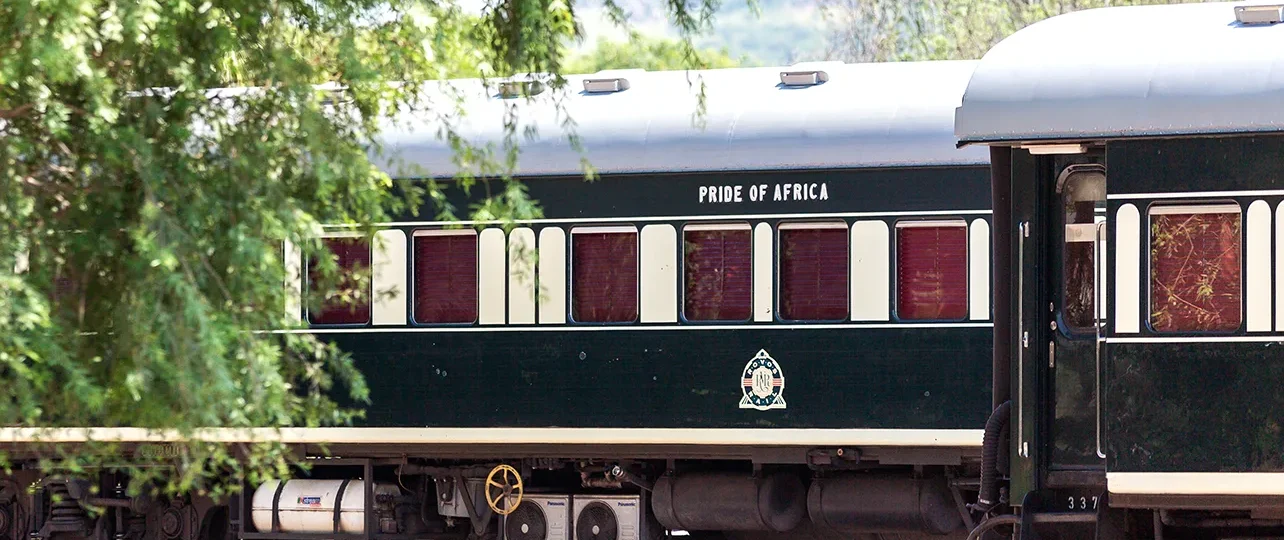
On a Saturday evening in early March 2026, forty-two of them boarded Rovos Rail’s magnificent train in Windhoek, Namibia, and settled into their suites for the long, glorious roll south to Cape Town. The wood panelling gleamed. The brass fittings caught the light. The observation car waited at the rear for those who wanted to stand in the African night air and watch the stars wheel overhead. The continent stretched away in every direction — vast, ancient, indifferent to human schedules — and the train moved through it with the unhurried confidence of something that has earned its place in the landscape.
Nobody aboard that train knew that a bridge was waiting for them in the dark.
The Train
Since Rohan Vos founded Rovos Rail in 1989, the Pride of Africa has occupied a singular position in the world of luxury travel — not merely as a way of getting from one place to another, but as a destination in itself. The beautifully restored coaches, hand-panelled in rich wood, carry a maximum of forty-two passengers in thirty-six suites across journeys that range from forty-eight hours to sixteen nights. The routes link some of the continent’s greatest destinations — Victoria Falls, the Okavango, the Karoo, Cape Town — with off-train excursions woven between long, meditative stretches of track where the only thing required of a passenger is to sit, and look, and be present in an Africa that most people only ever see from the air.
It is, by any measure, one of the most extraordinary travel experiences on earth. It is also, by its very nature, an experience of deep trust. You surrender your schedule, your direction, your sense of control, and place yourself entirely in the hands of the train and the people who run it. You sleep while the locomotive does its work. You wake in a new landscape. The magic of it depends, fundamentally, on that trust being honoured.
The train that left Windhoek that Saturday was carrying the full weight of that trust — and the full weight of the dreams that forty-two passengers had carried aboard with them.
The Bridge
The Seeheim-Holoog railway line cuts through some of the most remote and unforgiving terrain in southern Africa. Out here, the Namibian landscape is geology made visible — ancient rock ridges, dry riverbeds, plains that stretch to a horizon so flat and far it seems theoretical. It is country that does not negotiate. It does not soften itself for visitors. It simply is what it is, on its own terms, in its own time.
Water had been at work beneath a bridge near Naute, approximately 285 kilometres north of the South African border at Ariamsvlei. Quietly, invisibly, in the way that desert floodwater always works — sudden, violent in its effect long after the rain itself has passed — it had eaten away at the foundation of the last span of the bridge. A washaway, in railway terminology. The kind of structural failure that leaves no visible warning on the surface, no signal light, no alarm. The bridge looked like a bridge. From above, from the cab of an approaching locomotive in the pre-dawn darkness, it would have looked like every other bridge on the line.
It was not.
At approximately 05:00 on Sunday morning, 1 March 2026, the locomotives met it.
The Fall
The automatic brake system did what it was engineered to do. The moment the leading locomotives lost the track, the brakes fired — gripping every wheel on every coach behind them, arresting the momentum of the train with brutal, instantaneous force. It was a system designed to prevent catastrophe from becoming complete catastrophe, and in a very specific sense, it worked. The passenger coaches stopped. The forty-two guests were thrown about their suites — bruised, frightened, disoriented in the sudden violent dark — but alive, and largely unhurt.
The locomotives were beyond saving.
Two of them went over the compromised bridge, taking two utility coaches with them. The drop into the dry riverbed below was not survivable for those inside.
Rovos Rail’s statement, issued later that day, confirmed the cause with careful, grief-weighted language: a washaway of the last span of a bridge. Two locomotives, lost. Two utility coaches, lost. And, far more devastating than any equipment: two men who did not come home.
The Men
Rovos Rail confirmed the deaths of their own driver and the TransNamib pilot with words that carried the particular weight of institutional grief breaking through corporate language: profound sadness. Deepest condolences to their families, friends and colleagues.
They were crew — professionals whose expertise and experience made the whole extraordinary enterprise of luxury rail travel possible. While passengers slept in their suites, these were the men awake in the cab, responsible for the safe passage of everyone behind them through hundreds of kilometres of southern African darkness. They knew these tracks. They had made these runs before. They were doing their jobs with the same quiet competence they brought to every journey.
The bridge gave way, and they had no warning and no time.
Two families received the worst news imaginable on a Sunday morning in March. Two sets of people entered the specific and terrible country of sudden, violent loss — a country with no map and no visible exit. Whatever the investigation that follows might conclude about infrastructure and accountability and maintenance oversight, it will not touch the irreducible human fact of what those families now carry.
The Passengers
For the forty-two guests, the aftermath unfolded in the surreal, slow-motion way that serious accidents always do — a confusion of voices in multiple languages, the hiss of disturbed machinery, the vast Namibian silence pressing in around the edges of the chaos, and the gradual, disbelieving realisation that something catastrophic had happened and that they were, against reasonable expectation, alive.
Rovos Rail confirmed that no passengers or other crew members were injured
The passengers found themselves in the pre-dawn desert, far from anything, the train sitting at a wrong angle behind them and its front simply absent — swallowed by the darkness below the bridge. Whatever they had imagined waking up to on this Sunday morning — the Namibian landscape emerging slowly from the dark, the smell of coffee from the dining car, the slow approach of another extraordinary day aboard the most beautiful train in Africa — this was not it.
TransNamib’s chief executive, Desmond van Jaarsveld, activated the company’s emergency response plan immediately. Teams were dispatched. Medical attention was organised and provided. The logistics of extracting forty-two people from one of the most remote stretches of railway line in southern Africa were handled with urgency and, by all accounts, genuine care.
Buses were arranged. Guests were transported to Upington. Flights to Cape Town were organised. Hotels were secured. And in a detail that said something true about the nature of Rovos Rail as a company — built not by a corporation but by a family, on passion and obsession and a genuine love for what they do — members of the Vos family personally travelled to meet the passengers on arrival. Not company representatives. Not public relations staff. Family.
It was the right response. It could not be the complete one. It could not restore what had been lost — not the two lives taken from the cab of that locomotive, and not the once-in-a-lifetime journey that forty-two people had saved for, planned for, dreamed about. Some of them will rebook. Some will not. All of them will carry Sunday morning, 1 March 2026, for the rest of their lives in a way they had never anticipated when they packed their bags in Windhoek.
The Questions That Follow
By Sunday afternoon, the political response had begun — and it was pointed.
Nelson Kalangula, the Independent Patriots for Change’s shadow minister of works and transport, issued a statement that gave formal voice to what the wreckage near Naute made impossible to avoid. The condition of Namibia’s railway infrastructure. The inspection and certification status of the Seeheim-Holoog line. Maintenance oversight. Executive accountability within TransNamib. The gap between what rail safety requires and what Namibia’s rail network has been receiving.
“Rail transport is a high-risk sector that demands strict adherence to safety standards and continuous infrastructure inspection,” Kalangula said. “Where lives are lost, transparency and accountability must follow.”
The IPC noted that just days before the derailment, a motion had been tabled in parliament calling for the establishment of a dedicated rail accident investigation section within the Ministry of Works and Transport. The timing carried its own bitter commentary on the distance between legislative conversation and operational reality.
Kalangula called for an immediate and transparent investigation, full disclosure of the inspection and safety certification status of the affected line, and clear public communication about corrective measures. He called the tragedy a catalyst — or at least an opportunity — for strengthening the oversight systems that might prevent the next bridge from failing beneath the next train.
Rovos Rail, for its part, identified the washaway as the cause and confirmed that an investigation is underway. The company has faced this territory before: in April 2025, eleven months earlier, four crew members were injured when one of its trains collided with a freight train in Zimbabwe. That incident passed. The broader conversation about rail safety in the region did not produce, it seems, sufficient urgency.
The questions now are the uncomfortable ones. Was the bridge inspected? When? By whom? Were there signs of the washaway that went undetected, or was this the kind of failure that leaves no visible trace until it is too late? These are questions for investigators, for engineers, for the parliamentary committee that will eventually convene. There are also questions that the families of the two dead crew members deserve to have answered with complete honesty.
What Remains
The Pride of Africa has, for thirty-seven years, represented something genuinely rare in modern travel — an experience of Africa that moves at the continent’s own pace, that refuses the tyranny of speed and schedules and airports, that invites its passengers to simply be present in one of the most extraordinary landscapes on earth. That reputation was not built easily, and it will not be destroyed by a single terrible morning.
But a single terrible morning has happened. Two men are dead. Four people were injured. Forty-two guests who came to southern Africa carrying years of anticipation went home carrying something else entirely — the memory of a pre-dawn disaster in the Namibian desert, the sound of brakes firing, the wrong angle of a train that should have been moving and wasn’t.
The bridge failed. The water beneath it had been doing its patient, invisible work, and nobody had known, or nobody had checked, or the check had not been thorough enough. An investigation will try to determine which of those things is true.
In the meantime, two families are grieving. Forty-two passengers are home, or on their way there, changed in ways they are still processing. And somewhere in the desert near Naute, two locomotives lie at the bottom of a dry riverbed — the wreckage of an ordinary Sunday morning that was supposed to be nothing more than another beautiful day on the most beautiful train in Africa.
An investigation into the derailment is underway. The families of the two crew members who died remain in the thoughts of all who love the African rails and the people who keep them running.
Two locomotives lost. Two lives taken. One bridge, and the water beneath it, that nobody had watched closely enough.