
FOR years, the story told about African Christianity was one of triumphant growth – pews overflowing, congregations multiplying, bishops dispatching missionaries back to a spiritually depleted West. Nowhere was this more vivid than in the Anglican Communion, where Africa had quietly become the demographic engine of an 85-million-member global church. Nigeria alone claimed 18 million Anglicans. Uganda was sending evangelists to Britain. Rwanda’s bishops were rebuking Canterbury. Africa was not a footnote to Anglicanism – it was Anglicanism.
That power is now being wielded. And the institution it built may not survive the wielding.
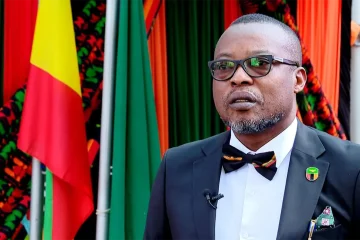
On Thursday, in Abuja, the Global Anglican Future Conference ( GAFCON) did what years of theological negotiation, diplomatic entreaty and institutional reform had failed to prevent. It announced the creation of a rival conciliar structure to lead the global Anglican Communion, a direct repudiation of the Archbishop of Canterbury’s authority, and a declaration of intent so unambiguous that GAFCON’s chairman, Archbishop Laurent Mbanda, could only say: “The future has arrived, no turning back.”
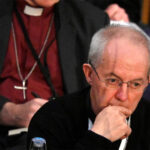
The timing is surgical. The announcement came just weeks before the enthronement of Sarah Mullally as the 106th Archbishop of Canterbury on March 25 – the first woman ever to hold that office. GAFCON’s objection to her appointment, made plain since October, is theological in framing but institutional in consequence. The message is not merely that Mullally’s leadership is unacceptable. It is that Canterbury’s claim to lead the global Communion is, in GAFCON’s view, no longer legitimate at all.
This is a schism – whatever its architects choose to call it.
THE PARADOX OF AFRICAN POWER
There is a deep and painful irony at the heart of this rupture. African Anglicanism was not built by Africans – it was planted by British missionaries, nurtured in the shadow of empire, and handed its institutional architecture by the very Canterbury it now seeks to supplant. For much of the 20th century, African churches were viewed within the Communion as junior partners: faithful, growing, but ultimately peripheral to the theological conversations that shaped the Church’s direction.
That calculus has inverted entirely. As Western Anglicanism has declined in numbers and drifted – in African eyes – from scriptural moorings, African churches have grown in membership, confidence and theological conviction. GAFCON, founded in 2008, crystallised this shift: it gave African and Asian conservatives an organisational identity that was no longer dependent on Canterbury’s approval.
The new Global Anglican Council, with its collegial leadership structure, bishops and lay members voting as equals, and Mbanda – a former Rwandan refugee educated in the United States – as chairman, is the institutional expression of that long-developing confidence. Africa is no longer asking to be heard in the Anglican Communion. It is reorganising the Communion in its own image.
But here is the paradox: in asserting that power, African Anglicanism risks fracturing the very institution whose global reach gave that power meaning.
WHAT THE SPLIT MEANS FOR AFRICA
For Africa, the consequences are double-edged and potentially severe.
The Anglican Church is not merely a spiritual institution on the continent – it is a social infrastructure. Anglican schools, hospitals, clinics and community networks are woven into the fabric of public life from Lagos to Nairobi, from Kampala to Cape Town. The Church’s institutional coherence – its shared name, its ecumenical relationships, its access to international funding and development partnerships – rests on a degree of communion with the broader global body.
A hard schism risks fragmenting that infrastructure. Property disputes, jurisdictional conflicts, and competing claims to the Anglican identity could paralyse institutions that millions of ordinary Africans depend upon. The Episcopalian wars in North America – where congregations spent years in litigation over buildings and assets after breaking with their provinces – offer a cautionary precedent, and those were wealthy, litigious societies. In Africa, the stakes for communities with fewer alternatives are considerably higher.
Beyond the institutional, there is a geopolitical dimension. African Anglican leaders have, in recent years, wielded considerable soft power – their theological conservatism aligned with governments and populations on issues of sexuality and family, while their numerical weight gave them genuine leverage in global ecumenical conversations. A formalised split could diminish that leverage, reducing GAFCON to a parallel communion rather than the voice of a unified global majority. Canterbury and its progressive allies would no longer be bound to negotiate. The very act of leaving the table ends the negotiation.
WHAT IT MEANS FOR THE CHURCH GLOBALLY
For the Anglican Communion as a whole, this is potentially the most significant institutional rupture since the Church of England broke with Rome under Henry VIII – an event now nearly 500 years past. That break produced Anglicanism. This one may unmake it.
The Communion has survived previous crises – the ordination of women, the consecration of openly gay bishops in North America, the various Lambeth walkouts – through a combination of studied ambiguity and institutional inertia. The Nairobi-Cairo Proposals, referenced by the Anglican Communion Office in its measured response to Thursday’s announcement, represent the most recent attempt at managed pluralism: a more collegial, post-colonial leadership structure that might have given African churches the recognition they sought without requiring rupture.
GAFCON’s answer is that the time for proposals has passed.
If the split consolidates, the result will likely be two competing Anglicanisms: a progressive, Western-led rump centred on Canterbury, diminished in numbers but still commanding the institutional inheritance and diplomatic relationships of the historic church; and a growing, conservative, majority-world body, commanding the pews but fighting for the name. Neither will be the Anglican Communion that has existed, imperfectly, contentiously, but coherently, for the past five centuries.
THE DEEPER QUESTION
There is a question that no statement from Abuja or London fully answers: what does it mean for Africa to lead this fracture?
For a continent that has spent two centuries being told that its Christianity was derivative — a gift from the West, to be practised on Western terms — there is something genuinely historic about African leaders reshaping global religious architecture on their own theological terms. Mbanda’s council is, in one reading, an act of post-colonial assertion: Africa refusing, at last, to have its faith defined from Lambeth Palace.
But assertion is not the same as flourishing. The Anglican Communion, for all its fractures, has been a vehicle for African voices to reach the world — in ecumenical councils, in global development conversations, in the quiet diplomacy of faith-based institutions. Shattering that vehicle in the name of theological purity may feel like liberation. It may also prove, in time, to be a costly solitude.
Archbishop Mbanda said the future has arrived. He may be right. The question is whose future – and at what price.