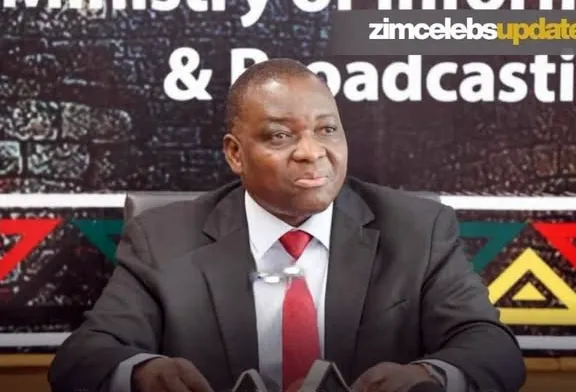
FIFTEEN families in Zimbabwe are now waiting for bodies that may never come home. Sixty-six more Zimbabwean men remain alive – for now – on the front lines of Europe’s most devastating conflict since World War II, having arrived there not as soldiers, not as volunteers, but as victims of a crime. Zimbabwe’s government confirmed all of this on Wednesday, and used language that stripped away any diplomatic ambiguity: this is human trafficking.
Speaking at a press conference in Harare, Information Minister Zhemu Soda delivered a statement that was as much a public alert as it was an official admission. “The recruitment of Zimbabwean citizens results in them ending up in foreign armies and participating in armed conflicts beyond our borders,” he said. “This is not a matter of legitimate military service. It is a sophisticated scheme of deception, exploitation, and human trafficking that has already resulted in the loss of Zimbabwean lives.”
“Our citizens are being preyed upon by unscrupulous individuals and networks that operate with complete disregard for human life.”
Zhemu Soda, Zimbabwe’s Information Minister
The Mechanics of Deception
The pattern Soda described is disturbingly precise and increasingly familiar. Fraudulent employment agencies — many operating exclusively online — advertise high-paying jobs abroad: logistics support, security work, driver positions. The advertisements target men in a country where unemployment has persistently hovered above 80 percent, where the informal economy is the economy, and where any credible-seeming offer of foreign income is seized upon as a lifeline.
Once recruited, the process accelerates with terrifying efficiency. Travel documents are confiscated upon arrival in Russia. What was advertised as a civilian contract becomes a military one, drafted in Russian, with no translation and no legal counsel provided. Recruits are given minimal training — sometimes as little as three weeks — before being deployed to active combat zones.
“They receive little to no training and are placed in life-threatening situations,” the minister confirmed. “When they are injured, killed or captured, the recruiters vanish, leaving families in Zimbabwe with no information, no support and no one to hold accountable. In many cases, the promised remuneration is never paid.”
The recruits who survive describe a closed system of coercion from which escape is nearly impossible. CNN’s reporting this February, based on testimonies from 12 African fighters still inside Ukraine, found that men had been promised signing bonuses of up to $23,000 and monthly salaries as high as $3,500. Some were required to pay upfront recruitment fees to local agencies before departure — fees that came from family savings, guaranteeing devastating financial loss on top of everything else.
| AT A GLANCE: ZIMBABWE’S WAR CRISIS |
| 15 Zimbabwean nationals confirmed killed on Russian-held frontlines |
| 66 Zimbabweans still alive in active combat zones as of 26 March 2026 |
| Total of 81 citizens identified as fraudulently recruited |
| Zimbabwe has engaged Russian authorities for repatriation of survivors and remains |
| Harare government explicitly classifies the scheme as human trafficking |
| All employment agencies facilitating foreign placements now required to seek Registrar approval |
A Continental Crisis in Plain Sight
Zimbabwe’s confirmation arrives weeks after a cascade of similar disclosures from across the continent, each one adding numbers to what Ukraine’s military intelligence now estimates at more than 1,780 Africans fighting in Russian ranks — drawn from at least 36 countries. Analysts and advocacy groups say the true figure is almost certainly higher.
Ghana has borne the heaviest confirmed toll. Foreign Affairs Minister Samuel Okudzeto Ablakwa disclosed last month that at least 55 Ghanaians have been killed in the war, out of some 272 believed to have been recruited since the conflict began in 2022. “This is not our war, and we cannot allow our youth to become human shields for others,” Ablakwa said during a landmark visit to Kyiv in February — the first such visit by a Ghanaian minister.
Kenya has seen the largest documented national cohort. An intelligence report presented to parliament on 17 February estimated that more than 1,000 Kenyans had been recruited — 89 confirmed on the front line, 39 hospitalised, 28 missing in action. Parliamentary majority leader Kimani Ichung’wah accused Russian embassy officials in Nairobi of colluding with local recruitment agencies to channel victims in on tourist visas. The Russian Embassy denied the allegations. In Nairobi, a court has since charged a recruitment agency director with trafficking 25 Kenyans to “Russia for the purpose of exploitation by means of deception”.
In South Africa, 17 nationals were repatriated after President Cyril Ramaphosa personally telephoned Vladimir Putin. Police questioned the men upon their return. Two separate South Africans were subsequently confirmed killed in combat. The scandal claimed a political career: Duduzile Zuma-Sambudla, daughter of former President Jacob Zuma and then a sitting member of the National Assembly, resigned from parliament after allegations emerged that she had recruited men to Russia under the guise of security training for her father’s MK Party.
Nigeria has confirmed the deaths of two nationals in the Luhansk region. Ukraine’s intelligence directorate, which found the bodies, said both men had signed military contracts in 2025 with no prior military training. They were killed by a drone strike before they fired a single shot in combat. Two Nigerians identified as fighters have also been found dead in similar circumstances.
“If Africans are being lured into a foreign war through deception and exploitation, then Africa should respond collectively.”
Samuel Okudzeto Ablakwa, Foreign Minister of Ghana
The Architecture Behind the Scheme
Inpact, a Geneva-based organisation that has conducted a sustained investigation into the recruitment networks, verified a list of 1,417 individual recruits from across the continent and concluded that the trafficking of Africans was not incidental but central to Russia’s battlefield strategy: a deliberate effort to produce wave assaults capable of overwhelming Ukrainian defensive lines through sheer human volume.
“We think we are just scratching the surface with these numbers,” Inpact researcher Lou Osborn told reporters. The organisation noted that Cameroon, Egypt and Ghana appeared most heavily represented in the lists it had verified — though its investigators believe recruitment has touched every sub-region of the continent.
The recruitment infrastructure follows a replicable model. Ghost companies are established online, sometimes with professional-looking websites and social media presences, offering specific civilian roles — logistical support, medical orderlies, security guards, heavy equipment operators. Contact numbers are local. The agencies are frequently unregistered or registered under shell identities. Once payment is made and documentation submitted, the recruit boards a commercial flight to Moscow. By the time they realise their situation, their passport is gone.
The International Crisis Group has noted that Russian consulates across Africa appear to have facilitated visa arrangements for many recruits, though governments have been careful to avoid direct accusations of Kremlin-sanctioned policy. South Africa’s foreign affairs directorate-general said investigations so far had “not pointed to involvement of the Russian state” — even as it acknowledged the possible role of the Africa Corps, the successor to the Wagner mercenary group.
Russia has consistently denied recruiting African citizens illegally. Its embassy in Nairobi stated it “does not preclude citizens of foreign countries from voluntarily enlisting in the armed forces” — a formulation that acknowledges the enlistment while denying the coercion.
| THE AFRICAN TOLL IN NUMBERS (AS AT 26 MARCH 2026) |
| Zimbabwe: 15 dead | 66 still on frontlines |
| Ghana: 55+ dead | 272 total recruited since 2022 |
| Kenya: 1,000+ recruited | 89 confirmed frontline | 28 missing in action |
| South Africa: 2 confirmed dead | 17 repatriated after Ramaphosa-Putin call |
| Nigeria: 2 confirmed dead (Luhansk region) |
| Total across continent: 1,780+ fighters from 36+ nations (Ukrainian intelligence estimate) |
Harare’s Delicate Position
Zimbabwe’s formal acknowledgement carries particular diplomatic weight. Harare has maintained close and longstanding ties with Moscow — a relationship anchored in decades of mutual support dating to the liberation era and reinforced by Zimbabwe’s consistent abstention from UN resolutions condemning Russia’s invasion of Ukraine. The country is not a member of any Western-aligned security architecture. Speaking plainly about Russian conduct, therefore, required the government to balance legitimate outrage against the strategic imperatives of a friendship it has no intention of severing.
Minister Soda’s framing was carefully constructed. He did not accuse the Russian state. He named the crime — human trafficking — as one perpetrated by “unscrupulous individuals and networks”. The government simultaneously announced that it had engaged Russian authorities to facilitate the repatriation of the 66 survivors and the return of the remains of the 15 dead. The diplomatic channel, in other words, remains open and is being actively used.
But the government’s language about domestic enforcement was considerably more muscular. Soda announced that the security cluster had been directed to identify and dismantle the trafficking syndicates. He warned that facilitating foreign military service is illegal under Zimbabwean law — a crime the government said it would prosecute to the full extent available. All private employment agencies facilitating international placements were placed on notice: they must be registered, vetted, and licensed, and are required to seek approval from the Registrar of Private Employment Agencies before any recruitment exercise.
“Fifteen Zimbabwean nationals have lost their lives on foreign battlefields after being deceived into enlisting in foreign wars. This is human trafficking.”
Zhemu Soda, Zimbabwe’s Information Minister
The Human Cost Behind the Numbers
Statistics obscure the specific gravity of each death. These were not men who chose war. They were men who chose work. They scrolled through social media feeds in Bulawayo and Harare and Mutare and saw a path out — a contract, a salary, a way to send money home. The promise was real enough to act on. The deception was sophisticated enough to convince them.
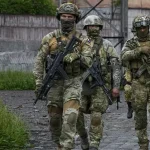
Families in Zimbabwe are, in many cases, now in a condition of uncertainty that has no clear end. No compensation. No military pension. No official death certificate in many instances. Some have not yet been told definitively that their son or husband or brother is dead. They received a phone call that stopped, or a WhatsApp message that went unread, or a video that someone forwarded from an unknown number — a man in camouflage on a frozen landscape they did not recognise.
In Kenya, one mother described to CNN watching a video of her son that went viral in December — footage in which he appeared in military uniform with a land mine strapped to his chest while a Russian speaker used racial slurs to describe how he would be deployed as a “can-opener” to breach Ukrainian positions. She could not watch it herself; her daughter described it to her. Her son had borrowed money to pay the recruitment fee, believing he was investing in a better future.
Many of the families across all the affected countries are also carrying financial devastation. Recruitment fees were paid from savings. Loans were taken. In some cases, assets were sold. And then the recruiter disappeared, and with them any possibility of recovery.
Will Africa Speak with One Voice?
Ghana’s foreign minister has explicitly called for a collective African response. “This is bigger than Ghana,” Ablakwa said. “If Africans are being lured into a foreign war through deception and exploitation, then Africa should respond collectively.” Kenya’s foreign minister has visited Moscow directly. South Africa’s president called the Kremlin. Zimbabwe has engaged diplomatic channels. The question is whether these individually calibrated responses — each designed to avoid the appearance of choosing sides in the Ukraine conflict — add up to anything capable of stopping the machinery that keeps producing victims.
The International Crisis Group’s Pier Pigou has been measured in his assessment. He does not believe the scandal will fundamentally alter African governments’ relationships with Russia unless domestic political pressure mounts to the point that no government can absorb it quietly. The African Union has not yet spoken collectively on the matter. The continent’s carefully maintained principle of non-alignment, which has served many purposes since 2022, may now be in tension with the increasingly undeniable reality that Russia’s war is consuming African lives.
What Zimbabwe has done by making this declaration public — and by naming the crime in unambiguous terms — is add a voice and a toll to a record that cannot be quietly managed away. There are 15 Zimbabwean families who need their dead back. There are 66 Zimbabwean men who need to come home. That is the immediate measure of what accountability requires.
The larger measure is whether African governments, individually and collectively, will treat the systematic trafficking of their citizens into a foreign war as the continental emergency it already is.