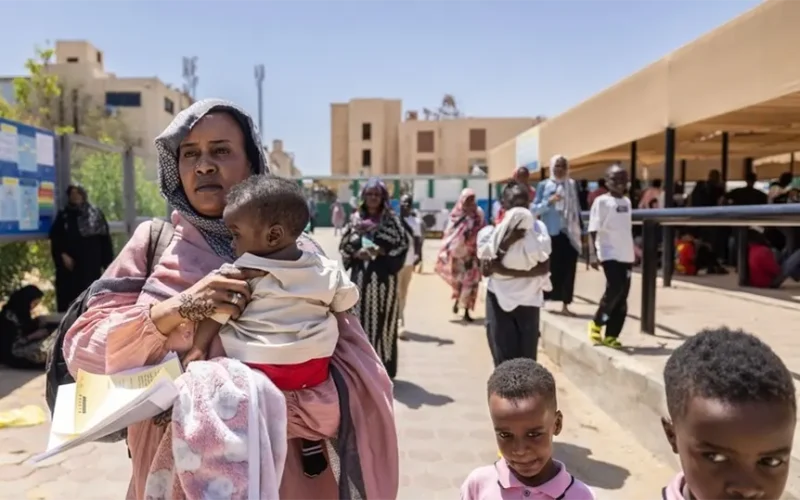
NAWAL clutches her youngest son on the cramped balcony of their Cairo tenement, his frail body a stark reminder of the choices no mother should make. The 35-year-old Sudanese widow, widowed by the war that has ravaged her homeland for four merciless years, gets just 1,520 Egyptian pounds ($28) a month from UNHCR – barely enough for survival, yet it’s all that’s keeping her six children from the streets. “I can only afford school for three of them,” she says, voice cracking. “My eldest boy babysits the rest while I scrape by on part-time work. No child should sacrifice their future like this.” Her toddler’s chronic illnesses go untreated; eviction looms if she spends on medicine instead of rent. “We fled Sudan for safety,” Nawal whispers, “but here we’re starving just the same.”
This isn’t isolated agony – it’s the new normal for tens of thousands of Sudanese refugees in Egypt, the world’s top destination for those fleeing Africa’s largest displacement crisis. Sudan’s conflict, ignited in April 2023, has uprooted nearly 12 million people – one in four Sudanese – including 3.6 million refugees. Egypt’s registered Sudanese numbers have ballooned fourteenfold to over 846,000 since the war began, straining a nation already hosting one of the globe’s biggest non-camp refugee populations.
At the heart of this humanitarian freefall: a global funding drought that’s gutting UNHCR’s cash assistance program. Over half of the 20,000 most vulnerable families – mostly led by women like Nawal – lost their aid between January and March 2026. Without $10 million in emergency funds, the rest, supporting 87,000 souls, face cutoff by month’s end. That’s just a fraction of the 200,000+ extremely needy refugees here who can’t survive without it. UNHCR’s per-person funding in Egypt has cratered from $11 monthly in 2022 to $4 in 2025, despite surging arrivals, covering everything from food to healthcare.
Mohamed, a 60-year-old Sudanese grandfather in Cairo, embodies the vicious cycle. “Even with the aid, I choose between food and pills,” he says. “Skip treatment, my health tanks, and soon I need care I can’t afford. Without it? We’re done.” Families burn through stipends in days on basics, skipping meals, pulling kids from school, delaying doctor visits – choices that breed deeper crises, like untreated illnesses spiraling into emergencies.
Egypt’s bind is brutal: a 2% funding rate for 2026 cash aid leaves UNHCR staring at program collapse amid skyrocketing needs. Cash support isn’t charity – it’s dignified empowerment, letting refugees buy what they need and pump money into local markets. Yet donors’ inaction, even as Sudan’s war grinds on, risks condemning families to destitution.
Nawal’s plea cuts through the statistics: “I thought Egypt meant hope. Instead, we’re fighting for scraps.” As the crisis deepens, UNHCR urges governments, businesses, and donors to flood in resources now – before the brink becomes the abyss.