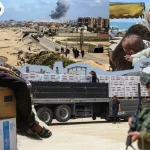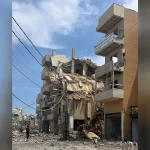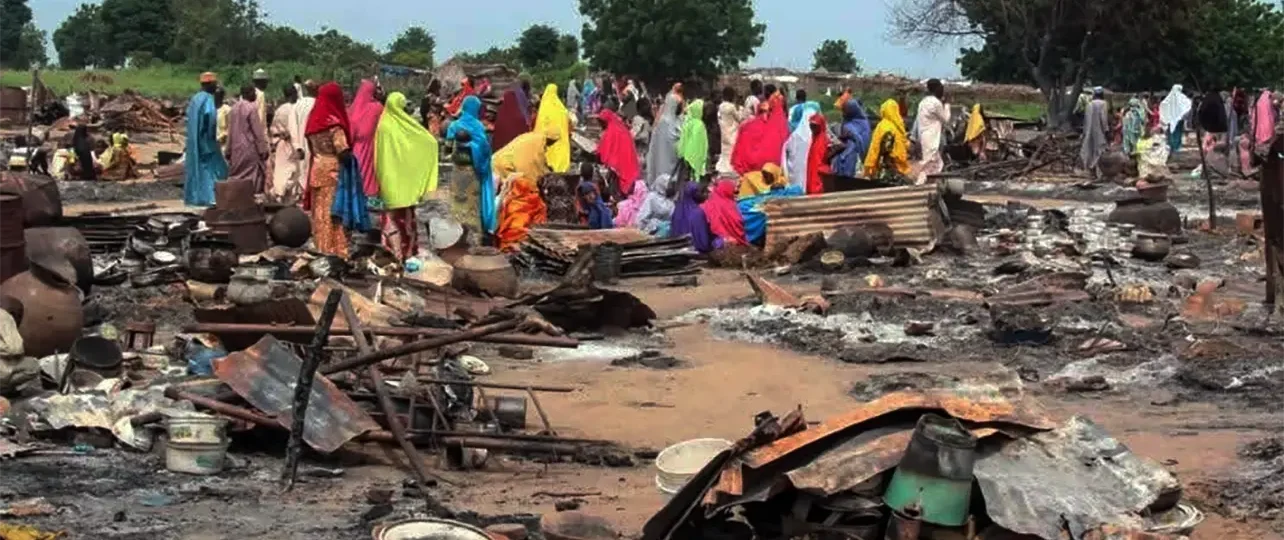

ON a Saturday night in April 2026, Nigerian military jets swept over the northeast of the country in pursuit of Islamist militants. What they hit was a village market. More than 200 people are feared dead. The victims were not combatants. They were traders, buyers, ordinary citizens navigating the brutal economics of survival in one of Africa’s most conflict-ravaged regions.
It is, by now, a familiar story. And that familiarity is itself the scandal.
In the period from January 2023 to April 2026, Nigerian military airstrikes have killed well over 400 civilians across the country’s north and northeast – in markets, in fields, in villages that had the misfortune of being near armed gangs or militants that the military was targeting, or believed it was targeting. The pattern is consistent: a strike, a death toll, a presidential order for investigation, a court-martial for lower-ranking officers, and then – another strike.
A DOCTRINE WITHOUT DISCIPLINE
The Nigerian military operates in one of the most complex counterinsurgency environments on the continent. Boko Haram, ISWAP, Lakurawa, and a proliferating network of armed kidnapping syndicates have turned the country’s north and northwest into a patchwork of lethal theatres. The pressure on military commanders to show results is immense, and the geography – vast, sparsely populated, with poor road infrastructure – makes ground operations slow and costly.
Airpower, in that context, becomes a temptation. Fast. Visible. Politically legible. Generals can point to smoke on the horizon and claim a victory. But when the targets are indistinguishable from civilians – because militants embed in civilian areas by design – airstrikes without verifiable intelligence become something else entirely: collective punishment by another name.
The December 2023 Kaduna drone strike that killed at least 85 people, including women and children, prompted President Bola Tinubu to order an investigation and court-martial proceedings for two officers. It was, at the time, described as exceptional. It was not. It was structural.
“When the targets are indistinguishable from civilians, airstrikes without verifiable intelligence become collective punishment by another name.”
THE INTELLIGENCE FAILURE NO ONE IS NAMING
Across each of these incidents, a common thread runs: the military believed it was striking a legitimate military target. In Zamfara during Eid 2024, it was a kidnapping gang. In Nasarawa in January 2023, it was cattle rustlers – who turned out to be Fulani herders retrieving their own livestock from state authorities. In the latest incident, it was Islamist militants. In every case, the intelligence was either wrong, stale, or applied without adequate confirmation protocols.
This is not a new problem. It is, however, a growing one. As Nigeria’s security crisis has expanded – geographically, ideologically, and in terms of the number of armed actors – the demands placed on intelligence have grown faster than the capability to meet them. The Air Force lacks the ground networks to verify targets in real time. Drone surveillance exists, but its integration with strike operations is evidently insufficient.
The result is a military that is operationally active but strategically adrift – winning tactical strikes that lose the broader war for civilian confidence.
ACCOUNTABILITY WITHOUT CONSEQUENCE
After the December 2023 Kaduna strike, two military officers faced court-martial. It is not known whether either was convicted, or what sentence was imposed, or whether the reforms recommended by the subsequent investigation were ever implemented. The public record is silent. And silence, in accountability terms, is acquittal.
Nigeria has the institutional architecture to hold its military to account. The Defence Act, the rules of engagement, the National Human Rights Commission, the National Assembly’s defence committees – these mechanisms exist. What is absent is the political will to activate them with sufficient force and visibility to change behaviour.
When a court-martial for killing 85 civilians produces no publicly known conviction, it sends a message to every future strike commander: the cost of error is manageable. The pattern is the evidence. Seven major civilian-casualty incidents in three years – including one with over 200 feared dead – cannot be explained as a series of isolated errors. They are the output of a system that has not been restructured to prevent them.
“Seven major civilian-casualty incidents in three years cannot be explained as a series of isolated errors.”
THE REGIONAL AND CONTINENTAL DIMENSION
Nigeria is not alone in this. Across the Sahel – from Mali to Burkina Faso to Niger – military operations against jihadist groups have produced catastrophic civilian casualties, often with even less accountability than Nigeria has managed. The difference is one of scale and symbolism: Nigeria is Africa’s most populous nation, its largest economy, and its most consequential democracy. What its military does – and what its government tolerates – carries continental weight.
The African Union’s normative frameworks on the protection of civilians in armed conflict are explicit. The Ezulwini Consensus, the Lomé Declaration, and the AU’s post-conflict reconstruction architecture – all of these affirm the obligation of member states to protect their own civilians. A pattern of strikes that has killed more than 400 civilians in three years, without systemic reform, places Nigeria in uncomfortable proximity to the accountability conversations usually reserved for non-state actors.
It also matters for the broader counterinsurgency mission. Civilian casualties are the most powerful recruitment tool available to Boko Haram and ISWAP. Each village market struck, each family destroyed, each young man who buries a mother or a sister in rubble that used to be a food stall – these are not collateral damage. They are future fighters.
WHAT MUST CHANGE
The immediate demand is transparent accountability. The Nigerian government must release the findings of every previous investigation into civilian-casualty strikes. The outcomes of the December 2023 court-martial must be made public. The commanders responsible for the April 2026 market strike must be identified, suspended, and subject to an independent review — not an internal military inquiry conducted outside public view.
Beyond individual accountability, there must be structural reform. The Air Force needs independent target verification protocols requiring civilian intelligence confirmation before strikes on populated areas. An independent civilian oversight body — one with actual subpoena power, not merely advisory standing — must be established. Nigeria’s defence committees must hold public hearings.
And President Tinubu, who has spoken powerfully about Nigeria’s security challenges, must lead from the front. An executive directive compelling full transparency on past strike investigations — and establishing binding protocols for future operations — would signal that civilian lives in the northeast and northwest are valued as fully as those in Lagos or Abuja.
THE TEST OF A DEMOCRACY
Nigeria’s democracy is frequently tested by the gap between its constitutional promises and its security realities. A democracy that allows its own military to bomb its own markets — repeatedly, without systemic correction — is not fully the democracy it claims to be.
The north of Nigeria has borne the disproportionate weight of both the insurgency and the state’s response to it. The villages that have been struck are not powerful. They do not have well-resourced advocacy networks or corporate lobbyists. Their dead do not trend on social media for more than a news cycle. That asymmetry of visibility is itself a form of structural injustice.
More than 200 people were feared dead in a market on a Saturday night. They were not militants. They were Nigerians. The question that must follow is not just “who gave the order?” but “what kind of country allows this to become normal?”
That question belongs to Nigeria’s citizens. But the answer must come from its government.