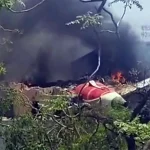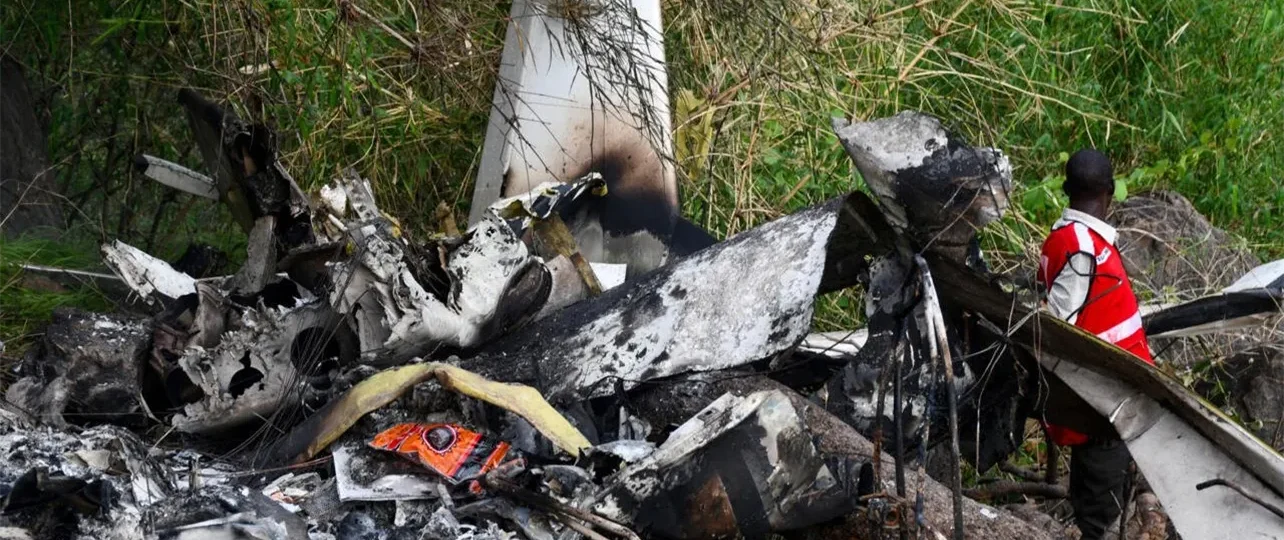

THE Red Cross officials came down the hill slowly, deliberately, each carrying the weight of a life cut short. Fourteen white body bags. Fourteen souls. The smouldering wreckage of a Cessna 208 Caravan lay scattered across the mist-shrouded highlands on the outskirts of South Sudan’s capital – burnt metal and scorched earth half-swallowed by the lush, wet vegetation of a landscape that had become, without warning, a graveyard.
This is what an aviation tragedy looks like in the heart of Africa.
The Cessna, operated by CityLink Aviation, lifted off from Yei at 0915 local time on a routine flight to Juba International Airport. It would never land. At 0943 – just 28 minutes into the journey – ground controllers lost all contact. What followed was silence, then smoke, then the grim confirmation that 13 passengers and their pilot had perished on an unnamed hill approximately 20 kilometres from the capital.
Among the dead were two Kenyan nationals. The remaining 12 victims were South Sudanese.
Videos that spread rapidly across social media painted a haunting picture: burning wreckage strewn across mountainous terrain, low cloud hanging heavy over the site like a shroud, the landscape’s vivid green jungle canopy a cruel contrast to the blackened debris of a commercial aircraft that had flown into conditions it could not escape. The footage confirmed what investigators are only now beginning to formally document – that visibility at the time of the crash was critically low, and that the weather likely played a fatal role.
The South Sudan Civil Aviation Authority moved quickly to acknowledge the disaster, issuing a statement confirming the crash and noting that preliminary reports pointed to bad weather – particularly poor visibility – as a likely contributing factor. A response team was dispatched to the crash site, with emergency services and investigators working to secure the area, recover the remains and begin the painstaking process of reconstructing the final minutes of Flight CityLink.
But for the families of the dead – in Juba, in Nairobi, in Yei and the communities that lie between – no investigation will restore what this hillside has taken from them. The burnt-out fuselage of a Cessna Caravan, a workhorse of short-haul aviation across the African continent, lies as a monument to the unforgiving arithmetic of flight in difficult terrain and deteriorating weather: one aircraft, fourteen lives, zero survivors.
South Sudan, a young and fragile nation still rebuilding its infrastructure after decades of conflict, has long depended on small aviation to knit together communities separated by poor roads and vast distances. CityLink Aviation is among the operators that service this critical connectivity – routes like Yei to Juba that for many passengers represent the only viable link to the capital.
That fragility is now exposed again.
Authorities have pledged a full investigation. More details, they say, will follow. But on a misty hill outside Juba, the story is already complete – told in white body bags, in smouldering wreckage, and in the terrible quiet that follows catastrophe.