THERE is a particular cruelty in a catastrophe that destroys children twice: once in the doing, and again in the forgetting. In Sudan’s Darfur region, both are happening simultaneously.
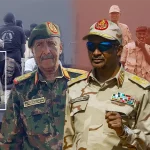
The war that has consumed Sudan since April 2023 – when the Sudanese Armed Forces (SAF) and the paramilitary Rapid Support Forces (RSF) turned their guns on each other – is now entering its fourth year. It is one of the worst humanitarian emergencies on the planet. In Darfur alone, it has produced death tolls that stagger the mind, displacement on a biblical scale, and famine conditions that experts describe not as a risk but as a confirmed reality. And almost nobody outside the region is paying attention.
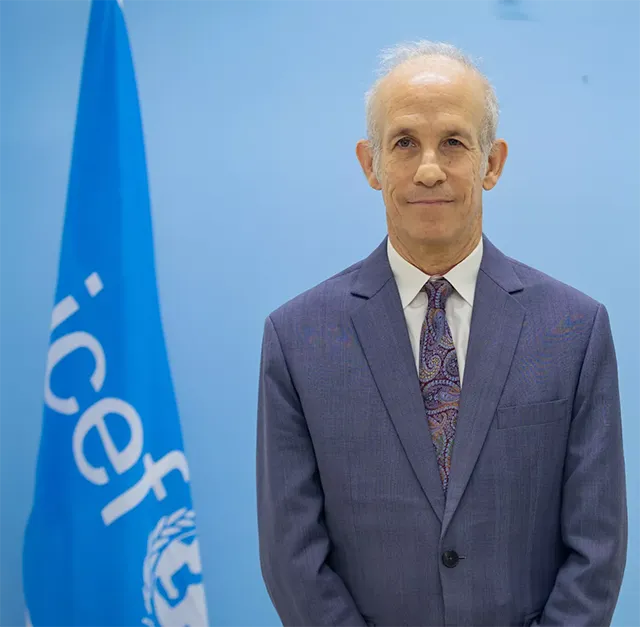
That silence is the subject of a stark warning issued this week by Sheldon Yett, the UNICEF representative in Sudan, speaking from Port Sudan. His words were not the cautious language of a bureaucrat seeking not to offend governments. They were the words of a man who has watched the same horror film twice – and cannot believe the rest of the world has switched channels.
| “I was in Darfur 20 years ago, and we had every Hollywood celebrity competing to get on the plane, to get in the car. Now we have absolutely no attention on Darfur — and the situation is far more complex than it was 20 years ago.”— Sheldon Yett, UNICEF Representative in Sudan |
The Numbers Behind the Silence
Numbers in catastrophic conflict carry a particular danger: they can anaesthetise. But these must be confronted.
| Children facing extreme deprivation across Darfur’s five states: 5 million+ |
| Children killed or injured in first 90 days of 2026 alone: 245 verified (true toll acknowledged as ‘likely far higher’) |
| Grave violations against children verified in El Fasher since April 2024: 1,500+ including 1,300+ killed or maimed |
| Acute malnutrition rates among children in parts of Darfur: 50%+ Famine confirmed in El Fasher November 2025 |
Each of those data points represents children who were alive before the RSF and SAF decided their strategic rivalry mattered more than civilian lives. What makes the Darfur dimension of this conflict particularly savage is not only its brutality but its deliberateness. Schools are being hit. Markets are being hit. Health centres are being hit. Humanitarian convoys – clearly marked, their movements coordinated with all parties – are being hit by drone strikes.
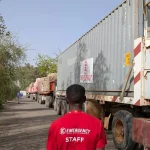
Last Friday, a UNHCR truck carrying emergency shelter kits to displaced families in Tawila, North Darfur, came under drone attack. Every kit was destroyed. Over 1,300 families – already stripped of their homes – were left with nothing above their heads.
This is not collateral damage. It is a pattern.
El Fasher: Siege, Fall, and the Ruin That Remains
The story of El Fasher, North Darfur’s capital, is the story of Sudan’s war at its most concentrated and most damning. For 18 months, the city endured a siege that the United Nations documented as it unfolded – civilians deliberately cut off from food, water, medicine, and humanitarian assistance. The RSF overran the city in late October 2025.
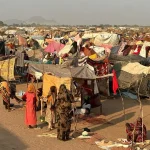
Even now, with the siege formally over, its shadow persists. Children who fled carry the trauma with them across borders. Children who remain face the ruins of whatever services once stood. Famine conditions, confirmed in November 2025, did not lift with the city’s fall.
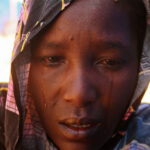
| “In Darfur, children are being killed and maimed, uprooted from their homes, and pushed into extreme hunger, disease, and trauma. History is repeating itself in the darkest possible way.”— Sheldon Yett, UNICEF |
The use of attack drones is a defining feature of this conflict’s technology of terror. Yett described their deployment with a rare intensity seldom seen in modern conflicts – a particularly troubling escalation given that drone warfare has, in other theatres, been subject to at least rhetorical international scrutiny. In Sudan, the international community has barely raised its voice.
Beyond Borders: A Regional Crisis in Waiting
Sudan’s catastrophe does not stop at its own frontiers. Children are crossing into neighbouring countries – Chad, Egypt, Ethiopia, South Sudan, the Central African Republic – exhausted, malnourished, and traumatised. Host communities have largely shown the generosity that characterises African solidarity in adversity. But generosity alone cannot hold. Services are overwhelmed. Funding is absent.
UNICEF’s 2026 humanitarian appeal for Sudan is, in Yett’s telling, severely underfunded. The gap between what is needed and what the international community has chosen to provide is not a rounding error. It is a policy choice – one that tells children in Darfur exactly where they rank in the hierarchy of global concern.
The contrast with 2006 is not merely rhetorical. Two decades ago, the Darfur crisis galvanised a global movement. Celebrities. Campaigns. Emergency sessions. Public anger. Whatever that effort’s limitations – and it had them – it represented the world’s insistence that what was happening mattered. Today, the RSF’s drones strike clearly marked humanitarian convoys, famine stalks a region the size of France, and the global news cycle moves on.
Africa Must Be the Witness the World Refuses to Be
The African Mirror has consistently argued that African media cannot afford to follow the attention economy of the Western press – that our editorial choices must be guided by what matters to African people, not what is profitable to produce. Sudan is a test of that commitment.
This is not a distant conflict. It is an African war, devastating African children, destabilising African states, and generating an African refugee crisis. The AU’s response has been feeble. IGAD’s mediation has been fitful. The great powers have largely treated Sudan as a theatre for proxy interests rather than a humanitarian emergency requiring immediate action.
Yett’s warning deserves to be heard not only in New York and Geneva, but in Addis Ababa, Pretoria, Nairobi, and Dakar. An entire generation is at stake – his words, not ours, though we endorse them without reservation.
The world stood by as Darfur burned once before. The children now dying in the rubble of El Fasher, now fleeing across the Sahel with nothing but the trauma they carry, are the second generation to learn what that silence means.
History does not have to repeat itself. But it requires decision – from African governments, from the AU, from the international community – to stop it. The decision, so far, has not been made.