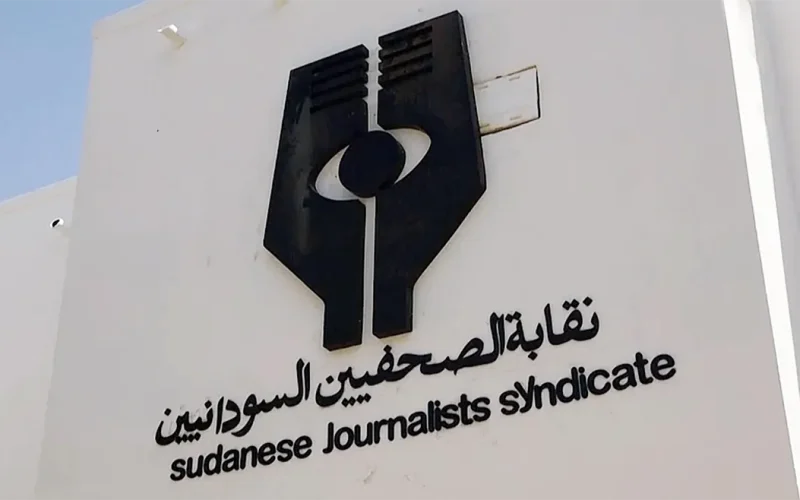
THEY reported from rubble, from rooftops, from exile. Some transmitted dispatches while sheltering from drone strikes. Others disappeared into the silence of a war that has swallowed whole cities and shuttered newsrooms across a country the size of Western Europe. On the eve of World Press Freedom Day, the United Nations Education, Scientific and Cultural Organisation gave them the world’s most prestigious press freedom prize.
The Sudanese Journalists Syndicate has been named the 2026 laureate of the UNESCO/Guillermo Cano World Press Freedom Prize — awarded in recognition of the collective’s extraordinary documentation of what has become one of the most dangerous environments for journalism on the African continent, and arguably in the world.
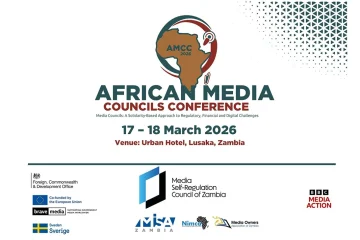
The prize was announced on 30 April, ahead of World Press Freedom Day on 3 May, and conferred at the UNESCO global conference “Shaping a Future at Peace” in Lusaka, Zambia, co-hosted by the Zambian government from 4 to 6 May.
“The members of the Sudanese Journalists Syndicate have demonstrated extraordinary courage and unwavering dedication. Despite immense challenges, they continue, day after day, to deliver accurate, lifesaving information to their communities when it matters most.”
Khaled El-Enany, UNESCO Director-General
A profession under siege
Since fighting erupted between the Sudanese Armed Forces and the Rapid Support Forces in April 2023, the Syndicate has documented the deaths of 32 journalists. It has logged 556 separate violations against media workers – an average of more than one every two days across three years of conflict. Scores of newspapers and radio stations have ceased operations. The country’s independent media has been effectively gutted.
Ninety percent of Sudan’s media infrastructure has been destroyed, according to UNESCO’s assessment. Journalists have been threatened, arrested, trapped in homes and workplaces by street battles, and severed from the world by internet and telecommunications blackouts that make filing a story as hazardous as gathering one.
The result, UNESCO says, is a country that has become a “zone of silence” — vast civilian populations cut off from verified information, left vulnerable to war propaganda and the wave of misinformation that always accompanies prolonged conflict.
THE TOLL ON SUDANESE JOURNALISM
32 journalists killed since April 2023
556 recorded violations against media workers
90% of media infrastructure destroyed
Exile as the price of bearing witness
Many of the journalists the prize honours are not in Sudan at all. Forced out by the violence, they file from Cairo, Nairobi, London, and cities across Europe – a diaspora of reporters who remain, in many cases, the only credible sources of information about conditions in Sudan’s besieged cities and displaced-persons camps. Their displacement is itself part of the story.
The Syndicate’s chair, Abdelmoniem Abuedries Ali, said the award transcended the organisation and amounted to a tribute to every Sudanese journalist still working under fire. “This award is not only a recognition of the Sudanese Journalists Syndicate,” he said, “but a tribute to all Sudanese journalists who continue to defend truth and press freedom under extremely difficult and dangerous conditions.”
UNESCO has attempted to meet some of the immediate needs of Sudanese journalists. In partnership with Media in Cooperation and Transition, the organisation has established two safe spaces for journalists in Port Sudan. To date, 49 journalists have received direct support, including assistance with relocation to safer areas within Sudan and abroad, as well as access to psychological support. UNESCO has also helped establish the Sudanese Media Forum, a coalition of more than 20 outlets working to keep the country’s humanitarian crisis visible internationally.
“This award is not only a recognition of the Syndicate, but a tribute to all Sudanese journalists who continue to defend truth and press freedom under extremely difficult and dangerous conditions.”
Abdelmoniem Abuedries Ali, Chair, Sudanese Journalists Syndicate
A global crisis, not a regional exception
Sudan’s media collapse does not exist in isolation. UNESCO’s latest global report on freedom of expression documents a 10 percent decline in press freedom worldwide since 2012 – a deterioration comparable, the organisation says, only to three other inflection points: the First World War, the prelude to the Second World War, and the late 1970s Cold War period.
Self-censorship among journalists has grown by 69 percent globally between 2012 and the end of 2025, according to UNESCO analysis of V-Dem data. The most effective censor, the data suggests, is now internalised – journalists silencing themselves before power needs to silence them.
Online harassment of journalists – disproportionately targeting women – has accelerated markedly. Research by the International Centre for Journalists for UN Women, in partnership with UNESCO, found that 75 percent of women journalists have experienced online violence. By 2025, at least 42 percent of women journalists reported that online attacks had escalated into offline abuse, threats, or physical violence – double the figure of 20 percent recorded in 2020.
The case for public investment
At the Lusaka conference, UNESCO Director-General Khaled El-Enany called on governments and civil society to recommit to independent journalism and the free flow of information – arguing that press freedom must be embedded in any serious peace, recovery, or security policy alongside humanitarian, institutional, and economic dimensions.
El-Enany issued an unusually stark economic argument for investment in public-interest journalism: UNESCO’s own analysis shows that just 15 days of annual global military spending would equal a full year of investment sufficient to sustain public-interest journalism worldwide.
“When independent journalism declines, corruption increases, poor governance takes hold, and information violence precedes physical violence,” he said. “Free, accurate information is a public good. I call on Member States and all our partners to invest in journalism as a lever of peace.”
Among the signals of hope, UNESCO cited: nearly half of the 194 countries reviewed in its 2025 global survey now have legal frameworks supporting community media, with many providing financial support. And 139 UN member states have adopted legal guarantees for public access to information.
Carrying the dead and the displaced
For the journalists of the Sudanese Journalists Syndicate, the award arrives not as a celebration but as a reckoning – a moment to name what has been lost, and what has been done to those who refused to stop working. Thirty-two colleagues are dead. Hundreds more have been harassed, arrested, or driven from their country.
Those who remain – inside Sudan and in diaspora – continue, as UNESCO’s director-general put it, to deliver accurate, lifesaving information to communities when it matters most. The Guillermo Cano Prize, named for the Colombian journalist assassinated in 1986 for his reporting on drug trafficking, was always intended for exactly this kind of courage.
This year, it belongs to Sudan.