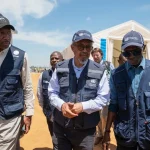
THE World Health Organization says a stepped-up effort to decentralize laboratory testing and intensify contact tracing — underpinned by community engagement — is central to containing the current Ebola outbreak in eastern Democratic Republic of the Congo (DRC), which has also produced cross-border cases in neighbouring Uganda.
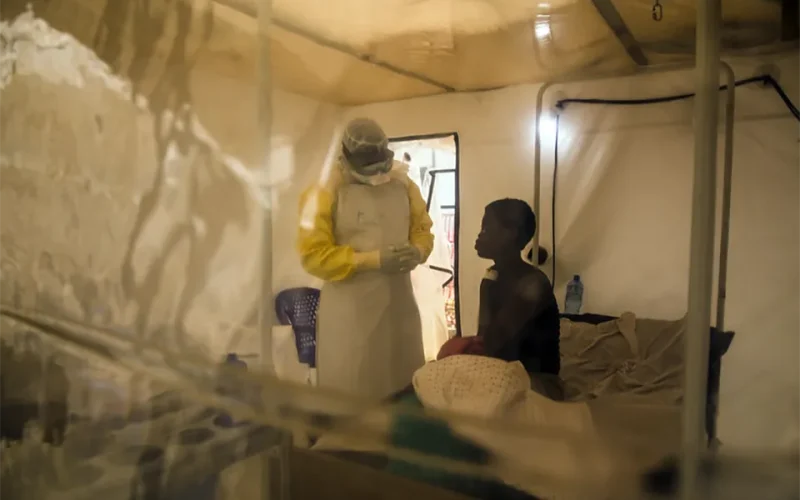
WHO’s Health Emergency Alert and Response Operations Director, Dr. Abdirahman Mahamud, told reporters in Geneva on Tuesday that the outbreak, caused by the rare Bundibugyo strain, had produced 550 confirmed cases and 101 deaths in the DRC as of 8 June. Nineteen patients have recovered, illustrating the lifesaving potential of early detection and treatment, he said.
Testing scale-up behind case rise
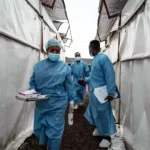
Officials attribute the recent rise in confirmed cases largely to expanded testing capacity rather than sudden geographic spread. WHO has opened more decentralized laboratories, including a fully functional facility in Mongbwalu, to shorten the time between sample collection and diagnosis. Field labs now operate in five affected locations, and WHO has delivered 40 tonnes of equipment and supplies while deploying more than 100 personnel in support of government-led operations.
The decentralized approach has practical effects on turnaround times that shape the outbreak response. Dr. Mahamud noted that residents near Bunia in Ituri Province — which accounts for roughly 94% of DRC cases — may receive results in one to two hours, while samples from remote communities can take up to 24 hours or more to reach a lab. In some locations, samples currently require road trips of ten hours to reach testing sites; WHO expects a new lab in Aru, close to the Ugandan border, to be operational by Friday, reducing those delays.
Contact tracing and community trust
As of 6 June, authorities had identified 5,040 contacts across Ituri, North Kivu and South Kivu, with contact tracers reaching about 62% so far. WHO’s target is to reach 90–95% of contacts within the coming weeks. Dr. Mahamud emphasized that progress has been “slow and steady” and rooted in building trust with communities. He described local healthcare workers as indispensable for early case identification and timely referral to treatment centres, and characterised the response as “a well-functioning system that’s integrated from surveillance to contact tracing to the treatment centre and to the lab,” supported by efficient data sharing.
Cross-border cases but no community transmission in Uganda
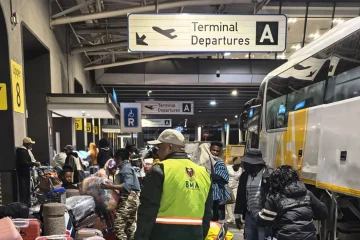
Uganda has reported 19 confirmed cases and two deaths, plus one probable death. WHO said there is no evidence to date of sustained community transmission in Uganda, but the proximity of cases and the presence of cross-border movement heighten the risk and underscore the importance of rapid testing and local surveillance on both sides of the border.
Operational gaps and bottlenecks
Despite gains, the WHO warns of persistent operational challenges. Connectivity and transport constraints in remote parts of Ituri and neighbouring provinces slow sample transport and complicate follow-up. The sheer scale of Ituri — “as big as France,” Dr. Mahamud observed — means equitable access to testing and care remains difficult to achieve quickly. Achieving the 90–95% contact-tracing goal will require sustaining staffing, logistics and community engagement under challenging field conditions.
What to watch
- Whether the new Aru laboratory and other field labs will materially cut sample turnaround times in remote areas.
- Progress toward the 90–95% contact-tracing benchmark and whether coverage gaps persist in hard-to-reach communities.
- Signals of community transmission in Uganda, which would change the regional risk profile and require broader cross-border coordination.
WHO’s account suggests the outbreak’s trajectory is influenced as much by surveillance intensity and laboratory access as by viral spread. That makes rapid expansion of testing, consistent contact tracing and continued community trust the immediate levers for limiting mortality and preventing wider regional spread.