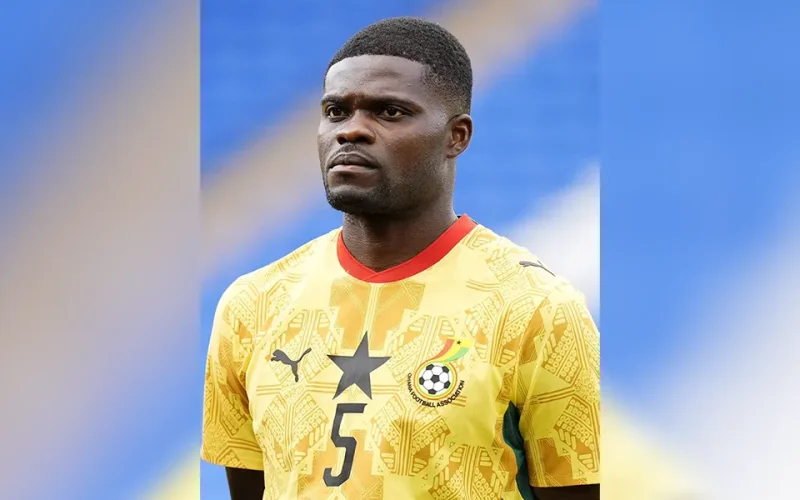
GHANA’S World Cup preparations were jolted on Friday when FIFA confirmed that midfielder Thomas Partey will miss the Black Stars’ opening match in Toronto after the Canadian government refused his visa. Partey, charged but not convicted in Ghana and denying the allegations, was unable to travel from the team’s Boston base to Canada; FIFA stressed it does not adjudicate host-country immigration decisions.
Sporting impact is immediate and stark. Partey is Ghana’s midfield fulcrum – a shield for the defence and a proven breaker of opposition lines. His absence forces coach Otto Addo into a tactical rethink for the June 17 opener against Panama and potentially for the rest of any fixtures played on Canadian soil. Beyond formation tweaks, the psychological blow to a squad that had counted on his experience is real: group-stage margins are fine, and the loss of a leader in the engine room amplifies pressure on Ghana’s younger midfielders.
In a statement, FIFA said: “FIFA can confirm that player Thomas Partey will be unable to travel from Ghana’s team base camp in Boston, USA, to Canada for their first match against Panama on Wednesday, 17 June, as his visa application has been refused by the Canadian government. FIFA is not involved in the immigration processes of host countries, including the adjudication of visas. As with previous FIFA events, the host government ultimately determines who receives a visa and is admitted into the country.”
The visa decision, however, resonates far beyond the pitch. It exposes a persistent tension between national sovereignty over immigration and the transnational expectations of global sport. Canada’s publicly available guidance states that those who have committed or been convicted of a crime “may not be allowed into Canada.” Partey’s case sits in a legal grey zone—charged, awaiting trial, claiming innocence—yet the Canadian government exercised discretion to bar entry. For many African observers, that discretionary power will feel familiar and fraught: athletes and officials from the continent have previously found mobility circumscribed not by sporting rules but by immigration and diplomatic calculations.
This is not without precedent. In 2010, Algerian clubs and national-team staff faced delays entering neighbouring countries for regional competitions due to paperwork and diplomatic frictions. In 2018, Nigerian footballers encountered visa problems traveling for a continental youth tournament in parts of West Africa, delaying matches and forcing squad reshuffles. More consequentially, during the 2016 CAF Confederation Cup and other regional fixtures, travel authorisations and late visas repeatedly disrupted African club schedules, prompting CAF to push for clearer host obligations. These episodes underline a structural vulnerability: when immigration systems and ad hoc diplomacy intersect with tournament timetables, teams disproportionately bear the cost.
The political optics are sensitive. Ghanaian supporters and diasporas in North America are likely to press their government and football authorities for answers, while Canadian officials will point to sovereign authority and public-safety prerogatives. FIFA’s stance – hands off on visa adjudication – illustrates limited leverage. That gap between expectation and power invites calls for pre-event, binding agreements that clarify visa protocols and speedy appeal avenues for charged but unconvicted athletes.
For African teams and governing bodies, the lesson is blunt. Sporting success increasingly depends on off-field logistics and diplomatic engagement as much as on coaching and fitness. As the continent’s stars play on global stages, federations must secure legal and consular contingencies long before kick-off. For Ghana, the immediate task is tactical recovery; for African football, the Partey incident should trigger institutional fixes so future squads are judged on talent, not travel documents.