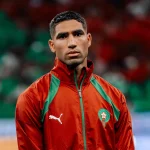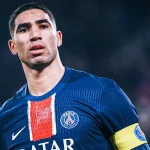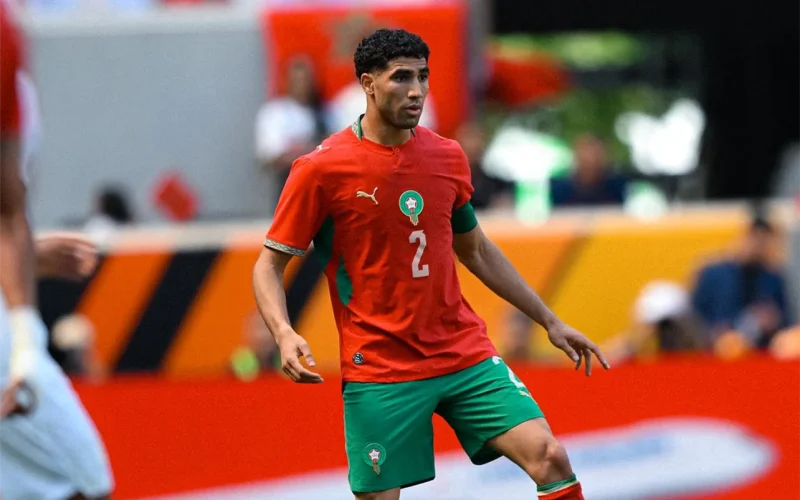
ACHRAF Hakimi spent Thursday night marshalling Morocco’s defence against Scotland in Foxborough, Massachusetts, wearing the captain’s armband of a team chasing only its second World Cup knockout berth in history. Less than 24 hours earlier, a court in Versailles had settled a question that has trailed him for more than three years: he will stand trial for rape.
The Versailles Court of Appeal confirmed on Friday that it had rejected Hakimi’s bid to overturn a February ruling sending him to a criminal court on a rape charge, closing off the last avenue by which the Paris Saint-Germain and Morocco right-back could have avoided a public reckoning with allegations dating to February 2023. No trial date has yet been fixed; French judicial sources indicate one will be set later this year once the World Cup has run its course.
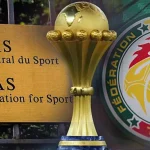
For Hakimi, the timing could not be more brutally compressed. He arrived in North America as the reigning CAF Men’s Player of the Year, the first defender to win the award in fifty-two years and the first Moroccan to claim it since Mustapha Hadji in 1998. He leaves the tournament, whenever Morocco’s run ends, to face a French criminal court on the gravest charge in the penal code.
WHAT THE COURT DECIDED
The ruling itself was narrow but decisive. Hakimi was not appealing a verdict; he was appealing the decision of an investigating magistrate, made in February, that there existed sufficient grounds to send the case to a criminal court rather than dismiss it. The Versailles appellate judges agreed with the magistrate. In French procedure, that referral order is itself a significant judicial finding: it means a court has concluded the evidence gathered over three years of investigation justifies a full trial, not merely that a complaint was filed.
Hakimi responded within hours on social media, describing himself as a man whose story is being told without him and saying “Sometimes I feel like I’ve become an easy target.” He wrote separately that he had chosen years of silence, trusting the justice system, and that he was now relieved the matter would finally be heard in open court. He has consistently denied the charge since he was first placed under judicial supervision in March 2023.
THE ALLEGATION
The case originates in the Paris suburb of Boulogne-Billancourt. According to the woman’s account to investigators, she and Hakimi made contact on Instagram in January 2023, and in the early hours of 25 February that year he sent a car to bring her to his home, where his wife and children were away. She told police she was kissed and touched without her consent, that she protested, and that the encounter ended in rape before she pushed him away and fled, sending a distress message to a friend who later corroborated her account to investigators. She reported the incident the same day at a police station in the Val-de-Marne region southeast of Paris.
Hakimi was taken into police custody and formally placed under judicial investigation for rape on 3 March 2023. A judicial confrontation between the two parties took place in December that year, at which the complainant reiterated her allegations and Hakimi maintained his denial.
THE DEFENCE
Hakimi’s legal team has built its defence around the complainant’s conduct during the investigation rather than disputing the encounter itself outright. His lawyer, Fanny Colin, has argued the prosecution rests on an account from a woman who declined a medical examination, refused DNA testing, would not submit her phone for analysis and withheld the identity of a witness she had referenced. Colin’s broader contention, echoed by Hakimi himself, is that fame alone has manufactured a case that would not otherwise have reached this stage — a claim his lawyers have at points framed as an extortion attempt.
The complainant’s lawyer, Rachel-Flore Pardo, has taken the opposite reading of the same three years, telling reporters her client felt relief and hope that the appellate ruling meant her voice would finally be heard in a courtroom, and crediting the French judiciary with handling the matter rigorously throughout. Both sides now wait for a trial date neither has been given.
“Today, an accusation of rape is enough to justify a trial, even though I contest it and everything shows that it is false.”
Achraf Hakimi, on X, after the February 2026 referral order
A COLLISION OF TIMELINES
French judicial timetables do not pause for the World Cup, but they have, for now, been overtaken by it. Hakimi opened Morocco’s campaign by helping force a 1-1 draw against Brazil, then captained the side against Scotland with the appellate ruling barely a day old. Morocco arrived in North America as one of the form teams of African qualifying, having won all eight of their qualifiers, and as a side built explicitly around Hakimi’s engine on the right flank — a player his own coaching staff regard as effectively irreplaceable. Walid Regragui’s squad, and now Mohamed Ouahbi’s, have spent four years trying to convert the romance of Qatar 2022, where Morocco became the first African and Arab nation to reach a World Cup semi-final, into sustained continental and global stature. Hakimi has been the constant thread through that project, on the pitch and increasingly, like it or not, off it.
There is no suggestion that French prosecutors timed Friday’s ruling to coincide with the tournament, and nothing in the procedural record indicates the Versailles court considered the World Cup at all. But the optics are unavoidable: Africa’s outstanding individual footballer of 2025, freshly garlanded in Rabat, will end the most prestigious month of his professional life walking not toward a Ballon d’Or podium but into a Hauts-de-Seine criminal courtroom.
WHAT IS ACTUALLY AT STAKE
It is worth being precise about what Friday’s decision does and does not establish. Hakimi has not been convicted of anything. The presumption of innocence that protects every accused person under French and international law protects him too, and a referral to trial is a statement that a case merits judicial examination, not a finding of guilt. The trial itself, whenever it is scheduled, will be the forum where the competing accounts — the complainant’s description of a forced encounter and Hakimi’s account of a consensual one undermined by an uncooperative accuser — are finally tested under oath, with evidence, cross-examination and a verdict that carries legal weight.
What the ruling does establish is reputational and structural, and it lands squarely on a continent that has watched its footballers become its most visible global exports. African football’s governing institutions, CAF chief among them, have spent the past decade building a star system around precisely the kind of cross-over figures Hakimi represents: Champions League winners, Ballon d’Or contenders, captains of national sides chasing historic World Cup runs. That star system has no real mechanism for handling a serious criminal allegation against its most decorated honouree, beyond watching the story play out in a foreign jurisdiction over which it has no influence and offering no public comment of its own.
For PSG, the calculus has so far been straightforward: Hakimi has continued to be selected, continued to captain in Morocco’s absence in the French dressing room hierarchy, and continued to be presented to sponsors and supporters as a marquee asset through a season in which the club retained its grip on French and European football. Clubs are not courts, and French labour law gives PSG little obligation to bench a player who has not been convicted of anything. But the gap between a club’s commercial incentives and the gravity of a pending rape trial is one supporters, sponsors and African football’s own institutions will increasingly be asked to account for, whatever the eventual verdict.
TIMELINE: THE CASE AGAINST THE CAREER
• January 2023 — The complainant and Hakimi make contact on Instagram, according to her account to investigators.
• 25 February 2023 — She alleges she was driven to his Boulogne-Billancourt home in the early hours and raped; she reports the incident to police in Val-de-Marne the same day.
• 3 March 2023 — Hakimi is taken into custody and placed under judicial investigation for rape; he is released under judicial supervision.
• 8 December 2023 — A judicial confrontation is held; the complainant reiterates her allegations, Hakimi maintains his denial.
• 1 August 2025 — Nanterre prosecutors formally request that the investigating judge refer the case to a criminal court.
• 19 November 2025 — Hakimi is named CAF Men’s Player of the Year in Rabat, the first defender to win the award since 1973.
• 24 February 2026 — An investigating magistrate orders Hakimi to stand trial; his legal team files an appeal.
• 13 June 2026 — Morocco open their World Cup campaign with a 1-1 draw against Brazil; Hakimi captains the side.
• 19 June 2026 — The Versailles Court of Appeal rejects Hakimi’s appeal, confirming he will stand trial; no date has yet been set.
AFTER THE WHISTLE
Morocco’s World Cup will end the way tournaments always do, in either glory or elimination, and Hakimi will be at the centre of that story regardless of the outcome. But for the first time in his career, the back pages and the court calendar are now running on the same clock. Whatever a French jury eventually decides about the events of February 2023, the Versailles ruling has guaranteed that the defining image of Hakimi’s 2026 will not be confined to a football pitch. It will include a courtroom, a complainant who has waited more than three years to be heard, and a continent forced once again to reckon with how little space its football culture has built for accountability to sit alongside the adulation.