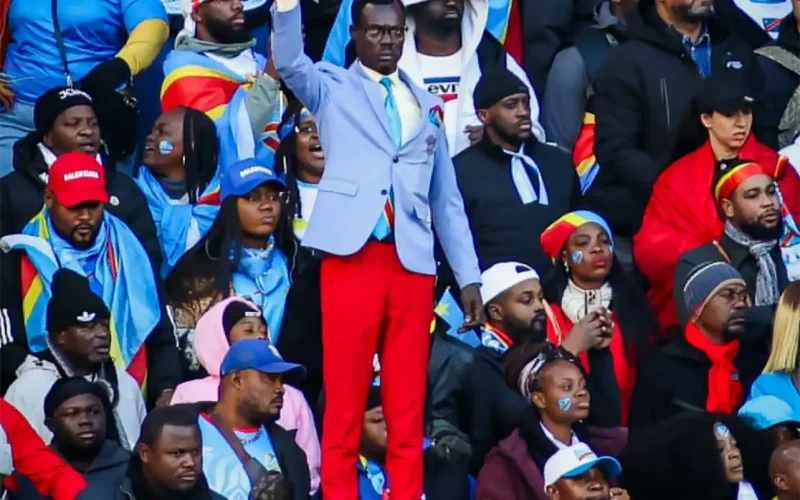
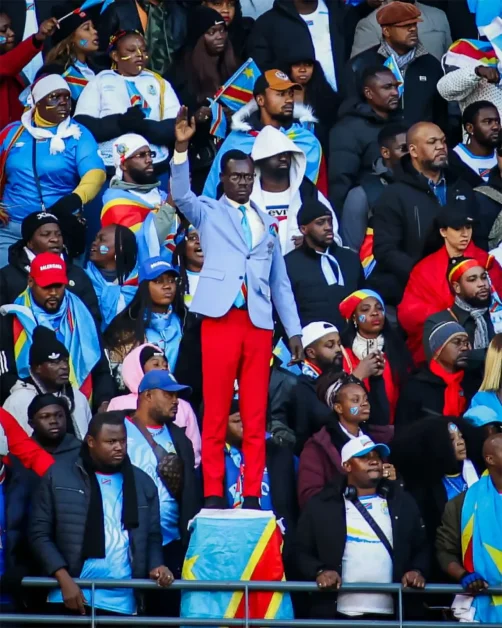
WHILE 40,000 fans jumped, screamed, and lost their voices across Morocco’s stadiums, one man stood absolutely, defiantly, gloriously still. Michel Nkuka Mboladinga didn’t need to move. He was already making history.
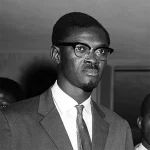
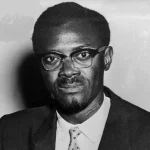
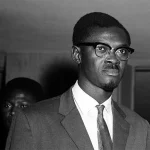
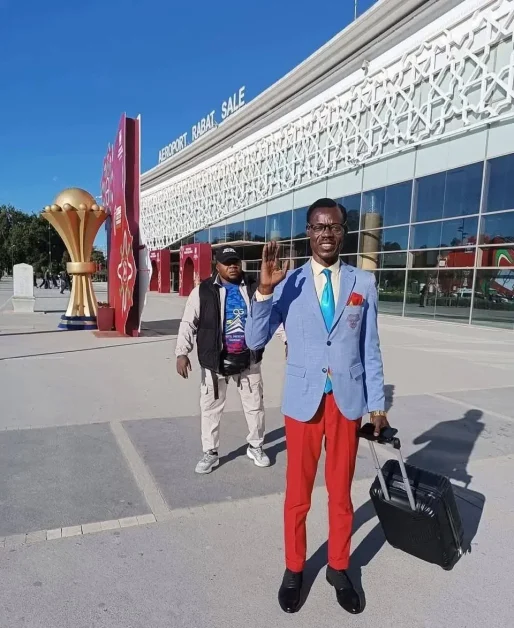
Draped in suits so bright they could guide ships to shore – electric blues, sunshine yellows, eye-watering greens – this self-appointed guardian of memory transformed himself into a living sculpture. His right arm thrust skyward, his gaze fixed on some distant horizon of justice, he channelled the spirit of Patrice Lumumba, the martyred hero of the Democratic Republic of Congo’s independence, murdered in 1961 by Belgian colonial interests who couldn’t bear to see Africa free.
And boy, did the world notice.
There’s something deliciously poetic about a football competition becoming an impromptu history lesson for former colonial powers. While Europe might prefer to file away its uncomfortable past in dusty archives marked “DO NOT OPEN,” Mboladinga – affectionately dubbed “Lumumba Vea” by adoring fans – had other ideas.
Every match became a masterclass in what scholars call “postcolonial discourse” and what the rest of us call “never letting them forget.” Standing motionless through ninety minutes of football isn’t just performance art, darling. It’s a PhD thesis delivered in Technicolor polyester.
The Belgian chocolate industry has done wonders for its international image. Mboladinga reminded everyone what else Belgium exported to the Congo: terror, exploitation, and the murder of one of Africa’s brightest lights. All without saying a single word. Chef’s kiss.
The Suits! Good God, The Suits!
Let’s pause to appreciate the sartorial magnificence of this man. While other fans showed up in replica jerseys and face paint, Mboladinga arrived like he was attending both a state funeral and a carnival – simultaneously. His suits didn’t just clash with the background; they declared war on it and won decisively.
Lemon yellow that could cure seasonal depression. Royal blue that made the Moroccan sky look drab. These weren’t outfits; they were declarations of intent. They screamed: “I am here. Africa is here. We are fabulous. And we remember everything.”
Fashion critics, eat your hearts out. This is what power dressing actually looks like.
Social media did what social media does best – it elevated a beautiful gesture into a global phenomenon. Within hours, Mboladinga wasn’t just a fan; he was THE face of AFCON 2025. Clips of his statue-still stance went viral faster than you can say “algorithm.”
Then came the Moroccan artist, producing a stunning tribute artwork that captured not just Mboladinga’s likeness but the profound weight of what he represented. Art begetting art. Memory inspiring memory. This is how culture works when it’s allowed to breathe.
Football stars noticed. Fans worldwide noticed. Even CAF President Patrice Motsepe – a man who presumably has slightly more important things to do – granted him an audience and posed for pictures. Because when you accidentally become the moral conscience of an entire continent at a football tournament, schedules get rearranged.
The Heartbreak Heard Round Africa
When Algeria’s Adil Boulbina scored in the 119th minute – because of course it was the 119th minute, football is nothing if not ruthlessly dramatic – DRC’s tournament dreams were shattered. And so did Mboladinga.
The statue crumbled. He removed his glasses, wiped away tears, and in his final devastating act, fell backwards into the crowd. The symbolism was almost too much to bear. Lumumba fell once before, betrayed and murdered. Now his tribute fell again, felled by a late goal and cruel sporting fate.
Then Amoura made a spectacular error in judgment, mimicking the pose in celebration. The internet, predictably, lost its collective mind. To his credit, the Algerian forward quickly issued an apology once he understood the profound historical weight of what he’d mocked. The Algerian Football Association, in a classy move that restored considerable faith in humanity, invited Mboladinga to meet the team and presented him with a personalised jersey bearing the name “Lumumba.”
Redemption arc: unlocked.
The Offers He Refused
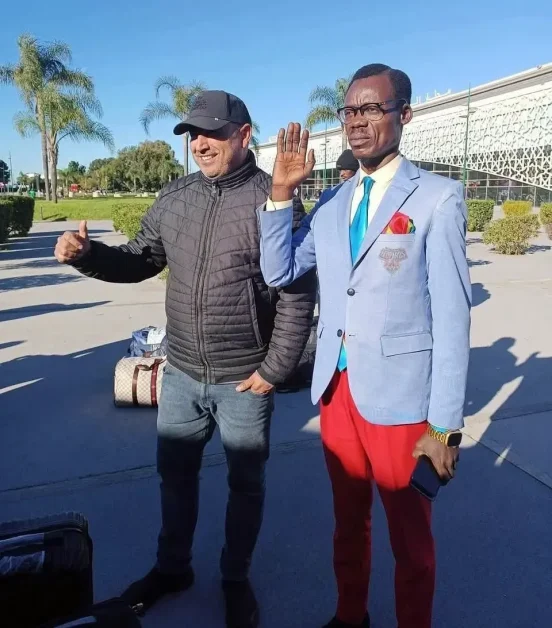
Here’s where it gets really good. Because Michel Nkuka Mboladinga could have stayed in Morocco. Multiple offers rolled in – €2,000 per match to continue his performance throughout the tournament. For context, that’s life-changing money in many African economies.
He said no.
Not “let me think about it.” Not “can we negotiate?” Just no. Because some things matter more than money. Some legacies cannot be commodified. Some stands must be taken at home, in the soil that birthed both the man and the memory he honours.
Lumumba Vea turned down the euros and boarded a flight to Kinshasa. Because that’s where heroes return. That’s where this story was always meant to end.
Waiting for him in the DRC: A reception by President Félix Tshisekedi himself. Not bad for a guy who just wanted to support his team while making a point about colonial atrocities.
Mboladinga didn’t just become famous. He became a symbol of memory, of resistance, of the quiet power that comes from refusing to let history be forgotten. He reminded an entire continent (and several uncomfortable European nations) that Africa remembers. Africa always remembers.
And we do it with style, passion, and occasionally, really spectacular suits.
The Legacy
Long after AFCON 2025 fades from headlines, long after the goals are forgotten and the brackets dissolve into trivia questions, people will remember the man who stood still. They’ll remember the bright suits and the raised fist and the tears that fell when the dream ended.
They’ll remember that football, at its best, is never just about football. It’s about community, identity, history, and justice. It’s about a Congolese fan turning a stadium into a memorial and a tournament into a reckoning.
Michel Nkuka Mboladinga went to Morocco to support his team. He left as an African icon, a continental conscience, and proof that one person, standing still in a loud suit, can move the world.
Belgium, awkwardly: “So… about that whole colonial genocide thing…”
Africa, gesturing at Lumumba Vea: “Yeah, we haven’t forgotten. Also, his suits are phenomenal.”
The most beloved figure at Africa’s premier football competition didn’t score a goal, make a save, or deliver a tactical masterclass. He simply stood still and remembered. In a world obsessed with movement, noise, and constant distraction, stillness became revolution.
Patrice Lumumba fought for the DRC’s independence with words and courage. Sixty-plus years later, Michel Nkuka Mboladinga fought for his memory with silence and style.
Both men understood: the revolution will be accessorised.
Welcome home, Lumumba. Africa is proud of you. The suit game will never be the same.
And somewhere, in whatever corner of the universe houses the spirits of liberation heroes, Patrice Lumumba is smiling, raising his fist, and absolutely rocking a bright yellow suit.
Editor’s Note: No Belgian colonial apologists were consulted in the writing of this article. They’ve had quite enough airtime already, don’t you think?