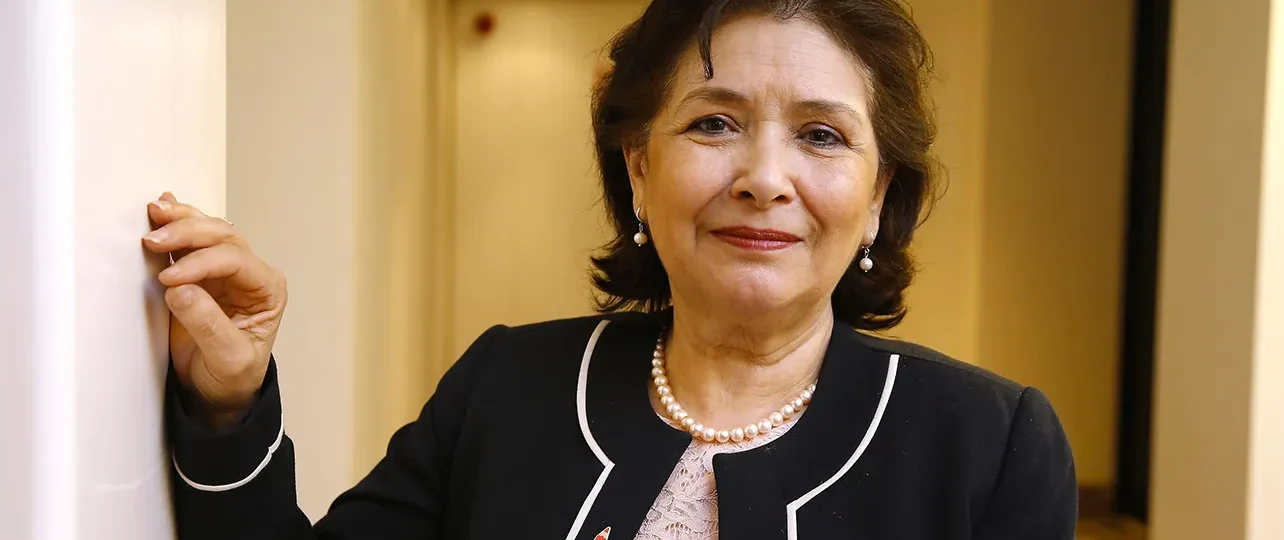

TUNISIA’S courts have, in the space of a single week, sentenced two of the country’s most prominent human rights defenders to prison terms that human rights lawyers describe as effectively a life sentence by attrition. On June 26, a Tunis Court of First Instance sentenced Sihem Bensedrine, the former president of Tunisia’s Truth and Dignity Commission, to 25 years in prison and ordered her and several co-defendants to pay a joint fine of roughly 1.8 billion Tunisian dinars — about US$600 million. Three days earlier, an appeals court in Tunis sentenced Saadia Mosbah, the president of the anti-racism association Mnemty, to eight years in prison and a fine of about $41,400.
Five other Mnemty members were sentenced alongside her, with terms ranging from one to three years, several of them suspended. Human Rights Watch, which reviewed the verdict minutes, said the rulings represent “another devastating blow” to what remains of Tunisia’s civic space.
A commission punished for doing its job
Bensedrine, 75, was convicted in two separate cases stemming directly from her 2014–2018 tenure leading the Truth and Dignity Commission, the body tasked with investigating decades of state abuse under Tunisia’s pre-2011 dictatorships. Tunisia’s own transitional justice law grants commission members immunity for the content of their official findings — a protection prosecutors appear to have set aside. She was charged in one case with fraud and forgery over the commission’s final report, following a 2020 complaint from a former commissioner, and in a second case over an arbitral agreement involving Slim Chiboub, son-in-law of former president Zine el-Abidine Ben Ali. She was held in pretrial detention from August 2024 until a February 2025 hunger strike secured her provisional release; she remains free pending appeal, having accumulated 20 years in the first case and five in the second.
It is not Bensedrine’s first encounter with a Tunisian prison cell. She was jailed for two weeks in 1987 under Habib Bourguiba and for nearly two months in 2001 under Ben Ali, and spent 2010 to 2011 in exile. Her latest conviction, rights groups argue, punishes her precisely for the accountability work the 2011 revolution was meant to institutionalise.
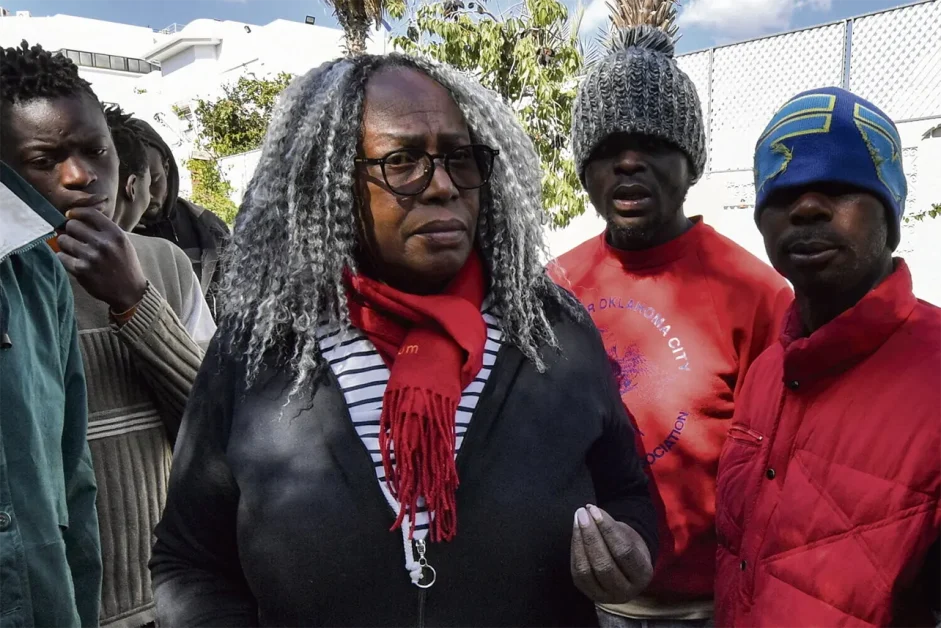
Mosbah’s case follows a similar arc. She helped drive Tunisia’s landmark 2018 law criminalising racial discrimination, and was arrested in May 2024 amid a wider crackdown on refugee-aid organisations and a racist social media campaign targeting her as a Black Tunisian public figure. She was charged with illicit enrichment, money laundering and inadequate bookkeeping, and has remained in detention ever since — well beyond the 14-month cap Tunisian law places on pretrial detention. Her family has told Human Rights Watch she has faced racist abuse from fellow inmates and prison staff.
A press dismantled case by case
The prosecutions of Bensedrine and Mosbah do not stand alone; they sit inside a five-year campaign, built substantially on President Kais Saied’s 2022 cybercrime measure, Decree-Law 54, that has methodically emptied Tunisia’s newsrooms of critical voices. The decree, imposed a year after Saied’s July 2021 seizure of near-total power, criminalises the spread of “false news” deemed to harm public order or national security — a standard press freedom monitors say has been weaponised against ordinary editorial commentary.
Journalists Mourad Zghidi and Borhen Bsaies have borne the sharpest edge of that campaign. Arrested in May 2024 over broadcast commentary critical of the president, they were handed a three-and-a-half-year sentence upheld on appeal in mid-2026; Zghidi, who holds French citizenship, has since gone on hunger strike in detention, with lawyers describing his condition as extremely serious. Commentator and lawyer Sonia Dahmani has faced at least five separate prosecutions tied to her media appearances, receiving an 18-month sentence in April 2026 that remains, in effect, suspended over her as a permanent threat. Ghassen Ben Khelifa, editor of the independent outlet Inhiyez, was sentenced to two years in March 2026 over a case authorities kept open for more than three years. Zied el-Heni, editor of Tunisian Press, was jailed for a year in May 2026 simply for criticising, on Facebook, the prosecution of another journalist. Khaoula Boukrim, founder of the outlet TUMEDIA, was sentenced in absentia to four years in June 2026.
Press unions in Tunis describe a climate of pre-emptive self-censorship: under Decree 54, the National Syndicate of Tunisian Journalists has noted, every working journalist now operates as though conditionally released, liable to be summoned over anything they publish. Independent outlets and civil society groups have also reported having their foreign funding frozen by banks acting on unexplained official pressure — a financial front to the legal one.
The opposition, buried under paper
The same judicial machinery has reached furthest into Tunisia’s formal political opposition. Rached Ghannouchi, the 84-year-old former parliamentary speaker and leader of the Islamist-inspired Ennahda party, has been in detention since April 2023 and has now been convicted in more than a dozen separate cases. In February 2026, an appeals court raised his sentence in the so-called “Conspiracy 2” case — which also implicated exiled former prime minister Youssef Chahed and Saied’s former chief of staff Nadia Akacha — from 14 to 20 years. In June 2026, a separate “secret apparatus” case brought his cumulative sentence past life imprisonment plus 30 years, alongside a 42-year term for former prime minister Ali Laarayedh and sentences of up to 96 years for other co-defendants. Ghannouchi’s legal team has said he will not appeal further, citing what they call a complete absence of fair-trial guarantees. He was hospitalised in April 2026 after a sharp decline in his health.
Rights groups, including the Washington-based DAWN, have characterised the case as part of a deliberate strategy to remove Saied’s most prominent critics from public life. Most of Tunisia’s opposition figures — from the Islamist and secular ends of the spectrum alike — have by now either been imprisoned or fled the country.
A pattern with a name
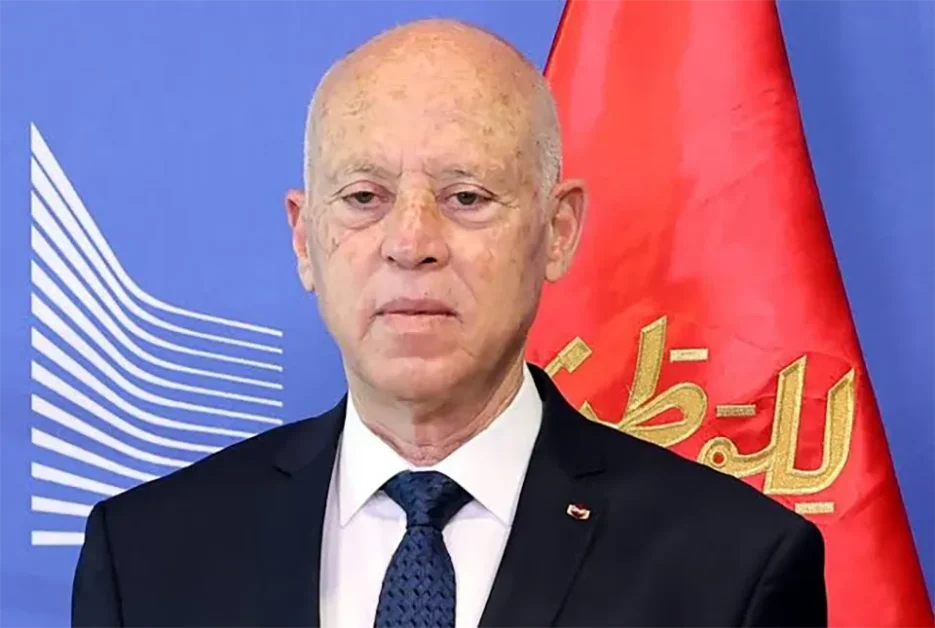
Taken together, the Bensedrine and Mosbah verdicts complete a picture that human rights organisations have been documenting since Saied’s 2021 power grab: a judiciary redirected from prosecuting the abuses of Tunisia’s past toward prosecuting those who investigated them, reported on them, or organised politically against the president who now controls the courts that try them. Tunisia remains a state party to the International Covenant on Civil and Political Rights and the African Charter on Human and Peoples’ Rights, both of which guarantee freedoms of expression, association and assembly and the right to a fair trial — protections rights monitors say are being systematically hollowed out in practice.
Bassam Khawaja, deputy Middle East and North Africa director at Human Rights Watch, called on Tunisian authorities to vacate the convictions of Bensedrine, Mosbah and their co-defendants and to drop what he described as abusive prosecutions against rights defenders more broadly. He urged Tunisia’s international partners, including the European Union, to press Tunis on civic space rather than continue a posture of cautious engagement built around counter-terrorism and migration cooperation — a calculation press freedom advocates argue has bought Saied’s government years of diplomatic room to prosecute dissent with limited consequence.
For a country still officially described by many Western governments as the Arab Spring’s lone surviving democracy, the accumulating case files against a truth commissioner, an anti-racism campaigner, a shrinking cohort of independent journalists and an 84-year-old opposition leader now serving a sentence longer than his remaining lifetime tell a different story — one being written, verdict by verdict, in Tunis’s courtrooms.