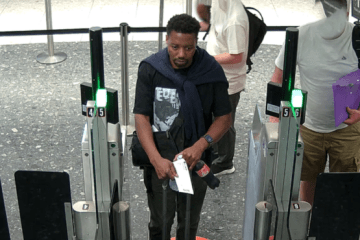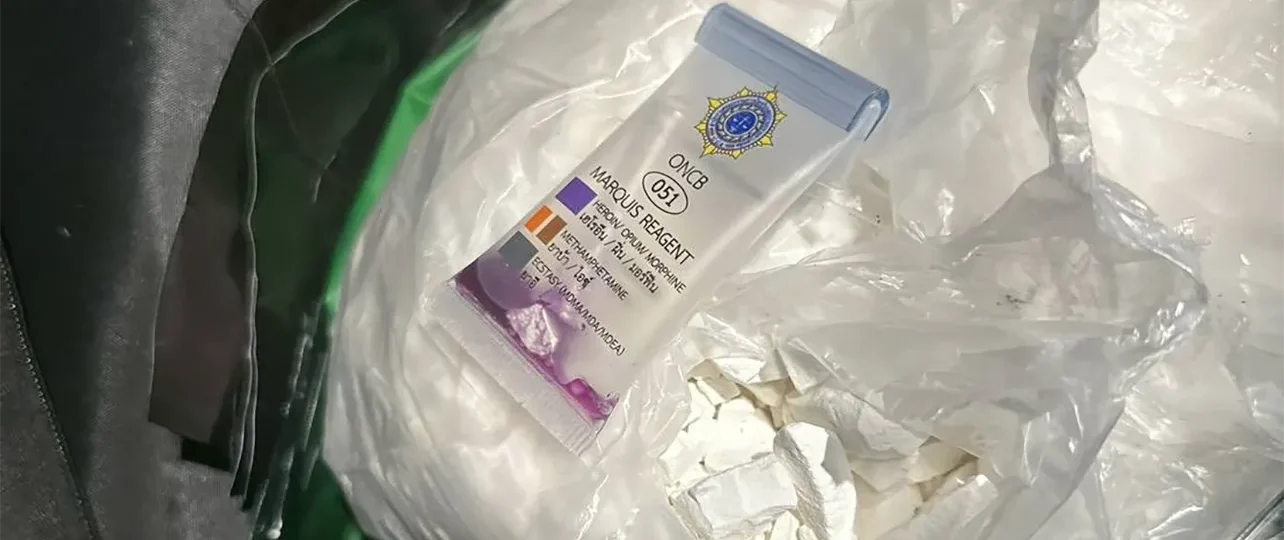

A South African national has been arrested at Bangkok’s Suvarnabhumi Airport after Thai customs officers discovered more than 17.5 kilograms of heroin concealed inside commercially packaged coffee, green tea and dietary supplements, in a bust that Thai authorities say forms part of a wider, multinational trafficking investigation.
The man was intercepted while transiting from Kuala Lumpur International Airport in Malaysia, en route via Addis Ababa to Ivato International Airport in Madagascar, according to Thailand’s Customs Department. Officers at the transfer baggage terminal flagged the luggage after an X-ray screening irregularity and pulled it aside for detailed inspection, where they found packets bearing coffee, green tea and supplement branding filled instead with a white powdered substance that later tested positive as heroin, a Category 1 narcotic under Thai law.
Thai officials placed the domestic street value of the seizure at more than 7.3 million baht – roughly R3.6 million – with authorities and analysts suggesting the consignment was destined to fetch several times that figure once it reached the Indian Ocean and southern African markets. The suspect now faces prosecution under Thailand’s Customs Act and Narcotics Code, offences that carry lengthy prison terms and, in aggravated trafficking cases, the possibility of life imprisonment.
A PATTERN, NOT AN ISOLATED CASE
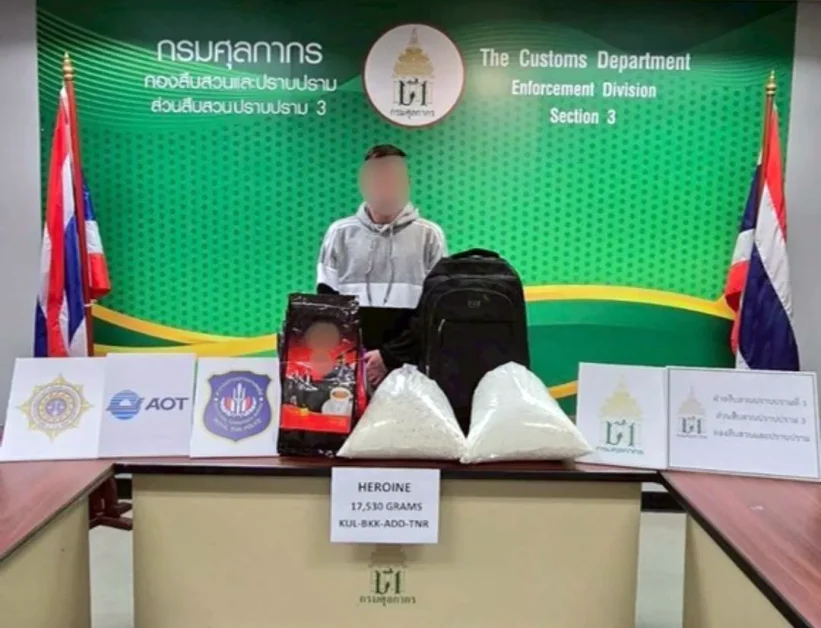
The Suvarnabhumi arrest is not a standalone incident. Thai authorities say the passenger was identified in advance through intelligence-led surveillance by the Customs Department working alongside the Airport Interdiction Task Force, rather than through a routine random check – a detail suggesting investigators already had the smuggling route under watch before the passenger arrived.
It also follows a near-identical case reported the previous week, in which a Thai woman was arrested for attempting to mail 2.1 kilograms of heroin to Taiwan through an international parcel service, the drugs likewise hidden inside coffee and tea packaging. She told investigators she had been paid 10,000 baht to send the parcel after collecting it in Chiang Rai province, and police are now examining whether her case is linked to a separate investigation involving a Thai Airways flight attendant arrested in Australia.
The repetition of the concealment method – narcotics packed into consumer goods such as coffee, tea, dietary supplements and, in at least one other case reported by Thai media this month, pet food – points toward a shared supply chain or packaging cell rather than opportunistic, unconnected smugglers. Thai police separately dismantled a 13-member trafficking syndicate this month, described by the Crime Suppression Division as led by an African “kingpin,” which used romance scams on Thai women recruited through social media to move heroin and cocaine worth more than 400 million baht, again concealed inside everyday packaging including coffee bags.
“This seizure points to sophisticated concealment methods and well-established routes linking Southeast Asia to the Indian Ocean islands and southern African markets.”
Cape Town-based trafficking analyst
WHY THE ROUTE MATTERS
The itinerary in this case – Kuala Lumpur to Bangkok to Addis Ababa to Antananarivo – traces a corridor long flagged by regional law-enforcement analysts as a preferred transit path for Southeast Asian heroin moving toward Indian Ocean island markets, where prices climb sharply and onward distribution networks extend into mainland southern Africa. Using Thailand as a mid-route staging point, rather than a direct flight, allows traffickers to break up the journey across multiple jurisdictions and exploit gaps in coordinated screening between customs agencies.
Analysts have noted that the use of ordinary consumer branding — rather than the traditional compressed “brick” packaging associated with cartel product — reflects a deliberate shift by trafficking networks operating in and through Thailand to defeat profiling systems trained on older concealment patterns. Thai investigators say the retreat from recognisable packaging has become a hallmark of networks currently under active pursuit.
CONSULAR AND INVESTIGATIVE FALLOUT
South Africa’s Department of International Relations and Cooperation is expected to be notified through standard consular channels and, if so, would provide routine legal and welfare assistance to the detained man and his family while liaising with Thai authorities. Thai prosecutors are expected to file formal charges and seek pretrial detention, with forensic analysis under way to establish the purity of the heroin and trace the origin of the packaging materials used to conceal it.
Thai officials say the investigation extends beyond the arrested passenger, with authorities tracing the packages’ origins in Kuala Lumpur and examining whether the man acted alone or as a courier within a larger network. Any confirmed links to South African-based handlers, financiers or distribution contacts would likely draw in the South African Police Service’s organised crime structures and could prompt requests for mutual legal assistance or INTERPOL cooperation.
THE BIGGER PICTURE
The case lands amid what Thai authorities describe as an intensifying, government-ordered crackdown on drug syndicates using Thailand as a global transit hub – a campaign that has, in the space of a single month, produced multiple heroin seizures using strikingly similar concealment tactics and repeated South African or African nationals as couriers. For African governments and regional bodies concerned with organised crime, the pattern raises pointed questions about how deeply established networks have become along the Southeast Asia–Indian Ocean–southern Africa corridor, and whether current customs and intelligence cooperation between the regions is keeping pace.