THE self-styled Director-General of the non-existent Presidential Foreign Intervention Promotion Council (PFIPC), Adeniyi Adeyemi, was arrested on Tuesday, moments after Justice Mohammed Umar of the Federal High Court in Abuja issued a bench warrant for his arrest, capping months of legal cat-and-mouse in one of Nigeria’s more audacious impersonation scandals.
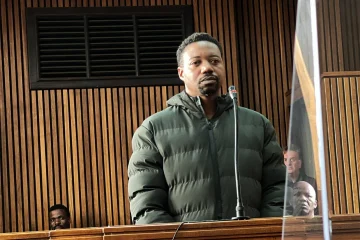
Adeyemi was due before Justice Umar in Maitama, Abuja, to take his plea on an eight-count charge of forgery, fraud and impersonation marked FHC/ABJ/CR/562/2025. He did not show up. His lawyer, Genesis Francis, announced an appearance on his behalf, but that was not enough to save the fictitious council’s founder from the reach of a court that had clearly lost patience.
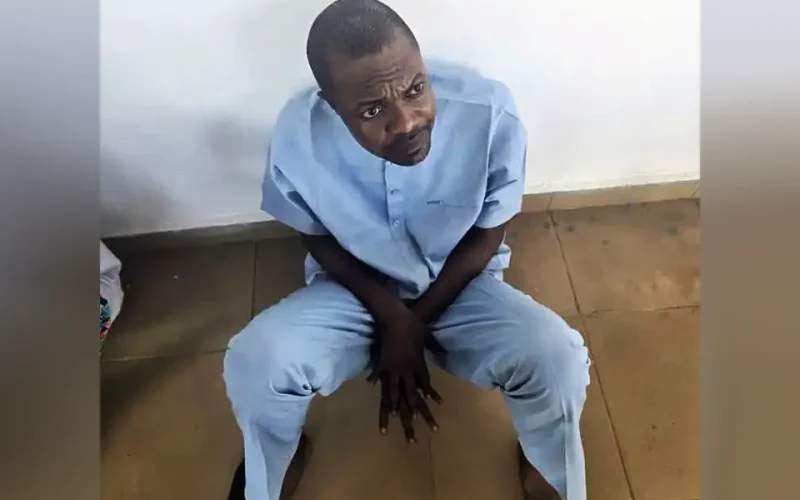
Prosecuting counsel Wisdom Madaki told the court it was the fifth time the matter had been called, and the fifth time Adeyemi had failed to appear. Relying on Section 394 of the Administration of Criminal Justice Act, 2015, Madaki asked the judge to compel the defendant’s attendance by force of law. Justice Umar agreed, ordering security agencies to arrest Adeyemi wherever he was found and produce him in court. Police confirmed hours later that he had been picked up in Osun State.
A DEFENCE BUILT ON FEAR, NOT DENIAL
Francis offered the court an explanation rather than an alibi: his client, he said, had stayed away because he feared for his life, and had written to President Bola Tinubu directly to raise his security concerns. Adeyemi, the lawyer insisted, wanted to “stay alive” long enough to defend himself at trial. He pointed out that his client had appeared for an earlier arraignment date on 16 May, only for the matter to be adjourned again.
“The court will help him to be alive.”
Justice Mohammed Umar, dismissing the defence’s fear-for-life explanation
Justice Umar was unmoved. He noted that Adeyemi had now missed four consecutive court dates since May, and that the court was fully capable of guaranteeing a defendant’s safety through the trial process. The matter has been adjourned to 30 September 2026 for arraignment, this time with the accused presumably in custody rather than in absentia.
HOW A FICTITIOUS COUNCIL REACHED THE NATIONAL BUDGET
The case traces back to a scheme that ran, by the Presidency’s own account, for roughly a year before it unravelled. Adeyemi presented himself as Director-General of the PFIPC — at various points also styled the Presidential Economic Advisory Council — armed with an appointment letter purportedly signed by Chief of Staff Femi Gbajabiamila. On the strength of that forged paperwork, he secured office accommodation on the second floor of Phase III of the Federal Secretariat Complex, the administrative nerve-centre of the Nigerian state.
From that office, prosecutors allege, Adeyemi hosted ambassadors at a private meeting in October 2025, sought a note verbale from the Ministry of Foreign Affairs to facilitate United States visas for staff of an agency that did not legally exist, and pursued self-accounting status and Central Bank of Nigeria account approvals through the Office of the Accountant-General of the Federation. Investigators say they eventually traced 34 bank accounts linked to him, nine opened in the names of fictitious government bodies.
Most striking of all: the 2026 Appropriation Act lists an entity matching the council’s name with a total allocation of ₦1.302 billion — roughly ₦802.9 million for personnel costs, ₦200 million for overheads and ₦300 million for capital expenditure. The Presidency maintains the PFIPC never existed under this administration. Nigerians are still waiting for an explanation of how a body it insists is fictitious secured a line in the national budget.
THE CHARGE SHEET
Case number: FHC/ABJ/CR/562/2025
Counts: Eight — conspiracy, forgery of presidential and State House documents, impersonation as a Director-General
Co-accused: Two others, identified only as “Femi” and “Anu,” both still at large
Maximum penalty: Up to 21 years’ imprisonment without the option of a fine on forgery counts; up to 3 years or a fine on the impersonation count
Key witnesses listed: Chief of Staff Femi Gbajabiamila; officials of the Office of the Accountant-General of the Federation; a Deputy Superintendent of Police
Next court date: 30 September 2026, Federal High Court, Abuja
THE COLLAPSE OF THE COVER STORY
The fiction began to crack only when officials at the legitimate Nigerian Investment Promotion Council complained that a rival body appeared to be operating at cross-purposes with their mandate. That complaint prompted Gbajabiamila to write formally to the Department of State Services and the police in October 2025, disclosing forged appointment letters circulating in his office’s name. Adeyemi was arrested for the first time on 27 October 2025 at the Secretariat office he had occupied for months; searches of that office and his home in Suleja recovered what investigators describe as forged documents and other exhibits.
He told investigators that one Dolapo Babatunde Tanimola had helped him obtain the forged appointment letter — a claim that could never be independently tested, since police established that Tanimola had died in a hotel fire in Abuja five days before Adeyemi’s own arrest. Police filed the eight-count charge against Adeyemi and his two still-at-large co-accused on 27 November 2025.
A FUGITIVE’S COUNTER-NARRATIVE
While on bail, Adeyemi resurfaced with a version of events that directly contradicted his own earlier statement to police: he insisted Gbajabiamila had personally appointed him, and went further, alleging the Chief of Staff had demanded a cut of the council’s take-off grant and that the fraud case against him was retaliation for his refusal to pay. The Presidency has issued repeated disclaimers and branded him a serial impersonator with a documented history stretching back to a 2016 episode in which he falsely claimed to lead a United Nations-affiliated youth body. Human rights lawyer Femi Falana has argued the Presidency lacks the constitutional standing to unilaterally clear anyone in the matter and has called for an independent investigation reaching both men.
THE INSTITUTIONAL QUESTION THAT WON’T GO AWAY
Tuesday’s arrest closes one chapter of a saga that has embarrassed Nigeria’s federal bureaucracy at a delicate moment. The scandal broke just weeks after S&P Global Ratings lifted Nigeria’s sovereign credit rating for the first time in fourteen years, a vote of confidence in the Tinubu administration’s fiscal reforms. The juxtaposition has not been lost on observers: a state that persuaded international markets it had tightened its fiscal plumbing has spent the better part of a year explaining how one man with a documented history of impersonation talked his way past the gates of the presidency itself — and, on paper at least, into the federal budget.
For now, the long arm of the law has caught up with Adeniyi Adeyemi. Whether it also reaches the officials and internal controls that allowed a phantom council to operate inside the Federal Secretariat for a year remains, as Justice Umar’s courtroom has just demonstrated, very much a live question.