TEN Ethiopian nationals are feared to have drowned after a canoe carrying fifteen undocumented migrants capsized in the Zambezi River as they attempted to slip across the border from Zambia into Botswana under the cover of darkness, in a tragedy that has thrown a harsh spotlight on the perilous, largely invisible smuggling corridor that funnels tens of thousands of East Africans through southern Africa each year.
The incident occurred on the night of Monday, 13 July, near Mwaanga Village in Chief Sekute’s Chiefdom, Kazungula District – a stretch of river close to the quadripoint where the borders of Zambia, Botswana, Zimbabwe and Namibia converge, and barely a few kilometres from the modern Kazungula Bridge that links the two countries by road.
According to a joint statement issued in Lusaka by the Zambia Police Service and the Department of Immigration, the group of fifteen had boarded the canoe intending to bypass official border posts entirely, opting instead for the river route favoured by smugglers moving migrants and, at times, contraband across the porous frontier.
The tragedy came to light only the following day, on 14 July, when members of the public alerted immigration officers to two men who had staggered out of the river seeking help. Immigration officers who responded identified the pair as Menigstu Getachew Arenga, 33, who was found without any immigration documents, and Anebo Madamo Demeke, 35, who was in possession of a passport but had allegedly failed to report to an immigration officer upon entering Zambian territory.
It was from these two survivors that the full scale of the disaster emerged. Police and immigration officials said the pair told investigators the canoe had overturned mid-crossing. Of the fifteen aboard, five managed to swim to safety, while ten others were suspected to have drowned. The whereabouts of the remaining three reported survivors could not immediately be established, leaving investigators unable to confirm the final toll.
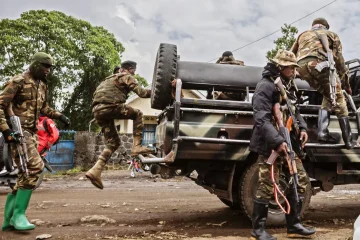
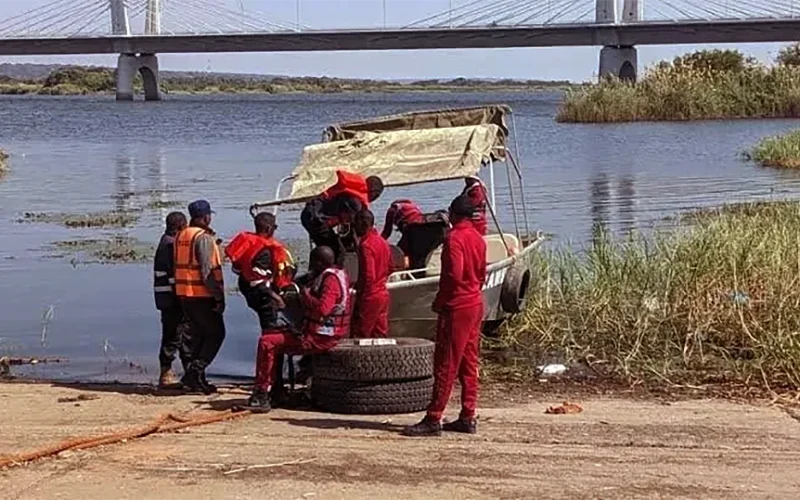
Zambian authorities have since launched a coordinated search and rescue operation, drawing on some of the country’s most specialised units: the Zambia Army Marine Special Forces, the Zambia Police Marine Unit, and the Fire Brigade and Rescue Services have all been deployed to comb the river for survivors and remains.
As of publication, officials said no bodies had been recovered, meaning the reported deaths of the ten missing migrants remain formally unconfirmed pending the outcome of the search. The Zambezi’s strong currents, considerable width and crocodile populations make recovery operations in the area notoriously difficult and slow.
Godfrey Chilabi, spokesperson for the Zambia Police Service, and Namati Nshinka, Chief Public Relations Officer for the Department of Immigration, issued the joint statement appealing to members of the public for any information that might assist the search. The two officials also urged communities living along Zambia’s border regions to continue reporting suspected illegal crossings and human smuggling activity to the nearest law enforcement agency.
Arenga and Demeke remain in lawful police custody, assisting investigators while simultaneously being processed for immigration offences, including failure to report to an immigration officer upon entry into Zambia.
A Well-Trodden and Deadly Route
The Zambezi crossing at Kazungula is only the latest and most visible flashpoint on what researchers and migration agencies call the “Southern Route” – a sprawling, informal corridor stretching from southern Ethiopia and urban Somalia, through Kenya, Tanzania, Malawi, Mozambique, Zimbabwe and Zambia, toward South Africa’s cities and towns, where established Ethiopian and Somali communities dominate the informal spaza-shop retail trade.
The International Organisation for Migration has tracked thousands of movements exiting Ethiopia through border towns such as Moyale each year, with the overwhelming majority of travellers being young men under 30 seeking economic opportunity unavailable at home. The journey south can take months and typically costs migrants several thousand dollars, paid to a chain of brokers and smugglers who control safe houses, transport and river crossings along the way.
Rights researchers have long warned that the reliance on rivers to evade official border posts – the Limpopo between Zimbabwe and South Africa, the Zambezi at Kazungula, and numerous other crossing points – exposes migrants to acute risk of drowning, especially when overloaded canoes and rafts are used after dark to avoid detection by border patrols. Local criminal networks operating in these border zones have also been documented extorting, robbing and in some cases violently exploiting migrants mid-journey.
Monday’s tragedy on the Zambezi is a stark reminder that, despite growing enforcement efforts by Zambian, Botswanan and regional authorities, the underlying economic pressures driving irregular migration from the Horn of Africa show no sign of abating — and neither, tragically, does the human toll exacted by the routes migrants are forced to take to escape them.
Search efforts were continuing at the time of publication, with Zambian authorities yet to confirm any recoveries. The African Mirror will continue to monitor developments in this story, including the fate of the ten missing migrants, the three unaccounted-for survivors, and the legal proceedings against the two men now in custody.