
FOR much of 2026, South Africa’s handling of irregular migration has been fought as much in the court of public opinion as in its immigration courts. Vigilante-style street searches targeting foreign nationals, a fatal law-enforcement confrontation in Bellville, and the sprawling, at times chaotic, Musina Temporary Repatriation Processing Centre have all fed a narrative – at home and abroad – of a country struggling to reconcile border enforcement with its constitutional commitments to human dignity and social cohesion.
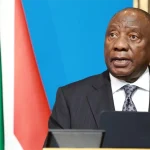
On Sunday, the Inter-Ministerial Committee on Migration (IMC), fronted by Minister Mmamoloko Kubayi, sought to reset that narrative with a detailed account of what it says is measurable progress under government’s Five-Point Plan – a programme it insists is not a short-term political response but a coordinated, multi-agency national programme spanning law enforcement, border security, diplomacy, legislative reform and humanitarian coordination.
Kubayi did not mince words on one front in particular. Addressing impersonators conducting unauthorised identity searches and extortion against foreign nationals and businesses, she said: “We want to urge whoever is involved in this wrong practice to desist from it or face the might of the law.” She confirmed roughly seven arrests in Polokwane and said SAPS had been asked to act on every incident brought to the IMC’s attention.
The enforcement ledger
The government’s headline numbers are substantial. Multi-agency operations involving the South African Police Service, the Border Management Authority (BMA), Home Affairs and the Hawks have to date produced 354 arrests and prosecutions linked to migration-law contraventions, targeting human trafficking networks, labour exploitation, fraudulent documentation syndicates and illegal mining operations. A further 69 people were arrested in Jeffreys Bay last weekend and appeared in court on Monday.
Dedicated immigration courts finalised 28 736 cases — mainly deportations — between 1 April and the end of June, with Gauteng accounting for nearly half (13 312 cases), followed by KwaZulu-Natal (4 973), the Western Cape (3 334) and the Eastern Cape (2 019). New dedicated courts are now being established at OR Tambo International Airport, at a site designated by the Airports Company of South Africa, alongside an upgrade to the Lindela deportation facility’s court.
“Migration management is fundamentally a rule-of-law matter. Criminality will not be tolerated, regardless of who is involved.”
MINISTER MMAMOLOKO KUBAYI
Musina: from crisis response to stand-down
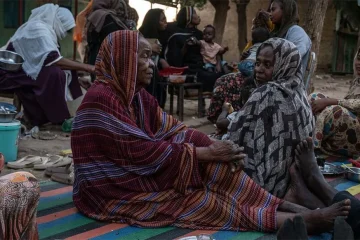
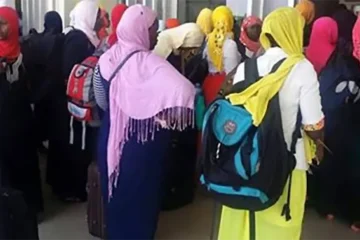
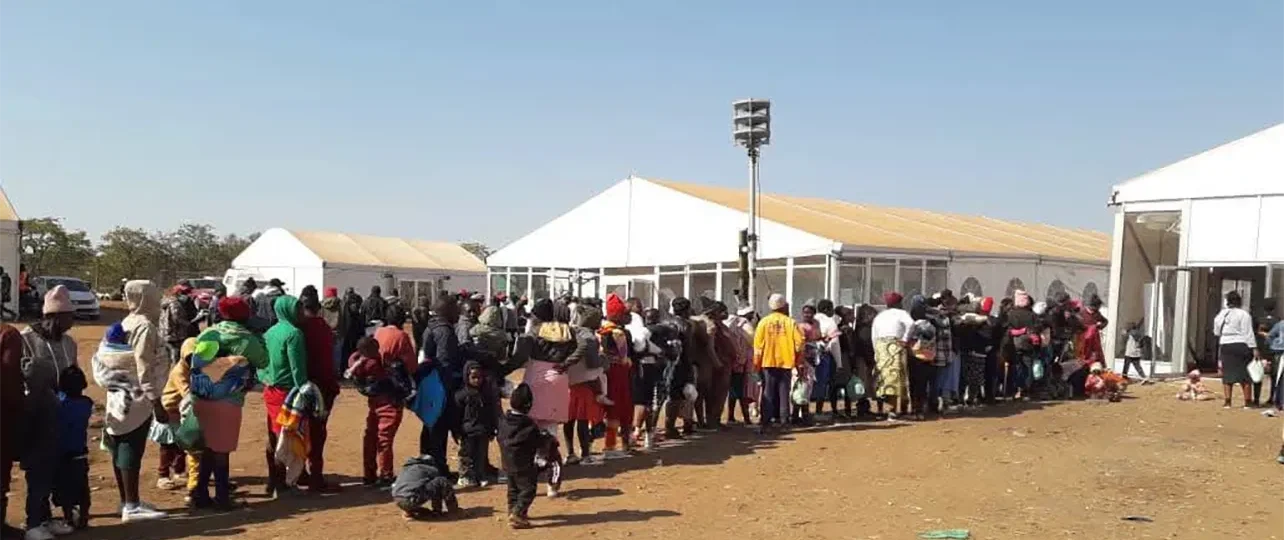
The most visible symbol of government’s response — the Musina Temporary Repatriation Processing Centre, stood up within four days of a 26 June decision — is being scaled down. From 1 August, capacity will drop from 20 000 to 1 500, following what the IMC describes as three weeks of declining demand. Since Malawian nationals began assembling at Sherwood in KwaZulu-Natal on 14 June, 68 138 foreign nationals have been processed through the system, the majority Malawian, followed by Zimbabwean and Mozambican nationals. Across all ports of entry, the BMA processed 72 906 repatriations between 7 June and 14 July.
Government credits an unusual coalition for keeping the centre running around the clock — officials from Public Works, Home Affairs, the SANDF, Social Development, the BMA, SAPS, Health, the Musina municipality and the Limpopo provincial government, alongside a R15 million donation from MTN channelled through Gift of the Givers, connectivity support from MTN and Vodacom, and relief work by NGOs including Al-Imdaad Foundation, Africa Muslim Agency, Musina Reform Church and the Mahlasedi Foundation. The IMC insists the wind-down will not compromise deportation capacity, with COGTA-identified assembly points now established nationally as a standing contingency.
Borders and infrastructure
On border security, the IMC reports 93 joint borderline operations since April targeting illicit goods, trafficking and drug syndicates, and says a memorandum will go before Cabinet this week to unlock funding for borderline infrastructure and surveillance technology. Six of the country’s busiest ports of entry — Lebombo, Beit Bridge, Oshoek, Ficksburg, Maseru Bridge and Kopfontein — are moving toward contractual and financial close, with construction targeted for early 2027.
A separate but related enforcement win came on 19 July, when the SAPS and National Prosecuting Authority secured a High Court preservation order against a Rietfontein property linked to a R100 million crystal meth laboratory, alongside R27 800 in cash seized in a November 2024 takedown. A Mexican national was arrested in connection with the operation — one of several signals government is pointing to as evidence that migration enforcement is also functioning as an anti-organised-crime tool.
The unresolved edge: vigilantism, a death, and diplomacy
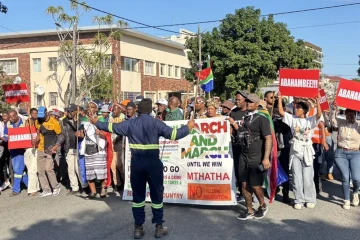
Yet the statement’s most pointed passages concern the pressures the government has not fully contained. The IMC used the briefing to warn against individuals impersonating Home Affairs officials to conduct “unauthorised identity searches” and extortion against foreign nationals and businesses — a practice it says led to roughly seven arrests in Polokwane — and against groups that confront and resist law-enforcement operations, citing a recent stand-off in Bellville.
That Bellville operation resulted in a fatality. The IMC confirmed the death is under investigation by the Independent Police Investigative Directorate (IPID), with findings to be made public once the inquiry is complete. Government has not attributed fault, and — consistent with the presumption that applies while an IPID investigation is open — no finding of wrongdoing has yet been made against any party.
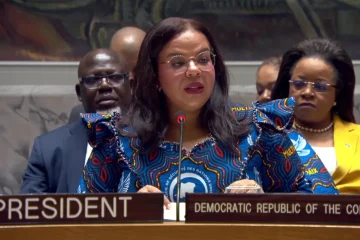
Diplomatically, South Africa is bracing for scrutiny at the African Union, where some counterparts are pushing to place migration and allegations of Afrophobia in South Africa on the agenda of the next Heads of State Summit. International Relations Minister Ronald Lamola, an IMC member, has said the government welcomes that engagement. Separately, the President has received a letter from Commissioner Solomon Ayele Dersso of the African Commission on Human and Peoples’ Rights, in his capacity as South Africa’s country rapporteur, raising concern over xenophobic violence against foreign nationals; the IMC says it has responded formally to the Commission. Government also disclosed that two Ghanaian civilians have petitioned the International Criminal Court over the matter, but said it has been advised the filing does not meet the Court’s jurisdictional threshold.
On the continental friction, Kubayi struck a conciliatory note, telling reporters: “South Africa remains committed to partnership, solidarity and cooperation with countries across the continent. We believe that the solution lies in collaboration, not confrontation.”
Closing the legislative gap
A parallel legislative track is under way, built around the Citizenship, Immigration and Refugee Protection Bill, the Employment Services Amendment Bill, and a Business Licensing Bill that would reserve certain business sectors wholly or partly for South African citizens. The Department of Trade, Industry and Competition is also set to meet hospitality, agriculture and tourism sector stakeholders over the next fortnight on local employment, while DIRCO and the dtic plan a separate engagement with South African businesses operating elsewhere on the continent to gauge how the migration debate is affecting continental trade and investment.
“The implementation of the Five-Point Plan is yielding tangible progress.”
MINISTER MMAMOLOKO KUBAYI
Progress, but the credibility test is still ahead
Taken on its own terms, the IMC’s account is a government attempting to convert a defensive, reactive posture — improvised repatriation logistics, viral footage of street confrontations, mounting diplomatic pressure — into a structured, auditable programme with numbers attached. The arrest tallies, court-finalisation figures and port-of-entry upgrade timeline give the Five-Point Plan a paper trail that was largely absent earlier this year.
But the numbers also expose where the real tests lie. The IPID investigation into the Bellville death will determine whether this reads as firm but lawful enforcement or something more troubling. The African Union Summit will test whether South Africa’s continental standing can absorb a formal Afrophobia agenda item without lasting reputational damage. And the scaling-down of Musina, from 20 000 to 1 500 places within a single week, will only vindicate itself if the assembly-point contingency system COGTA has built with municipalities holds up the next time a neighbouring state’s nationals need to move at short notice.
For a government that has spent months answering allegations of xenophobia with statistics, the message on Sunday was unambiguous: enforcement is working, it is lawful, and it is not finished. Whether that framing survives contact with the IPID’s findings, the AU Summit floor and the next surge of arrivals at the border is the story this masthead will continue to track.