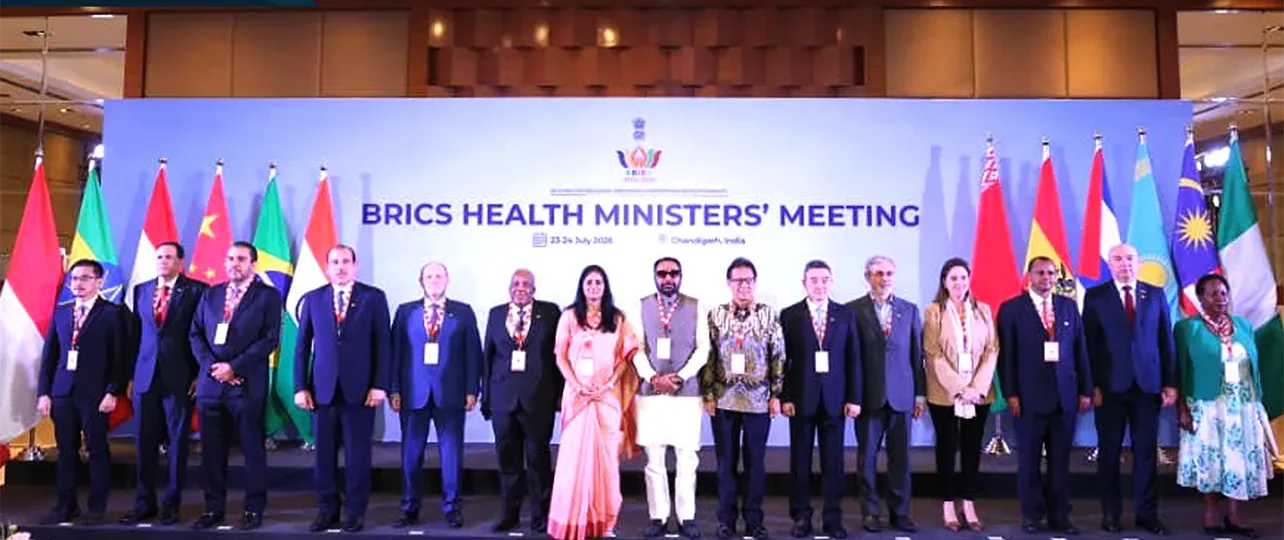

WHEN Jagat Prakash Nadda, India’s Minister of Health and Family Welfare, closed the 16th BRICS Health Ministers’ Meeting this week, he did more than sign off on a communiqué. He put a marker down for a bloc of nations home to roughly forty percent of humanity, declaring that health security, once treated as the charitable afterthought of a Northern-led development agenda, is now a sovereign priority the Global South intends to build for itself.
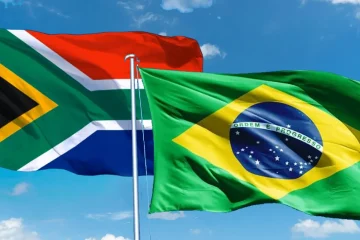
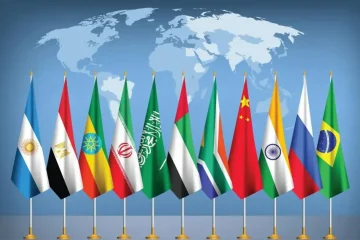
The meeting, held under the theme “Building for Resilience, Innovation, Cooperation and Sustainability,” brought ministers, senior officials and public health experts from Brazil, Russia, India, China, South Africa, Egypt, Ethiopia, Iran, the United Arab Emirates and Indonesia into the same room — a roster that itself tells the deeper story. This is no longer the BRICS of five founding economies. It is an expanded bloc stretching from Addis Ababa to Jakarta, and its health ministers have just agreed to move together on the issues that most directly determine whether their citizens live or die: access to medicines, pandemic preparedness, digital health infrastructure and the survival of traditional medical systems that Western pharmaceutical orthodoxy has long dismissed.
WHY THIS MATTERS BEYOND THE COMMUNIQUÉ
Declarations from multilateral summits are easy to dismiss as diplomatic theatre. This one deserves closer reading, because it lands at a moment when the fragility of Northern-controlled health systems has been repeatedly exposed to African, Asian and Latin American publics — from vaccine nationalism during the Covid-19 pandemic, when BRICS nations were pushed to the back of the queue for doses their own tax money had helped fund through global health financing mechanisms, to persistent gaps in access to essential and innovative medicines that continue to shape mortality gaps between the Global North and South.
The Chandigarh Declaration commits members to advancing Universal Health Coverage, accelerating digital transformation in healthcare, deepening joint research and widening access to medicines, vaccines and medical technologies. Stripped of diplomatic language, this is an attempt to build parallel infrastructure — manufacturing capacity, research partnerships and regulatory cooperation — that does not run through the same chokepoints that failed the Global South during the last pandemic.
“India’s experience has demonstrated the importance of resilient health systems and equitable access to healthcare as key elements of sustainable development.”
Jagat Prakash Nadda, India’s Minister of Health and Family Welfare
INDIA’S PITCH: LIFESTYLE, TRADITIONAL MEDICINE AND DIGITAL PUBLIC INFRASTRUCTURE
India used the Chairship to table two flagship initiatives: the BRICS Mission for Healthy Lifestyles and the BRICS Roadmap for Joint Initiative on Healthy Lifestyle Promotion, spanning 2026 to 2029. Both push a preventive, culturally rooted model of public health — promoting healthy diets, physical activity, the preservation of traditional food and medical cultures, and evidence-based behavioural approaches across member states. India also proposed expanding cooperation on mental health and wellbeing, an area chronically underfunded across the developing world despite mounting burden of disease data.
New Delhi framed its own domestic record as the template: digital public infrastructure, expanded coverage and “people-centric policies” delivered, in Nadda’s words, under “the visionary leadership of Prime Minister Narendra Modi.” African and Latin American delegations will read that pitch with interest, but also with a healthy dose of scrutiny — India’s Ayushman Bharat coverage model and its Co-WIN digital vaccination platform are genuine achievements worth studying, yet they were built for a market and administrative context very different from Addis Ababa, Pretoria or Brasília. The real test of this cooperation will be whether BRICS builds adaptable, not exported, health systems.
THE AFRICA ANGLE: WATCH THE FINE PRINT
For African Union member states inside and adjacent to BRICS — South Africa as a founding member, Egypt and Ethiopia as new entrants — the Chandigarh outcomes matter less for their rhetoric than for what gets funded next. Africa carries a disproportionate share of the global disease burden while manufacturing a fraction of the medicines and vaccines it consumes. Any serious BRICS health architecture has to confront that imbalance directly: through technology transfer, local manufacturing partnerships and regulatory harmonisation that lets African-made pharmaceuticals move across BRICS markets, not just Northern ones.
That is the unfinished business of this declaration. Universal Health Coverage and “wider access to medicines” are commitments easy to make and historically difficult to honour. The African Mirror will be watching for the follow-through: concrete financing instruments, manufacturing investment on African soil, and whether South Africa, Egypt and Ethiopia use their seats at this table to negotiate outcomes that shift where medicines are made — not merely where they are debated.
A BLOC TESTING ITS OWN COHESION
The breadth of the delegation list — ten countries spanning four continents, at vastly different stages of health-system development — is both BRICS’s greatest asset and its clearest vulnerability. Aligning Brazil’s universal health system, Russia’s state-run model, China’s manufacturing scale, the Gulf’s capital and Africa’s demographic weight into one coherent health strategy is a genuinely difficult diplomatic exercise. Chandigarh produced consensus language. Whether it produces a functioning, funded institution is the question that will define this Chairship’s legacy, and the one that will determine whether the Global South’s bid for health sovereignty becomes durable policy or another well-intentioned declaration filed away until the next summit.