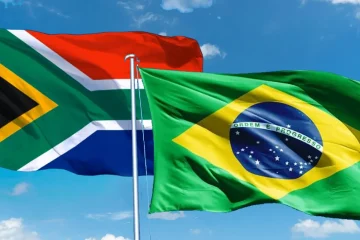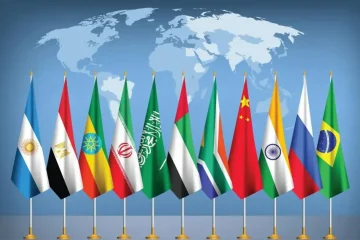
FOR years, Western analysts have puzzled over what, beyond a shared grievance with Washington and a fondness for summit communiqués, actually holds the BRICS bloc together. The grouping of Brazil, Russia, India, China, and South Africa – now expanded to a sprawling 17-country enterprise that takes in everyone from Bolivia to Vietnam – has always been an awkward acronym in search of a soul.
This week, in the golden-domed city of Kazan on the banks of the Volga River, the soul was found. It was wearing a crown containing more than 1,000 diamonds and 500 pearls, and it went by the name of Miss BRICS 2026.
“The main difference from other beauty contests is the philosophy of the event. The organisers focused not on external competition, but on inner beauty, friendship between countries, and cultural exchange.” — Anna Greben, National Beauty School, Belarus
49 Contestants, 17 Nations, One Tiara to Rule Them All
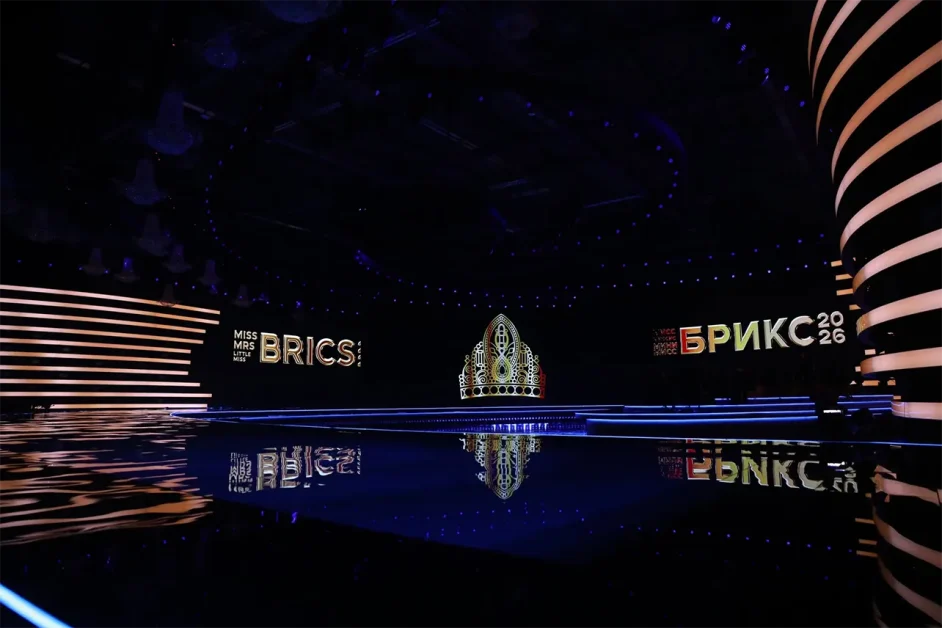
The first-ever Miss BRICS International Beauty Pageant ran from 1 to 8 March in Kazan, a city that – as every press release from the organisers reminded the international media – has “historically connected East and West.” Forty-nine contestants from 17 countries descended on Tatarstan’s capital to compete in not one but three categories: Miss BRICS (ages 18–25), Mrs BRICS (married women, 30-plus), and Little Miss BRICS (children under 13). If you thought the geopolitics of BRICS were complicated, try scheduling the swimsuit – sorry, national costume – parade around Ramadan. The organisers, to their credit, cancelled the swimwear segment altogether, describing it as an act of “high cultural and mutual respect.” Diplomacy, it turns out, can be achieved without a bikini.
The pageant’s grand results were announced on 7 March – International Women’s Day eve, naturally – and delivered the kind of geopolitical plot twist that would make a UN Security Council speechwriter weep with envy.
South Africa Takes the Crown – The Mrs One, Anyway
In a result that will be cited at the next BRICS foreign ministers’ meeting, whether they like it or not, South Africa’s Millicent Mpholodi Tlou walked away with the Mrs BRICS 2026 title. Her victory was greeted in Pretoria with the enthusiasm usually reserved for a Springbok Rugby World Cup win, with social media erupting in tricolour pride. “South Africa shines!” declared one outlet with the restraint of a vuvuzela at full blast.
Meanwhile, the headline Miss BRICS crown went to Russia’s Valentina Alekseeva — a result that surprised absolutely nobody, given that the pageant was held in Russia, judged partly in Russia, and had been organised by Russians. Bolivia’s Inmaculada Wachera came in second, and Belarus’s Aliya Korotkaya secured third place and the audience choice award, prompting Minsk to issue a press release of such patriotic fervour that it briefly outranked the country’s agricultural equipment export statistics.
South Africa. Bolivia. Belarus. The new axis of beauty is not what the geopolitical textbooks predicted.
Uganda, Nigeria, and the Pan-African Beauty Offensive
Africa’s performance at Miss BRICS deserves its own diplomatic cable. Nigeria sent three representatives – Blessing Ihuaenyi (a basketball player and model), Gladys Ade-Zaky (an artist who “expresses femininity through her paintings”), and young Isabel Dike (a model, ballerina, and actress). Uganda also fielded a full delegation. The continent’s collective message was unmistakable: Africa did not join BRICS merely to discuss commodity pricing and the reform of Bretton Woods institutions. Africa came to win.
Nigeria, it should be noted, only accepted its invitation to join BRICS as a partner country in January 2025 and was formally admitted during the Kazan summit in 2024. Barely a year into its partnership, the country had already assembled a pageant delegation of formidable credentials. This is the kind of institutional agility the World Bank can only dream of.
A Crown Fit for a Multipolar World
The jewellery alone warranted its own geopolitical analysis. The Mrs BRICS crown, crafted by the CHAMOVSKIKH Jewellery House, depicts Augusta, the goddess of beauty — a mature, unifying, and creative force — and features morganites, pink tourmalines, sapphires, diamonds, and that deep red rubellite “atop the crown,” which accentuates, in the words of the official description, “its grandeur.” The main crown weighs 850 grams and contains over 1,000 diamonds. For context, this is roughly the weight of a brick and more sparkle than any G20 communiqué has ever produced.
The Miss BRICS crown, the “Rising Augusta,” drew its inspiration from the imperial jewels of the House of Romanov — a detail that Russia’s state media covered with a reverence usually reserved for military hardware.
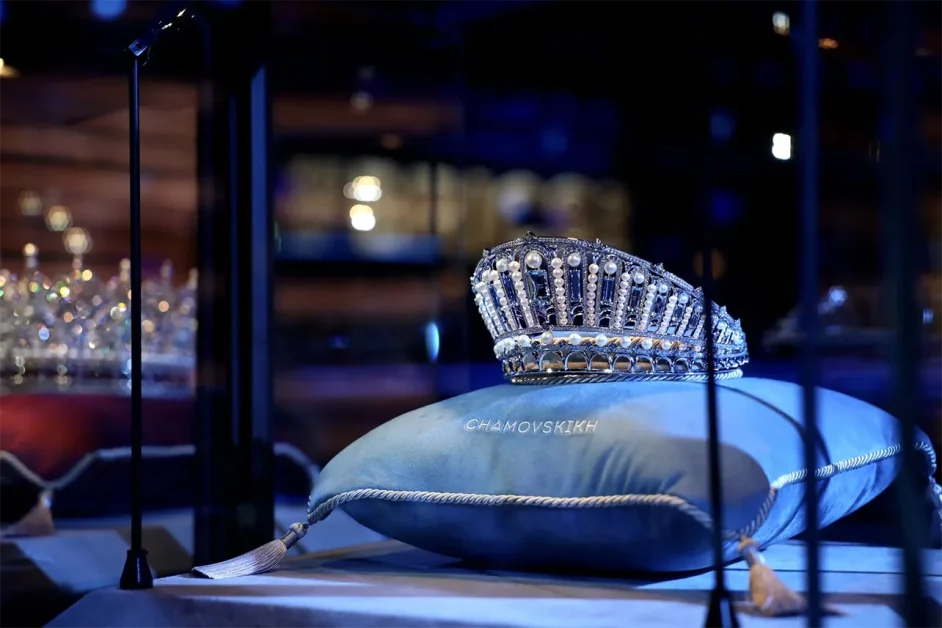
850 grams of gold. 1,000 diamonds. 500 pearls. The BRICS crown outsparkles the G7’s entire soft power budget.
Cultural Exchange, Or: What Happens When 49 Women Are Locked in a Hotel in Kazan for a Week
Beyond the glitter, organisers insisted that Miss BRICS was a “next-generation event” focused on “inner beauty, friendship between countries, and cultural exchange.” Each day, contestants were treated to master classes in the morning, excursions to Tatar cultural sites in the afternoon, and “informal communication and colourful performances by famous artists” in the evenings. Girls from different countries, reported Belarus’s press secretary with touching wonder, “often got together, exchanged souvenirs and impressions, and simply had dinner and fun.”
In other words: what years of BRICS foreign minister meetings, sherpa negotiations, and working group deliberations have failed to produce – genuine warmth between nations – was achieved in one week by 49 women, a shared plate of Tatar cuisine, and the universal language of competitive glamour.
The Geopolitical Takeaway
Cynics will note that Miss BRICS was organised in Russia, held in Russia, and won, in its headline category, by Russia. They will observe that Kazakhstan, making its debut this year, sent a 17-year-old as a pointed symbol of the country’s “cultural diplomacy” ambitions. They will point out that the pageant’s official website describes beauty as “a cultural code and human potential capable of uniting countries, generations, and meanings,” which is either the most profound thing ever written about a beauty contest or the least profound thing ever written about international relations.
They would not be entirely wrong. But they would be missing the point.
In an era of sanctions, proxy conflicts, and fractured multilateralism, seventeen nations ranging from Brazil to Vietnam found a reason to send their daughters – and their mothers, and their little girls – to a cold city on the Volga to be judged on their poise, their cultural presentations, and their capacity for “mindful self-expression.” South Africa’s Mrs BRICS came home with a diamond-encrusted crown. Nigeria’s delegation came home with new friends. Belarus came home with third place and the audience vote, which they treated like a Nobel Prize.
The IMF, one suspects, has never generated this much national pride.